The bathroom was already fogged up when Jeanne’s daughter knocked on the door. “Mum, you’ve been in there ages, you’ll slip,” she called, half worried, half annoyed. Jeanne, 78, sighed softly. Her knees were aching, the tiled floor felt like black ice, and the hot water that once felt luxurious now drained her energy. She used to shower every morning at 7:15 sharp before work. These days, the rhythm of her body has changed. The world still tells her to scrub, exfoliate, shampoo and repeat as if she were thirty and rushing to an office. Her body quietly replies, “Not today.”
Somewhere between those two voices, a new hygiene routine is trying to emerge.
The rules we learned in childhood are starting to crack.
When daily showers stop making sense after 65
The story often starts the same way. Retirement settles in, the alarm clock disappears, and with it the daily shower “on autopilot”. For many over 65, washing suddenly feels heavier, slower, more complicated. Arms don’t lift like they used to. Balance is fragile. Skin reacts to every scented gel. Yet the old script runs in the background: clean equals shower every day, anything less equals “dirty”. That script can be brutal.
The truth is, the body at 70 doesn’t live on the same schedule as at 30. So why would hygiene stay stuck in the past?
Take Marcel, 82, who used to be a mechanic. All his life, he came home stained with oil and dust, jumped straight into a hot shower, and scrubbed until his skin went pink. His wife still laughs remembering the bathroom that smelled like a mix of engine grease and cheap soap. Now he lives alone. He barely goes out some days. He walks more slowly. The doctor has warned him about his dry, fragile skin. Marcel still tried to shower every morning, until one winter he slipped on the bath mat and fractured his wrist.
After that, the daily ritual suddenly became a question: “Do I really need this today?”

Dermatologists are clear: older skin doesn’t behave like young skin. It produces less sebum, the natural oil that protects and lubricates. Daily soapy showers can strip what little protection is left, leading to itching, micro-cracks, and infections. Add in lower mobility, medications that dry the skin, and fear of falling, and the famous “one shower a day” starts to look less like hygiene and more like stubborn habit. Many experts now say every other day, or even two to three full showers a week, can be perfectly healthy for seniors, combined with targeted washing of key areas. The body’s needs have shifted. The rulebook has to follow.
A new rhythm: targeted hygiene, not automatic showering
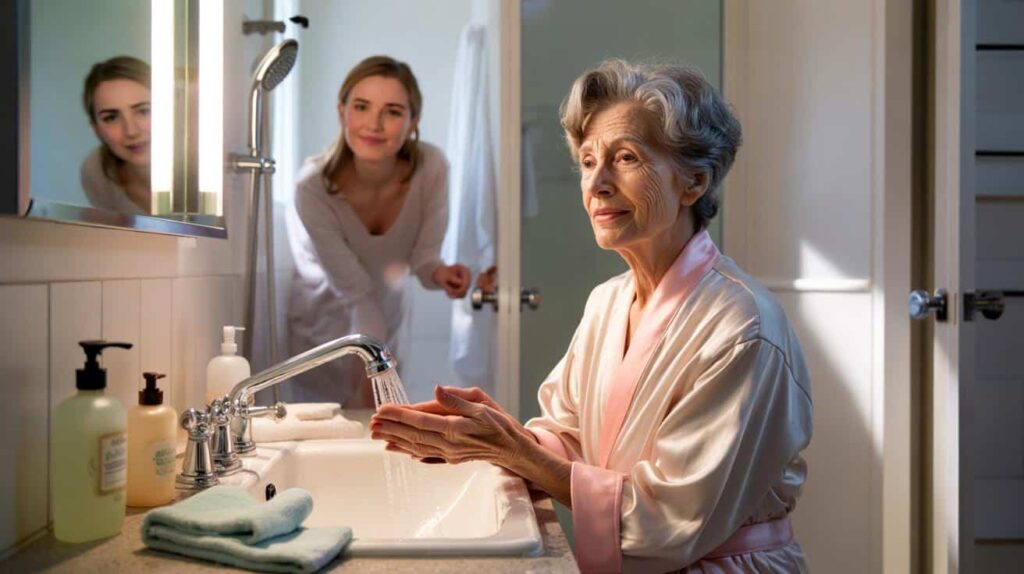
So what replaces the daily shower clock when you’re past 65? A more flexible routine that follows real life instead of old rules. One simple method used in geriatric care is “zone hygiene”. Instead of a full shower, you prioritise the areas that genuinely need daily attention: underarms, intimate area, feet, skin folds, face and hands. A warm washcloth, a mild cleanser, a comfortable chair by the sink. Ten focused minutes. No acrobatics on slippery tiles. On days when energy is higher or after physical activity, yes, a full shower or bath can still feel fantastic. The point shifts from “every day” to “when the body asks for it”.
Many older adults feel guilty when their routine changes, especially when family members comment. “You didn’t shower today?” can sound like an accusation, not a question. Yet what often disappears isn’t hygiene, it’s the old format. The mistake is to equate fewer showers with neglect, when the real danger lies elsewhere: too-hot water, harsh soaps, rushing, bathing alone when balance is shaky. Another common trap is clinging to products that worked twenty years ago. Strong fragrances, aggressive scrubs, drying shampoos. Skin after 65 often wants lotion cleansers, lukewarm water, less foam, more gentleness. The body whispers it. Pride sometimes refuses to hear.

“People imagine older adults refuse to wash,” explains Dr. Lena Ortiz, a geriatric dermatologist. “Most of the time, they’re not refusing hygiene, they’re refusing pain, cold, fatigue or humiliation. When we adapt the rhythm and the process, acceptance usually follows.”
- Create a safe spaceNon-slip mats, a stable shower stool, grab bars within arm’s reach. Safety first, speed second.
- Think “soft” before “strong”Gentle cleansers, cotton washcloths, lukewarm water, light pats with the towel, not vigorous rubbing.
- Keep dignity at the centerLet the person choose the time of day, the products, the order. Hygiene is also about feeling respected.
- Separate hygiene from performanceClean enough doesn’t mean spotless like a detergent ad. It means comfortable, odour-free, and skin-friendly.
- Watch the skin, not the calendarRed patches, itching or flaking matter more than the exact number of showers.
Letting go of old rules without letting go of self-respect
There is a quiet revolution in accepting that the hygiene rhythm after 65 is more like jazz than a metronome. Some days, energy is there, the body cooperates, and the full shower with hair wash feels like a spa moment. Other days, a quick wipe-down, clean underwear, fresh socks and a dab of moisturiser is already a victory. *Listening to that inner barometer is a skill we rarely learn when we’re young and racing to keep up.* It arrives late, almost shyly, when the body claims its right to slow down.
The challenge is not to confuse this slower rhythm with giving up on oneself.
We’ve all been there, that moment when a strong smell on public transport makes us silently swear we’ll “never end up like that old guy”. Those judgments stay in the back of the mind when our own routine starts to slip. Shame creeps in, especially if memory loss, depression or chronic pain join the picture. Loved ones can overreact, pushing for strict daily showers, turning hygiene into conflict. Let’s be honest: nobody really does this every single day. What helps more is curiosity than pressure. Asking gently, “What’s hardest for you about washing right now?” can reveal simple obstacles: fear of falling, cold bathrooms, exhaustion at night. Once the real problem is named, solutions stop feeling like orders and start looking like teamwork.
There’s also a cultural layer. Many of today’s seniors grew up with weekly baths, shared bars of soap, and water heated on the stove. Daily showers became the standard only later, framed as both modern and moral. Challenging that standard in old age can feel like going backwards, like “sliding” into neglect. Yet the science of skin, the reality of aging joints, and the ecological concern about water all point in the same direction: a more nuanced, personalised hygiene rhythm is not a failure. It’s an evolution. A 20-year-old might need a post-gym shower every day. A 75-year-old who goes out twice a week might need something very different. Bodies change, lives change, routines are allowed to follow.
| Key point | Detail | Value for the reader |
|---|---|---|
| Hygiene ≠ daily shower | Zone washing and gentler routines can replace automatic daily showers after 65 | Reduces fatigue, preserves skin health, and lowers risk of falls |
| Adapt to aging skin | Use milder products, lukewarm water, less friction, more moisturising | Prevents itching, dryness and small skin injuries that can complicate with age |
| Respect dignity and rhythm | Let older adults choose timing, method, and level of help | Strengthens trust, reduces conflict, supports autonomy |
FAQ:
- How often “should” a person over 65 shower?Many experts say two to three full showers a week are usually enough, combined with daily washing of underarms, intimate area, feet, hands and face. The real benchmark is comfort, absence of odour, and healthy skin, not a fixed number.
- Is washing less dangerous for health?Not necessarily. Overwashing can damage older skin and open the door to infections. Washing less often but more gently, focusing on key areas and drying skin folds properly, often protects health better than aggressive daily showers.
- What if my parent refuses to wash?First, try to understand why: fear of falling, pain, modesty, cold, depression, dementia. Then adapt: install safety aids, warm the room, offer help respectfully, suggest a wash at the sink instead of a full shower, or plan hygiene at the time of day when they feel best.
- Are dry shampoos and wipes a good idea for seniors?They can help on low-energy days or in case of illness, as a complement, not a permanent replacement. Choose fragrance-free, skin-friendly products and always dry the skin afterwards to avoid irritation, especially in skin folds.
- How can I talk about hygiene without shaming someone?Use “I” sentences and concrete observations: “I’ve noticed your skin looks irritated, can we look at products together?” Avoid words like “dirty” or “disgusting”. Offer choices rather than ultimatums, and propose doing it together rather than checking up on them.