That future just hit a wall.
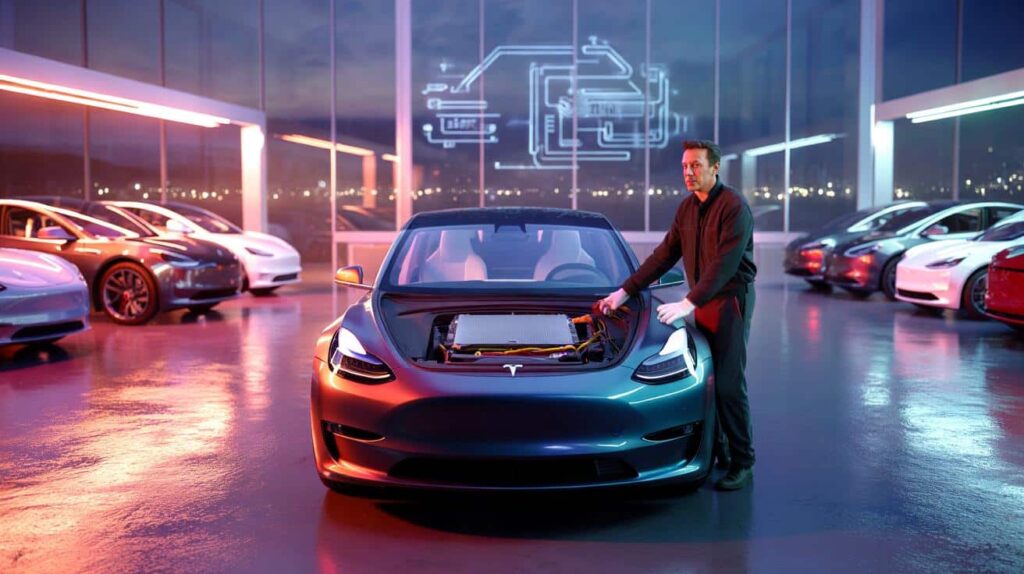
Tesla chief executive Elon Musk has finally acknowledged that thousands of cars sold as “Full Self‑Driving ready” will need new hardware, and that the upgrade process will be “painful and difficult” after years of bold promises and mounting frustration.
A decade of promises finally collides with reality
Since the mid‑2010s, Musk has repeatedly claimed that Tesla vehicles already on the road would one day drive themselves through a simple software update. Buyers paying thousands of dollars for the Full Self‑Driving (FSD) package were effectively betting that their existing car had all the necessary tech on board.
In a call with major shareholders at the end of January 2025, Musk broke from that storyline. He said that Tesla vehicles equipped with its “Hardware 3” computer will not be able to run the company’s upcoming autonomous driving software without a physical retrofit.
Cars sold for years as self‑driving ready will need new computers. The fix, Musk says, will be “painful and difficult”.
The admission undercuts one of Tesla’s key selling points: that you could buy a car today and unlock full autonomy tomorrow, paying upfront for a capability that would arrive later.
What Musk actually said about hardware 3
On the investor call, Musk acknowledged that customers who purchased FSD on Hardware 3 cars will have to be upgraded. He framed it as a tough but necessary step if Tesla wants to deliver the autonomous system it has been promising.
“We’re going to have to upgrade the Hardware 3 computer of people who bought Full Self‑Driving. It will be painful and difficult, but we’re going to do it.”
That sentence packs several implications. First, Tesla is formally admitting that Hardware 3, hyped in 2019 as the computer that would finally enable self‑driving, is not sufficient for the current vision of autonomy. Second, it hints at a costly and logistically complex retrofit programme, just years after a similar upgrade saga between Hardware 2, 2.5 and 3.
Déjà vu for long‑time Tesla owners
Owners with long memories will recall a familiar pattern. When Hardware 3 was rolled out in 2019, Tesla said drivers with Hardware 2.0 and 2.5 who had paid for FSD would be moved to the new chip. That process dragged on and sparked legal complaints, including claims of misleading advertising in several markets.
The new twist is that Hardware 3 itself now looks like a dead end for true autonomy, leaving a string of hardware generations behind a technology that has not yet matched the marketing.
What this means for Tesla customers
For Tesla owners who paid thousands of dollars for FSD, the big questions now are: Will they get the upgrade free of charge? How long will it take? And will their cars ever perform as promised?
While Musk has signalled that Tesla intends to upgrade Hardware 3 cars, he has not given a detailed timetable or cost breakdown. For many owners, trust is already strained. Some have been waiting years under the assumption that their existing hardware was sufficient.
- FSD has been sold for years as a costly optional extra, especially in the US.
- Hardware 3 was marketed as the computer that would enable full autonomy.
- Hardware 4 is already shipping in new vehicles, with no true self‑driving yet.
- Regulators worldwide still treat Tesla systems as driver‑assist, not autonomous.
Tesla’s current production cars ship with “Hardware 4”, a more powerful computing platform. Yet even on those vehicles, fully autonomous capabilities remain unavailable. Customers who paid early for FSD are stuck in an uncomfortable position: they have funded the development of a product that still doesn’t function as originally advertised.
A slow‑motion credibility crisis
Musk’s comments hint at a company managing not just a technical overhaul, but the fallout from overpromising. The FSD brand has created expectations of robotaxis and hands‑off driving that the underlying technology has not yet met.
Specialist outlets and analysts note that Tesla appears to have learnt from past legal headaches, but the risk has not disappeared. If Tesla is forced to retrofit tens or hundreds of thousands of cars, the bill could run into the hundreds of millions of dollars globally. That is on top of any settlements or refunds from ongoing or future legal actions.
Tesla may have to spend heavily just to keep pace with promises made years before the technology was ready.
The stakes are high. Self‑driving has long been framed by Musk as the key to Tesla’s valuation, with optimistic predictions of robotaxi fleets and software profits outstripping car sales. Each delay chips away at that story, while competitors quietly advance with more modest but steadily deployed driver‑assist systems.
Where hardware 4 fits into the picture
Today’s new Teslas leave the factory with Hardware 4, featuring more computing power and expanded camera coverage. On paper, it is better suited to real‑time decision‑making in complex traffic.
Yet even with this upgrade, “full” self‑driving remains absent. The cars run advanced driver‑assist features, where the human must stay alert and responsible at all times. That’s a long way from the level Musk was talking about in past investor calls, where he forecast millions of self‑driving robotaxis on the road by the early 2020s.
For early adopters who paid upfront for FSD, this creates a moving target. Hardware 2 owners needed Hardware 3. Now Hardware 3 owners are told they will need a new computer again, while Hardware 4 drivers are still waiting for the headline feature to materialise.
How self‑driving levels actually work
A lot of confusion stems from the gap between marketing claims and technical definitions. Regulators and safety bodies usually refer to the SAE (Society of Automotive Engineers) levels of driving automation:
| Level | Driver role | What it looks like |
|---|---|---|
| Level 0 | Driver does everything | No automation beyond alerts |
| Level 2 | Driver supervises constantly | Systems like lane‑keeping and adaptive cruise, as in many Teslas today |
| Level 3 | System drives in limited conditions | Car can handle some situations, but hands‑off only in defined scenarios |
| Level 4 | System drives in set areas | Robotaxis in geo‑fenced zones, no human intervention in normal conditions |
| Level 5 | No driver needed | Full autonomy, anywhere, any time |
Despite its name, Tesla’s Full Self‑Driving is generally treated by regulators as Level 2, since the driver must keep attention on the road and be ready to take over instantly. That gap between branding and regulatory classification fuels criticism and legal pressure, especially when crashes occur.
Practical scenarios for owners caught in the middle
For a typical Tesla owner with Hardware 3 and paid‑up FSD, the coming years could play out in several ways:
- Tesla offers a free upgrade to a newer computer, but with long waiting times and limited service capacity.
- The company proposes a partial refund or transfer of FSD to a new car, as an incentive to trade up.
- Regulators or courts in some regions force clearer disclosures, potentially reshaping how FSD can be advertised.
An owner may also face a more subtle risk: by the time full autonomy reaches their car, newer models with better sensors and computing power could outperform it, reducing the practical value of the belated upgrade.
Risks and benefits for the wider industry
Tesla’s struggles around FSD have ripple effects beyond its own customer base. Other manufacturers are watching closely. The lesson is simple: overselling future capabilities can generate short‑term buzz but carry long‑term costs in trust, legal exposure and retrofit bills.
On the positive side, the mounting pressure may push Tesla and its rivals toward more transparent communication about what their systems can and cannot do. Clearer descriptions of driver‑assist features, realistic timelines for software updates, and honest discussions about hardware limits could reduce confusion and accidents.
For drivers, the safest approach today is to treat any “auto” feature, whether from Tesla or another brand, as assistance rather than a replacement. The tech can reduce fatigue and help in traffic, but it does not turn the car into a reliable robotaxi. Musk’s latest admission is a reminder that, for now, self‑driving remains a work in progress, not a promise fulfilled.