For many homeowners, the garden becomes a no-go zone until spring. Yet professional gardeners rarely face that same muddy disaster. They follow a set of simple, quite practical steps that keep grass walkable, even in the wettest months.
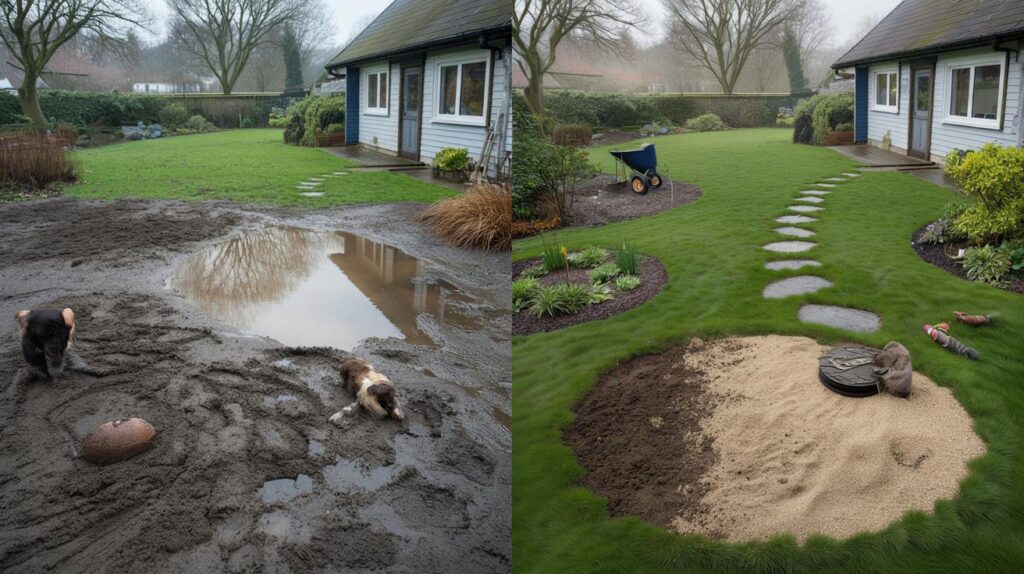
Why your lawn becomes a muddy mess in winter
Before changing anything, you need to know what you’re fighting against. Mud is rarely just “bad luck”.
Winter brings frequent rain, shorter days, and slower plant growth. Water sits on the surface for longer, especially on heavy clay or compacted soil. Add kids, dogs and wheelbarrows trampling the same routes every day, and the surface turns from turf to soup.
 Meteorologists warn early February may bring an Arctic disruption outside historical norms
Most muddy lawns are a combination of poor drainage, compacted soil and constant foot traffic in wet weather.
Gardeners look for three key warning signs:
- Puddles that remain on the lawn long after the rain stops
- Grass that feels spongy or squelchy underfoot
- Areas where grass has thinned out and bare soil is visible
Those clues usually point to one main culprit: water has nowhere to go. Once the soil pores are clogged, every new shower just adds to the mess.
The drainage tricks gardeners rely on
Regular aeration: tiny holes, big change
Ask any working gardener how they keep winter mud under control, and aeration will come up early in the conversation.
Aeration simply means punching holes into the lawn to let air and water move more freely through the soil. It breaks up compaction and gives roots oxygen. Gardeners use a mechanical aerator on large areas, but a garden fork will work on a small patch.
Thorough aeration once or twice a year can turn a swampy lawn into a surface that drains within hours rather than days.
For a standard garden, many professionals recommend:
- Autumn aeration before the worst of the rain
- A lighter pass in early spring if the soil feels heavy again
On very compacted ground, they sometimes remove small plugs of soil (core aeration) rather than just pricking holes. Those plugs are left to break down on the surface or raked away.
Feeding the soil, not just the grass
Another quiet trick: gardeners think about “soil structure” almost as much as they think about the grass itself.
When they talk about improving structure, they usually mean adding organic matter such as compost, well-rotted manure or leaf mould. Mixed into the top few centimetres of soil, this material loosens heavy ground and helps sandy soil hold moisture more evenly.
On a lawn that tends to flood, a typical approach is:
- Aerate the surface
- Spread a thin layer of fine compost or a compost–sand mix
- Brush or rake it so it falls into the holes and between the blades of grass
This slow, repeated treatment gradually creates a more open soil that drains better and resists compaction.
Quick fixes gardeners use after heavy rain
Sanding and temporary absorbent layers
When a client calls in a panic because the lawn is a bog before a party or a house viewing, professionals do reach for quick solutions.
Short-term fixes will not change your soil, but they can make a dangerous mud patch usable again in a few hours.
Common temporary measures include:
- Spreading sharp sand on small puddled spots to improve grip
- Adding fine gravel to create a more stable surface in high-traffic areas
- Using bark or wood chips along side paths or around play equipment
These materials soak up some of the surface moisture and give shoes something solid to bite into. Gardeners are usually clear with clients, though: this is first aid, not a cure.
Solid routes through the garden
Where footprints always follow the same line from the door to the shed or bin, gardeners often recommend putting in a proper path rather than fighting nature every winter.

Two popular options are stepping stones and stabilising grids.
| Solution | How it helps | Typical use |
|---|---|---|
| Stepping stones | Spread weight and protect grass roots under each step | Lightly used routes and decorative gardens |
| Stabilising grids | Plastic or resin cells filled with soil, gravel or grass that keep the surface firm | Driveways, dog runs, gateways and play areas |
For stepping stones, gardeners usually dig out about 8–10 cm of soil, add a bed of sand or fine gravel, level it, then lay the slab so the top is flush with the grass. That prevents strimmers and lawnmowers from catching on edges.
Letting plants do some of the work
Trees and shrubs that drink up moisture
In particularly wet gardens, professionals often bring in plants that thrive on damp roots. These species act like natural pumps, drawing up large amounts of water.
Common choices for soggy corners include:
- Willow varieties for very wet ground, away from pipes and foundations
- Alders near ditches or at the bottom of slopes
- Bog-tolerant birch or poplar species where space allows
These plants will not magically dry an entire garden, yet they can noticeably reduce standing water in targeted zones, especially over a few seasons as their root systems expand.
Accepting that not every spot wants to be lawn
One quiet strategy many gardeners use: they stop forcing grass to grow where it constantly fails. Instead, they replace the muddiest patches with something more suitable.
That might mean a gravel seating area, a bark-mulched play corner, or a bed of moisture-loving perennials and shrubs. The lawn area becomes slightly smaller but far easier to maintain.
Long-term protection against winter mud
Changing how you use the lawn
Gardeners pay close attention to how a space is used. Constant football matches in January, or the dog racing the same lap every day, will undo a lot of careful soil work.
Limiting traffic on saturated ground can matter as much as any tool or product.
Some practical habits professionals suggest:
- Use designated paths when the ground is visibly wet
- Rotate where children play ball so damage is spread out
- Set up a winter “sacrifice zone” for dogs, surfaced with gravel or bark
By reducing pressure on the most vulnerable patches, the lawn has a real chance to recover between downpours.
Installing proper drainage where needed
On some properties, especially those at the bottom of a hill or built on heavy clay, surface fixes only go so far. Gardeners then talk about proper land drainage.
This usually involves cutting narrow trenches, laying perforated pipes in a bed of gravel, and directing excess water to a soakaway, ditch or existing drain. It is a bigger investment and often carried out by landscapers rather than a regular maintenance gardener.
When done correctly, though, this kind of system changes a permanently wet lawn into a usable space across the year.
Extra insights before you start digging
Two terms come up a lot when professionals assess a muddy lawn: “compaction” and “clay content”. Compaction means soil particles are pressed tightly together so there’s little space for air or water. Clay content refers to how much fine, plate-like mineral is in the soil. High clay makes soil sticky when wet and hard when dry.
A simple home test helps: take a handful of moist soil and roll it into a sausage in your palm. If it forms a smooth, bendy “worm” that does not crack, you likely have a high-clay soil and should focus on aeration plus organic matter over several seasons.
It can also help to think in scenarios. If you know that every February your garden hosts a birthday party, or the dog gets restless, plan around those peak moments. Put in a firm route to the shed, set up a bark-covered dog area before the rains start, and aerate in autumn rather than waiting for the first puddles.
There is always a balance between appearance and practicality. A perfectly flat, show-garden lawn might not cope well with winter sports and pets. Gardeners often recommend a tougher grass mix, clear routes, and slightly more varied planting to spread the wear and manage the water. Once those pieces are in place, the shock of stepping out into a mud field each winter slowly fades away.