The first time I saw someone boiling lemon peel, cinnamon sticks and slices of ginger in a small saucepan, it was in a cramped kitchen that smelled like winter and old radiators. The steam fogged the single window, and the person stirring the pot swore it was their “secret weapon” for everything: bloating, sore throat, fatigue, even a bad mood.
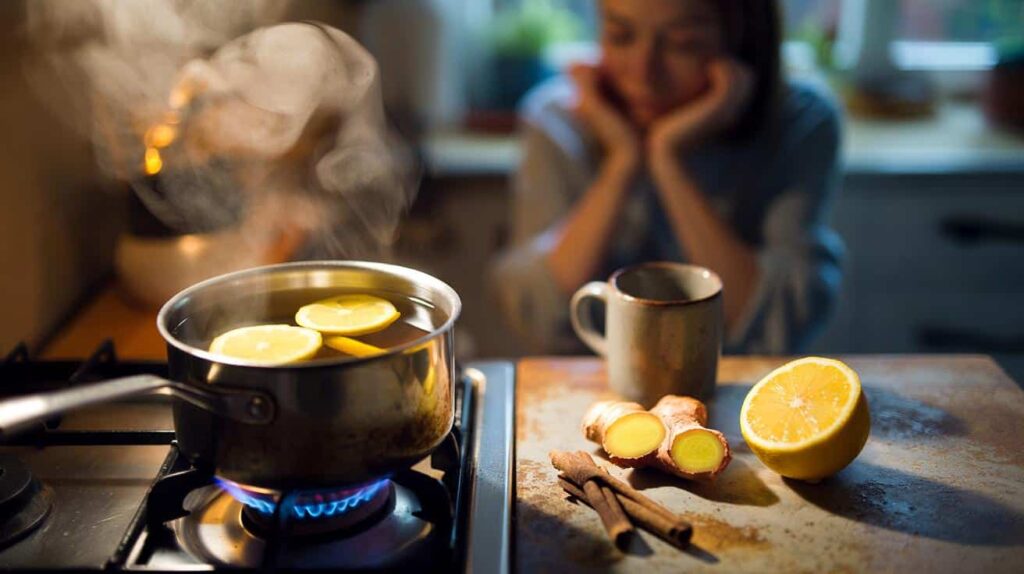
I remember the sound of the simmer, the clink of the spoon on the metal edge, and the way the scent of citrus and spice wrapped the room like a blanket.
It felt half like a home remedy, half like a small ritual of resistance against a tired body and a long day.

People don’t boil this mix just for the taste.
Why this strange trio is suddenly everywhere
You see the same recipe pop up on TikTok, in wellness Facebook groups, and on your aunt’s WhatsApp: lemon peel, cinnamon, ginger, boiled for a few minutes, then sipped like a magic potion. The photo is always the same too — a steaming mug, a slice of lemon balanced on the rim, maybe a cinnamon stick posing like a star.
Behind the aesthetic, there’s a real fascination. Lemon peel is sold as detox, cinnamon as fat-burning, ginger as immune-boosting. Together, they look like the Avengers of the herbal world.
The promise is seductive: relief, lightness, a “reset” for the body, all with three things you might already have in your kitchen.
Scroll long enough and you’ll find bold claims: “I lost 5 kilos with this drink,” “No more colds this winter,” “This cleaned my liver in a week.” A woman in her 40s films herself every night, pouring the golden liquid into a glass jar, explaining how this brew “changed her life.”
She talks about chronic bloating, heavy dinners, waking up swollen. After a month of drinking the mixture before bed, she says her digestion is calmer and her cravings are lower. The comments are full of people saying they’ll try it tonight.
That’s the power of these little kitchen rituals: they spread from friend to friend, screen to screen, faster than any scientific paper.
Underneath the hype, there are some real things happening in that pot. Lemon peel contains aromatic oils and antioxidants; ginger has compounds like gingerol that can help with nausea and mild digestive discomfort; cinnamon can play on blood sugar and has a comforting, warming effect.
Boiling them releases fragrance and flavor, and some of those molecules diffuse into the water. The result is a hot, spicy, slightly bitter drink that wakes up the senses and slows you down for ten minutes.
That pause alone already does something: you breathe, you feel the heat in your chest, you pay attention to your body again.
How people actually use this mix (and how to do it without overdoing it)
The usual method is simple. You take the peel of half an organic lemon (yellow part only if you dislike bitterness), a small piece of fresh ginger sliced thin, and half a cinnamon stick or a small teaspoon of ground cinnamon.
You drop it all into a small saucepan with about 300–400 ml of water. Bring it to a gentle boil, then let it simmer for 5 to 10 minutes over low heat.
Then you strain it into a mug. Some squeeze in a bit of fresh lemon juice at the end, others add a small spoon of honey once it’s not burning hot anymore.

People drink it in different ways. Some take a cup in the morning on an empty stomach, dreaming of a flatter belly. Others swear by a mug after a heavy dinner, to “help with digestion” and avoid feeling like a stone in bed.
There are those who only prepare it when a sore throat appears, or when they feel a cold coming on. They wrap their hands around the mug and just sit there, eyes closed, letting the steam hit their face.
Let’s be honest: nobody really does this every single day. Life gets in the way, work runs late, and sometimes you just grab water and fall into bed.
The biggest trap with this kind of drink is expecting it to do what no drink can do: erase an unbalanced lifestyle, a lack of sleep, permanent stress. When people get disappointed, it’s often because they secretly hoped for a shortcut.
There’s also the risk of overdoing it — drinking pot after pot “for detox” and ignoring signals like heartburn or stomach irritation. Some people are sensitive to too much ginger or cinnamon, or they have conditions or medication that don’t go well with large amounts of these.
“A hot herbal drink is support, not a cure. It can help you feel better, but it doesn’t replace medical advice or a balanced life,” says one nutritionist who watches trends with both curiosity and caution.
- Use organic lemon if you’re boiling the peel.
- Start with small amounts of ginger and cinnamon.
- Avoid adding too much sugar or honey “to make it healthy.”
- Talk to a doctor if you’re pregnant, on medication, or have chronic issues.
- See it as a gentle ritual, not a miracle treatment.
What this ritual really offers, beyond the health claims
Boiling lemon peel, cinnamon and ginger is not just about molecules and metabolism. It’s a sign of something deeper: the need to regain a bit of control over how we feel, without a prescription, without a long wait at the doctor’s office, without another app to install.
We’ve all been there, that moment when your body feels heavier than your day, and you open the cupboard looking for something — anything — to feel a little lighter. This small brew answers that moment.
There’s a psychological side too that nobody puts on the recipe cards. You take a saucepan, you wait for the water to heat, you watch the steam. It slows your evening down, even if only by five minutes. Your phone is on the counter, far from your hand.
*Sometimes the real effect of these kitchen remedies is simply forcing us to hit pause.*
The drink becomes a transition: from the noise of the day to the quiet of the night, from the stress of work emails to the softness of a warm cup.
Scientifically, the benefits are modest but real in context: hydration, warmth, light stimulation of digestion, perhaps a tiny effect on nausea, a sense of comfort. **That’s not nothing**, especially compared to another late coffee or sugary drink.
Yet the magic doesn’t live only in the ingredients. It lives in the intention: taking care of yourself, listening to what your body is asking, trying something gentle before reaching for stronger solutions.
Some will keep this ritual for life. Others will move on to the next wellness trend. **What tends to stay is the idea that small, repeatable gestures can change how a day feels**, even if they don’t change everything.
| Key point | Detail | Value for the reader |
|---|---|---|
| What the drink really does | Gently supports hydration, warmth and digestion, with a mild comforting effect | Helps set realistic expectations and avoid disappointment or dangerous overuse |
| How to prepare it safely | Use organic lemon peel, moderate ginger and cinnamon, short simmer, minimal sweetener | Allows readers to test the ritual at home without falling into common mistakes |
| Where the real “power” lies | In the pause, the ritual, and the feeling of taking simple care of oneself | Invites readers to focus on sustainable habits rather than miracle promises |
FAQ:
- Can this drink really detox the body?Not in the way social media often suggests. Your liver and kidneys already handle detox. This mix may support hydration and digestion, which can help you feel lighter, but it doesn’t “clean” organs in a few days.
- Is it safe to drink every day?For most healthy adults, a small daily cup is generally fine, especially if ingredients are used in moderate amounts. People who are pregnant, on medication (like blood thinners), or with chronic conditions should talk to a doctor first.
- Does it help with weight loss?On its own, no. It may slightly reduce late-night snacking if it replaces sugary drinks or dessert, and the warm, spicy taste can bring a feeling of fullness. Real weight change comes from overall habits, not a single beverage.
- Can I drink it cold instead of hot?Yes, you can let it cool and drink it iced. The sensory effect is different, and you lose the soothing warmth on the throat and stomach, but some people prefer it chilled during hot weather.
- Can I use powdered ingredients instead of fresh?Yes, though the taste and intensity change. Ground cinnamon works well; powdered ginger is stronger and can be a bit harsh, so start with a small pinch. Dried lemon peel is possible, but fresh peel gives a brighter aroma.