The radiator was almost too hot to touch, humming faintly in the quiet of the living room. The little red light on the thermostat glowed stubbornly, proof that the boiler was working hard and the energy bill was silently growing. Yet my toes were still icy inside my socks, my shoulders tense, the kind of chill that creeps under your sweater and won’t let go.
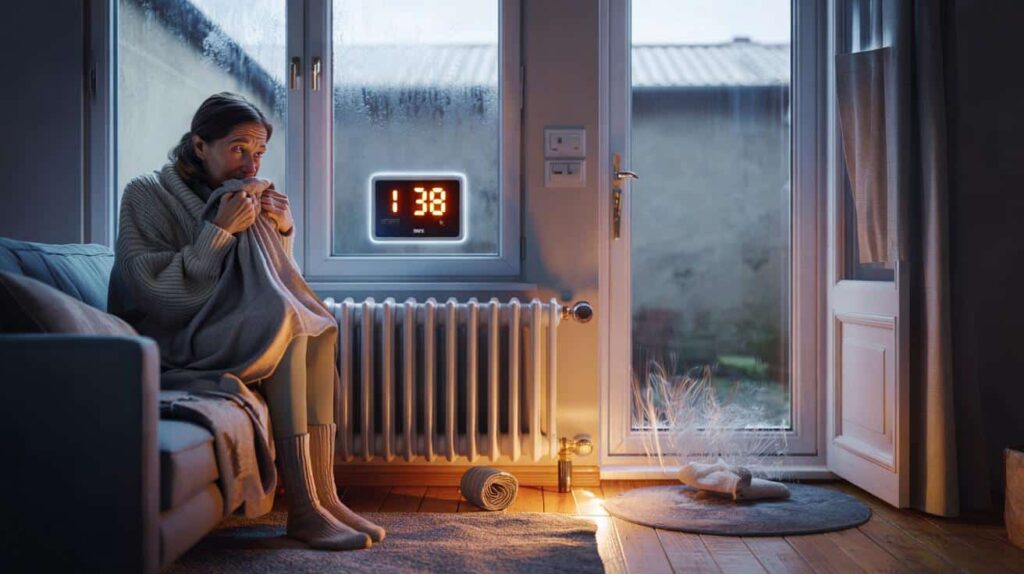
I walked from room to room, turning up the heat again, convinced the problem was the number on the screen. The higher it went, the colder I felt.
Something about that didn’t add up.

When the thermostat lies: why your home feels cold even when the heat is on
The scene plays out in thousands of homes every winter. You nudge the thermostat up a degree, then another, then one more for good luck. The boiler rumbles into action, radiators clank, warm air rushes from vents… and yet your body still whispers: “I’m cold.”
This disconnect between the number on the wall and the feeling in your bones is not just bad luck. It’s a clue. A sign that your home’s comfort has less to do with raw temperature and more to do with how your space actually holds, moves, and loses heat.
Take the case of Laura, who lives in a 1970s semi-detached house near Manchester. She spent last winter chasing warmth with her thermostat, sometimes pushing it up to 23°C just to stop shivering on the sofa. The heating engineer she finally called out expected a faulty boiler. Instead, he found something else.
Her radiators worked perfectly. The real culprits: thin loft insulation, draughts around old windows, and a north-facing living room with icy external walls. “You’re not heating the room,” he told her. “You’re heating the street.” Her bill? Up by 40% in one year, for a comfort level she described as “permanently almost-warm”.
That’s the quiet trap many of us fall into. We trust the thermostat like a magic dial: more heat equals more comfort, end of story. Except your body doesn’t read numbers; it reads surfaces, air movement, and humidity. Cold walls radiate chill back at you, even in a 21°C room. Tiny draughts brush your skin and your brain interprets it as “I’m losing heat, grab a blanket.”
*Thermal comfort is really a conversation between you, the air, the walls, the floor, and even your windows.* And when that conversation is out of sync, no amount of extra degrees will fully fix the feeling.
The hidden enemies of warmth: cold surfaces, sneaky draughts, and dry air
If you want to feel warm without roasting your bank account, you have to stop thinking only in terms of air temperature. The air can be at 21°C, but if your walls and windows are cold, your body will still radiate heat toward them, like standing next to a block of ice. You lose warmth without noticing, just a slow, steady drain.
First step: look, then feel. Stand barefoot on your floor. Put your hand on the external wall. Sit near the window for five minutes. These small checks reveal what your thermostat hides: cold surfaces and draughty spots that steal heat as fast as you add it.
Now picture this: a couple in a city apartment, fifth floor, big beautiful windows that sold them on the place. They kept the heating at a respectable 20°C, but every evening on the sofa turned into a tug-of-war over the blanket. The culprit wasn’t the boiler, it was the giant single-glazed window behind them.
An energy consultant measured a temperature of 13°C right on the glass. Their bodies were constantly radiating heat toward that cold surface. Once they added heavy curtains and a simple insulating film over the glass, they were able to drop the thermostat by 2 degrees and still feel warmer. The boiler worked less; their comfort went up.
The other big saboteur is air movement. Not the obvious gale under an old front door, but small draughts around sockets, letterboxes, floorboards, and window frames. Your skin is extremely sensitive to moving air; even a slight current makes you feel colder than the thermometer suggests.
 Excessive Rainfall Could Transform The Sahara And Upend Africa’s Delicate Balance, Study Warns
Then there’s humidity. Very dry air makes your skin and mucous membranes lose moisture faster, and your brain tags that sensation as “cold” too. A home at 21°C with 30% humidity often feels chillier than a 19°C room at 45% humidity. The plain truth is: heating is only half the story, the rest is how well your home holds onto that heat and how gently it wraps it around you.
What experts actually do at home: small changes, big comfort gains
Energy specialists don’t start by cranking the thermostat; they start by chasing leaks. A simple “draught hunt” can change everything. On a windy day, walk slowly around your home with the back of your hand near window edges, door frames, and skirting boards. Feel that tiny cold kiss of air? That’s where your money is flying out.
Use self-adhesive foam strips for windows, draught excluders for doors, and brushes or covers for letterboxes and keyholes. These aren’t glamorous fixes, but they’re the ones that quickly shift your home from “always a bit chilly” to “finally cosy at the same temperature.”
Then turn to surfaces. If external walls feel cold to the touch, even basic tricks help. A thick rug on a bare floor changes how warm your body feels when you walk through the room. Moving the sofa a few centimetres away from an icy wall can cut that creeping cold on your back.
Heavy curtains that close fully at night, especially over old windows, are like putting a coat on your home. Just remember to open them during the day to let the sun warm the room for free. Let’s be honest: nobody really does this every single day with perfect timing, but doing it most days still shifts the balance.
Experts often repeat the same core message: stop trying to heat the whole volume of your home evenly at all times, and start thinking in zones and routines.
“People imagine a perfectly heated house as a constant 21°C everywhere,” explains building physicist Dr. Michael Harris. “Real comfort is more about a warm core zone where you sit, sleep, and work, plus decent control over draughts and surfaces. Once you fix that, you can often drop the thermostat and feel better.”
- Focus on the “comfort bubble”: Prioritise the spots where you actually sit and stay still — sofa, desk, bed — and make those areas warm and protected from draughts.
- Use layered heating: Combine central heating with a small, efficient local heater or heated throw for short bursts when you’re inactive.
- Balance humidity: A bowl of water near a radiator or a small humidifier can lift humidity slightly, making a lower temperature feel more comfortable.
- Check your radiator health: Bleed them once or twice a season, remove furniture blocking them, and clean off dust so they can actually emit heat into the room.
- Time your warmth: Program the heating to start a little before you wake up or get home, instead of blasting it later to “catch up.”
Rethinking what “warm” really means at home
Once you start seeing your home not as a fixed box with a magic thermostat, but as a living shell that leaks, breathes, and reacts, the whole story of “why am I still cold?” changes. You realise the problem isn’t you being fussy or “always chilly”; it’s a building that’s silently working against you.
Your body doesn’t want a perfect number on the wall. It wants stable air, gentle humidity, and surfaces that don’t suck the heat out of you like a sponge. That’s why one old house can feel cosy at 19°C while another feels icy at 22°C.
The most interesting shifts often come from small, almost boring tweaks: a rolled towel at the bottom of a door on a windy night, a thicker curtain, a rearranged sofa, one less bare floor. Not massive renovations, just micro-adjustments that move your home closer to how your body actually experiences warmth.
You might even find yourself turning the thermostat down a notch, not to save money — though you will — but because you genuinely feel more held by your own space. And that moment, when you realise comfort is something you can shape rather than chase, changes the whole winter.
| Key point | Detail | Value for the reader |
|---|---|---|
| Thermostat ≠ comfort | Feeling warm depends on surfaces, draughts, and humidity as much as air temperature | Helps explain why turning up the heat alone doesn’t solve the “always cold” problem |
| Fix leaks first | Draught-proofing doors, windows, and floors reduces heat loss and cold air movement | Quick, affordable actions that immediately boost comfort and cut bills |
| Create a comfort zone | Prioritise warmth where you sit and sleep, use textiles and smart heating routines | Makes the home feel cosier at lower temperatures, without expensive renovations |
FAQ:
- Why do I feel cold at 22°C when others are fine?Your body might be more sensitive to air movement or cold surfaces. If your walls, floor, or windows are cooler than the air, you’ll radiate heat to them and feel chilly, even at a “normal” temperature.
- Is my boiler too small if I’m always cold?Not necessarily. Many “cold” homes actually have decent boilers but poor insulation and draught problems. A professional assessment can check if the system size is right before you spend money upgrading it.
- Do smart thermostats really make a difference?They can help by timing the heating better and avoiding big swings, which your body hates. That said, a smart thermostat can’t fix draughts or cold walls — it just manages the heat you already have more intelligently.
- What room temperature do experts recommend?Most experts suggest around 19–21°C for living spaces, slightly cooler for bedrooms. The right number for you also depends on clothing, activity level, and how well your home holds heat.
- Are small electric heaters a bad idea?Used as a main heating source for long periods, they can be expensive. Used selectively — for a short time in a specific corner or room — they can complement central heating and help you feel warm without overheating the entire home.