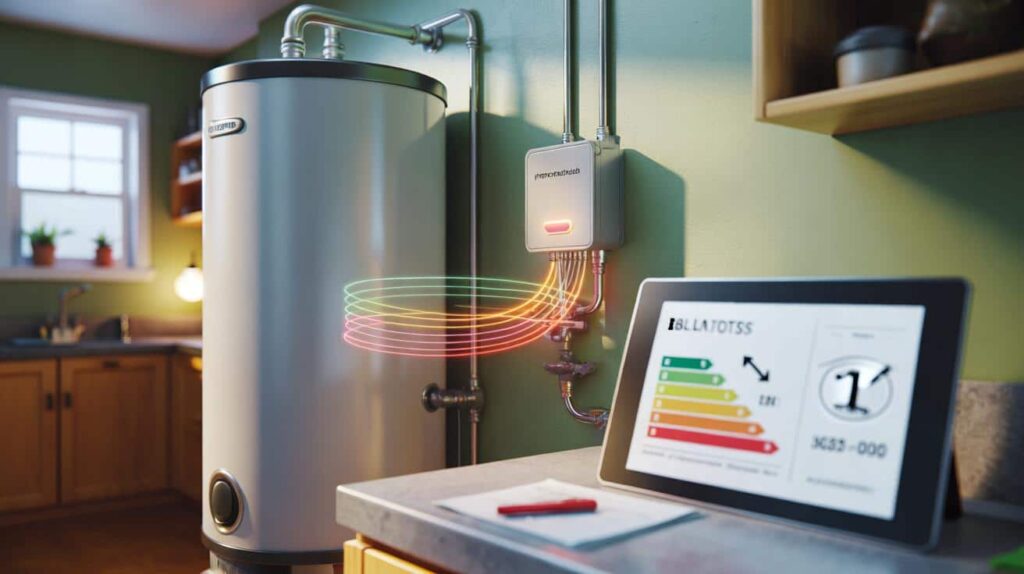
Across the UK, Europe and the US, the humble electric water heater has become a quiet budget problem, running in the background and burning through power even when nobody is showering or washing dishes. A new wave of small, inexpensive control boxes promises to change that – not by cooling your water, but by deciding when it gets heated.
Why your water heater quietly eats electricity
An electric water heater is essentially a large, insulated kettle with a thermostat. It keeps a tank of water hot all day, ready at a moment’s notice. That comfort comes at a price.
Once the water reaches its set temperature, the heater doesn’t simply stop forever. The tank slowly loses heat, so the unit cycles on and off to maintain the same temperature, even at 2am when no one is using it.

In many homes, water heating is the second‑largest use of electricity after space heating and cooling.
The way the heater is controlled makes a huge difference. Most systems have three basic modes:
- Always on (manual “on” or forced mode): the heater warms water whenever the thermostat calls for it, day and night, regardless of tariffs or usage.
- Automatic with off‑peak contactor: common in some European homes, the heater is allowed to run mainly in cheaper “off‑peak” hours.
- Off: the heater is disabled, which cuts consumption but also means cold showers if you forget to switch it back.
That automatic mode can help, but it is often crude. It doesn’t know your real schedule, or if you’re away for a long weekend. This is where the small control box comes in.
The small box that changes everything: a dedicated water heater programmer
The device many households are now adopting is a programmable controller or timer switch dedicated to the water heater. It does not heat water itself. Instead, it decides when the heater receives power.
The principle is simple: you choose specific time slots when the water heater is allowed to run. The box cuts the power the rest of the time. The water inside the tank stays hot thanks to insulation, so you still get hot water, just with fewer, smarter heating cycles.
This box does not lower the thermostat setting; it reshapes the heating schedule so the same temperature costs less.
How it actually works hour by hour
Imagine a 200‑litre electric tank in a family home:
- You program the box to power the heater from 4am to 6am and again from 5pm to 7pm.
- During these slots, the thermostat works as usual, heating water to, say, 55–60°C.
- Outside those periods, the heater is electrically off, even if the water cools slightly.
- The tank’s insulation slows heat loss, so water remains comfortably hot through the morning and evening.
The result: instead of dozens of tiny top‑ups all day, the heater runs in a few concentrated bursts, often during cheaper tariff periods if your contract offers them.
Why installing a programmer can cut your bill
Energy savings come from two main effects: reducing needless reheating and shifting consumption to cheaper hours where possible.
On typical electric tariffs, a good programming schedule can trim water heating costs by 15–30%, without changing your daily habits.
Key benefits for households
- Less “idle” heating: no more reheating a tank at midday if everyone is at work or school.
- Better use of off‑peak rates: if your supplier offers cheaper night-time electricity, the box can restrict heating to those periods even when your default wiring doesn’t do it automatically.
- Fewer start‑stop cycles: the heater’s resistance element works less frequently, which can extend the life of the appliance.
- Fine‑tuned comfort: you can schedule extra heating before guests arrive or reduce it during holidays.
For people who travel often or work shifts, the ability to “tell” the heater when they are actually home may be the biggest gain. You stop paying to maintain a hot tank when you’re away.
Choosing the right type of control box
Not all devices are the same. Some are simple mechanical timers, others are digital or even app‑connected. The right choice depends on your installation and how much control you want.
| Type of programmer | Main features | Best for |
|---|---|---|
| Mechanical timer | Rotary dial with pins; 15–30 minute steps; cheap, robust | Simple daily schedules, fixed routines |
| Digital timer | LCD screen; multiple programs; weekly planning | Families with varying weekday/weekend patterns |
| Connected smart relay | App control, remote changes, consumption tracking | Tech‑savvy users, second homes, frequent schedule changes |
Whatever the style, one technical point matters: power rating. A domestic electric water heater typically draws 2,000 to 3,000 watts. The control device must be rated to handle that load continuously and safely.

Installation: when you can do it yourself and when you shouldn’t
Before buying anything, you need to know how the heater is wired.
Check how your heater is connected
- Plugged into a standard wall socket: in many countries this is already borderline for such a powerful appliance. Adding a portable plug‑in timer is usually not recommended, as these devices are often undersized for the current.
- Hard‑wired to the electrical panel: this is the ideal case. You can install a DIN‑rail timer or smart relay directly on the dedicated circuit, next to the breaker.
In a modern consumer unit, the electrician usually labels the breaker that supplies the water heater. A compatible timer can be added in series with that breaker to control when current flows to the tank.
Anyone unsure about handling mains wiring should call a qualified electrician; a short visit for installation is often cheaper than a repair after a wiring mistake.
Basic steps a professional will follow
- Switch off the main power and verify there is no voltage on the heater circuit.
- Mount the programmer on the rail or in an approved enclosure.
- Connect the line and neutral from the breaker to the timer, then from the timer to the heater circuit.
- Program the desired time slots according to the household’s habits.
- Restore power, test a full heating cycle, then fine‑tune timings if needed.
Extra tricks to trim hot water costs further
The control box works best when combined with a few practical adjustments around the house. None of these require major renovation.
- Set a sensible temperature: 55–60°C is enough for hygiene and comfort in most cases. Above that, energy use rises and limescale builds up faster.
- Maintain the cylinder: descaling every two to three years keeps heating efficiency high, especially in hard‑water regions.
- Limit flow at taps and showers: aerators and eco‑shower heads cut hot water volume while keeping a satisfying spray.
- Insulate hot water pipes: foam sleeves are inexpensive and reduce heat loss when water travels through garages, lofts or basements.
Combined with smart scheduling, these small tweaks can push savings well beyond what the control box delivers on its own.
What real savings look like in practice
To get a feel for the impact, take a typical 3 kW electric heater in a family home. Suppose it currently runs the equivalent of three hours per day spread out in short bursts.
At an average electricity cost of £0.30 per kWh, that’s:
- 3 kW × 3 hours = 9 kWh per day
- 9 kWh × £0.30 ≈ £2.70 per day, or more than £80 per month
By tightening the schedule and preventing idle reheating, a 20% reduction in runtime is realistic, cutting the monthly water heating portion by roughly £16. If you can shift the bulk of that use into cheaper off‑peak hours, the financial gain grows again.
Key concepts: standby losses and stratification
Two technical ideas help explain why the box works so well.
Standby losses are the small but constant heat leaks from the tank to the surrounding air. Even a well‑insulated cylinder loses a few degrees across the day. Every time the thermostat compensates, it burns another bit of electricity.
Stratification is the layering of hot water at the top and cooler water at the bottom of the tank. When you use a bit of hot water, the incoming cold stays mostly at the bottom at first. The hotter upper layer means you often don’t need to reheat immediately after each use, which suits scheduled heating very well.
When a control box makes the most sense
Households on time‑of‑use tariffs stand to gain a lot: shifting most water heating to off‑peak hours can make a noticeable dent in bills. The same goes for people with rooftop solar, who may choose to align heating windows with midday sunshine peaks rather than overnight tariffs.
Tenants in older flats with basic electric cylinders can also benefit, provided the landlord approves changes to the electrical setup. In those cases, clear documentation of the device’s rating and safety certifications helps reassure building managers.
For anyone feeling squeezed by rising bills, this small box offers an unusually direct lever: it leaves comfort intact, keeps the temperature you’re used to, and focuses purely on when energy is consumed. For many homes, that timing shift is enough to turn the water heater from a silent money pit into a controllable appliance again.