The first time I saw someone stomp across their hallway to slam a vent shut, it was my neighbor, wrapped in a fleece blanket and muttering about the gas bill. The guest room door was already closed, the light off, the bed perfectly made. “No one’s sleeping in here,” she said, crouching down to twist the metal grille. “Why would I pay to heat it?”
I remember the soft metallic click, the kind that feels like you just outsmarted the system. One flick of the wrist and boom: money saved, right?
Except that same winter, her furnace started making a low, angry rumble. And the HVAC tech who came out had a very different story about those “money-saving” closed vents.
The trick that seems clever might actually be quietly working against you.
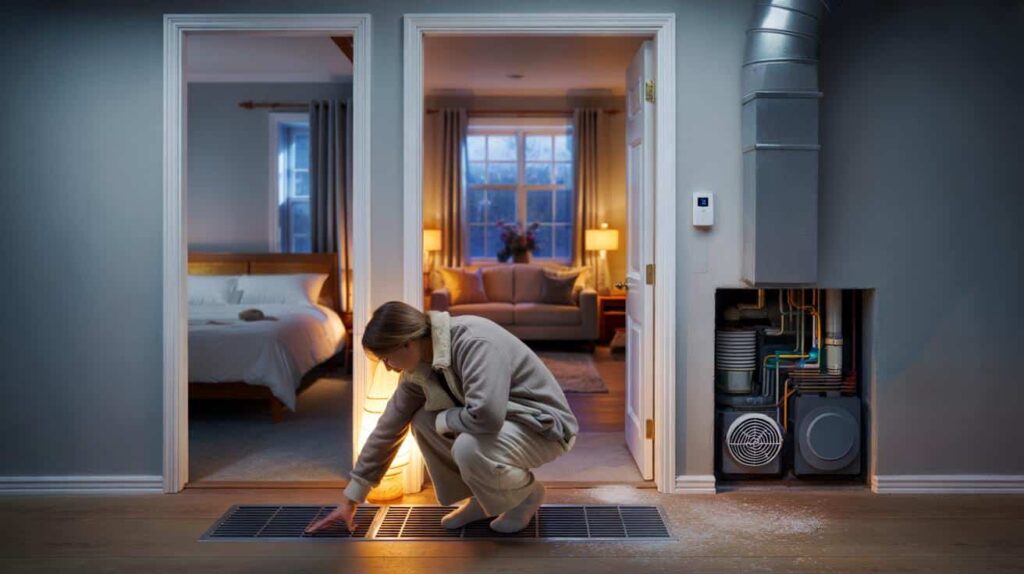
Why closing vents feels smart when the bills start climbing
When your heating bill jumps overnight, your brain starts scanning the house for “waste.” Empty rooms suddenly look suspicious. You walk by the unused office, the storage room, the guest bedroom that hasn’t hosted anyone since 2022, and you feel that warm air sliding under the door like dollar bills floating away.
So you do what countless people quietly do every winter: you twist the vent closed in those rooms and feel a little rush of satisfaction. The heat should now “focus” on the rooms you care about. The logic feels clean and simple, almost too obvious to question.
That’s exactly why this hack keeps spreading.
Talk to people and you’ll hear the same story. A Reddit thread with thousands of upvotes. A TikTok filmed in a dim hallway, someone narrating, “You’re literally heating rooms you don’t use, stop doing this.” Friends whispering, “Oh yeah, I close half my vents and my bill dropped.”
It sounds like a quiet rebellion against the energy companies. The part no one shares is what happens three months later. The blower gets louder. One room turns icy while another turns weirdly stuffy. A technician comes out, opens the furnace, and shakes their head in that way that makes your stomach drop before you even hear the price.
That’s the part that doesn’t go viral.

From the HVAC side, the story is very different. Most modern systems are designed for a specific airflow based on your ductwork and the number of vents. When you start shutting vents, you’re not “telling the heat where to go,” you’re choking the system. Pressure inside the ducts climbs. The blower motor works harder and hotter. Small air leaks get worse. Heat exchangers face uneven temperatures.
Over time, that can shorten the life of your furnace and quietly chew through the savings you thought you were generating. The trick that feels smart is playing tug-of-war with the physics that keep your system balanced.
The right way to “not heat” the rooms you don’t use
If you’re staring at that empty room thinking, “I don’t want to pay for this,” you’re not wrong. The instinct is solid. The tactic just needs a tweak. Instead of cranking vents fully closed, think about dialing things down, not slamming them off.
Most pros suggest only partially closing a small number of vents, and only in rooms that aren’t truly sealed off. Aim for a gentle reduction in airflow, not a total shutdown. A quarter turn. Half at most.
Pair that with a door that stays mostly closed and suddenly you’re nudging the balance, not breaking it.
Another quiet hero in this story: zoning and thermostats. If you have a two-story house and one thermostat downstairs, odds are the system is already struggling to heat evenly. Before playing whack-a-mole with vents, check if your thermostat sits near a drafty door, a sunny window, or a heat source. That tiny detail can skew the whole house.
A programmable or smart thermostat, set a couple of degrees lower at night or when you’re out, usually saves more money than attacking vents. Let’s be honest: nobody really does this every single day perfectly, but even half-consistent scheduling can beat the “closed vent” method in real-world savings.
The HVAC techs I’ve spoken with aren’t anti-savings. They’re just tired of being called in after a season of DIY airflow “hacks.” One of them told me:

“I walk into homes where five, six vents are shut tight. People are proud of it. They think I’m going to high-five them for being efficient. Then I’m the bad guy saying their system’s been straining all winter.”
*The plain truth is: the system cares about balance, not your floor plan.*
If you really want to cut costs without stressing your furnace, focus on low-drama moves that HVAC pros quietly love:
- Seal drafts around windows and doors before touching any vents
- Add door sweeps to little-used rooms to keep them cooler without strangling airflow
- Use thick curtains in rooms you don’t use to slow heat loss
- Keep furniture and rugs from blocking returns and main supply vents
- Have ducts inspected if some rooms are wildly hotter or colder than others
The trick, the tension, and what happens next winter
There’s a kind of low-key tension between how homeowners think about heat and how HVAC systems actually move air. One side is emotional and visual: I see a vent blowing into an empty room, I feel waste. The other side is invisible: static pressure, duct design, blower curves. You can’t see any of that from your hallway in a bathrobe.
That’s why this “close the vents” habit is so sticky. It matches what we see, not what the system feels. **And that gap is where money gets lost without you noticing.**
You might still decide to tweak a vent here or there. You might look at that unused room and think, “I’m okay with a little risk if the bill drops.” People do it every winter and most systems don’t explode. Yet once you understand that your furnace and ducts were designed as a whole, the question changes. It’s less “How do I shut rooms off?” and more “How do I help the system do its job with less waste?”
That’s a quieter approach. Less viral, more durable.
Next time you feel that wave of frustration opening the gas or electric bill, you’ll probably still glance at those vents. You’ll still think about closing them. Maybe you’ll only nudge them instead. Maybe you’ll grab a caulk gun, or finally schedule duct sealing or a thermostat upgrade. Maybe you’ll tell a friend, “Actually, blasting vents shut isn’t the magic trick people think.”
And when the furnace kicks on in the middle of the night, humming instead of straining, you’ll know your house isn’t playing tug-of-war with itself just to keep you warm.
| Key point | Detail | Value for the reader |
|---|---|---|
| Whole-system design | HVAC systems are sized for specific airflow across all vents and ducts | Helps explain why fully closing vents can backfire long term |
| Partial, not total closure | Lightly throttling a small number of vents is safer than shutting many completely | Offers a realistic way to act on the “don’t heat empty rooms” instinct |
| Better savings levers | Smart thermostats, sealing drafts, and duct work usually cut bills more reliably | Gives readers more effective alternatives to risky viral “hacks” |
FAQ:
- Is it ever okay to close a vent completely?In a typical central forced-air system, fully closing one or two vents probably won’t break anything, but closing several can cause pressure and comfort issues. Most pros prefer partial closure over total shutoff.
- Why do some rooms overheat if I don’t close the vent?Often it’s duct design, distance from the furnace, or poor balancing. An HVAC contractor can adjust dampers in the ducts or rebalance airflow far more safely than random vent-closing.
- Will closing vents reduce my energy bill at all?Sometimes people see small short-term savings, especially in leaky houses, yet those gains can disappear if the furnace or blower wears faster or runs less efficiently under high pressure.
- What’s safer than closing vents to cool unused rooms?Keep doors mostly closed, use thick curtains, seal drafts, and slightly lower the thermostat setpoint. For bigger changes, look into zoning or a separate system for rarely used spaces.
- Do heat pumps have the same issue with closed vents?Yes, heat pumps also rely on proper airflow. Choking vents can hurt efficiency and stress components, sometimes even more than with gas furnaces because heat pumps are very airflow-sensitive.