The first bird lands before the kettle has even finished boiling. A coal tit, light as a leaf, bouncing on the cheap plastic feeder you picked up in a February sale “just to see what happens.” Two more follow, then five, then a chaotic flutter of wings and tiny arguments over the last peanut crumb. You stand at the window, mug in hand, and feel that odd, guilty warmth: they came back. Again. Because of you.
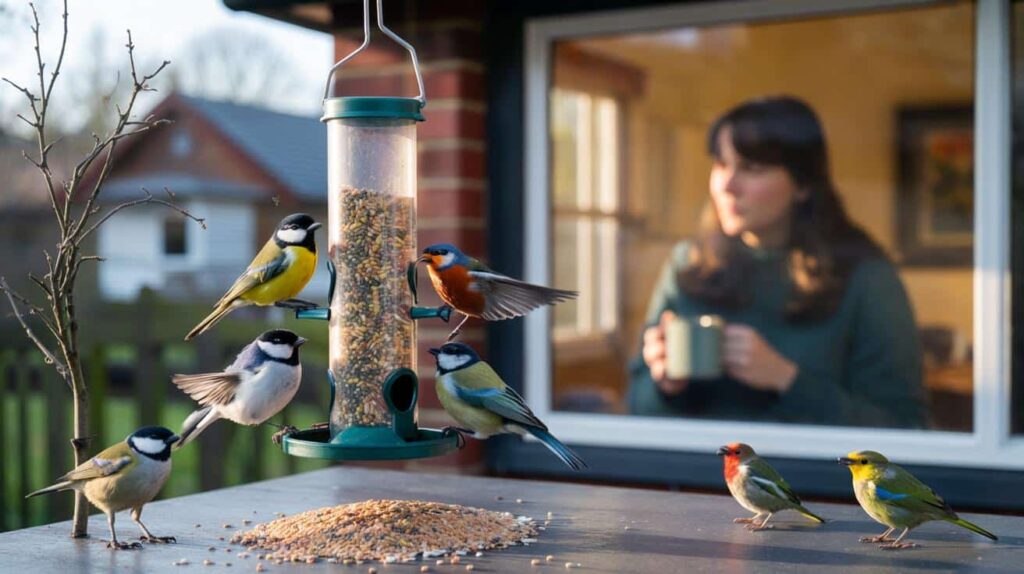
By the end of the week, the feeder is a full-blown habit, a live show just outside the glass. Only now, your phone is buzzing with a different kind of noise: angry posts, worried comments, warning labels about “emotional manipulation of wildlife for entertainment.”
The birds keep coming.

The doubts do too.
Cheap February feeders and the daily bird show
Across colder regions, the quietest month of the year has developed an odd little ritual. Supermarkets and discount chains roll out bargain bird feeders every February, stacked near the entrance where the grey sky feels closest. People grab them on impulse with frozen pizza and budget tea, pulled in by photos of robins and blue tits and a promise of “guaranteed daily visitors.”
It works. You hang the feeder, fill it with low-cost seed mix, and wait. The magic is that you don’t have to wait long. The magic is also the problem.
Spend one morning watching a popular city park and you can see the pattern. A retiree in a wool hat refills a £3 plastic tube with sunflower hearts from a bargain bag. A young couple sets up an entire “bird bar” on the balcony: one feeder for fat balls, one for seeds, one for peanuts. Across the path, a student points her phone at a robin, filming for TikTok as it hops toward a pile of cheap mealworms.
By lunchtime, dozens of birds know the route. They bounce from balcony to balcony, tree to fence to feeder, like commuters who’ve memorised the bus timetable. They’re not really wild visitors anymore. They’re regulars.
This is where the skeptics jump in. Ecologists warn that constant low-grade feeding with poor-quality mixes can skew bird behaviour, dull natural foraging skills, and cluster species in tiny spaces where disease spreads faster. Ethicists go further, calling these bargain feeders “emotional traps” that hook humans first.
Because once you’ve watched a robin land every morning at 8:12, skipping the visit starts to feel like letting someone down. You bought the feeder for fun. Suddenly, you’ve accidentally signed up for a relationship.
Between kindness and control: feeding without fooling yourself
There is a way to hang a feeder without turning it into a tiny stage. It starts with one simple shift: feed to support birds, not to guarantee your own entertainment. That means choosing quality over constant spectacle.

Instead of 24/7 refills, think in rhythms. Offer food in the harshest spells of winter, at dawn and dusk on the coldest days, and gradually ease off as natural food sources return. Let the birds keep their wild routines, their long pauses, their time off-screen. *Not every branch needs to be a front-row seat.*
A lot of people fall into the same well-meaning trap. They buy the cheapest mixed seed, often bulked with wheat and fillers that small garden birds barely touch. Then, when the feeder isn’t swarming like a nature documentary, they top it up again, or move it, or throw out “old” food that was never eaten. The whole thing becomes a kind of anxious performance.
We’ve all been there, that moment when you watch an empty feeder and feel weirdly rejected. The emotional script flips so quickly: from “I’m helping” to “Why aren’t they coming?” Then, when they finally appear, you feel rewarded. That’s when you know the hook isn’t just in the birds. It’s in you.
Bird carers and researchers have started pushing back against the guilt and the hype.
“Feeding birds is not evil,” says one urban ecologist I spoke to, “but designing products that promise guaranteed daily visits plays directly on human attachment. That’s not conservation. That’s marketing.”
So what can you do, if you still want that daily flutter of wings without turning into a puppet master?
- Choose one or two feeders, not an entire “bird buffet.”
- Use better food in smaller amounts: sunflower hearts, quality seed, seasonal fat balls.
- Give birds cover: bushes, hedges, or a tree nearby so they can come and go safely.
- Skip the emotional language in your head: they are wild animals, not guests you’re hosting.
- Leave gaps. Some days, let the feeder stay empty and watch what they do instead.
What we really want when we hang a feeder
Behind the argument about cheap February feeders sits something more fragile: loneliness, curiosity, the need to feel stitched into the living world. The feeder is small, but the feeling it carries is not. You hang a £4 plastic tube and suddenly your bare patio has a heartbeat. February doesn’t feel quite so endless. Your kitchen window becomes a place, not just glass.
Let’s be honest: nobody really does this every single day. People oversleep, go away for weekends, forget to buy seed. The birds adapt, wander, return or don’t. The real tension is less about strict routines and more about promises we quietly make to ourselves about the sort of person we are. Kind. Connected. Caring. Not the sort of human who treats wildlife like a rented show.
| Key point | Detail | Value for the reader |
|---|---|---|
| Limit the “show” mindset | Feed to support birds, not to guarantee daily entertainment | Reduces guilt and dependency on both sides |
| Prioritise quality over quantity | Use better seed and smaller portions, especially in harsh weather | Healthier birds, less waste, more natural behaviour |
| Keep some wildness intact | Allow feeder-free days and natural foraging | Respects bird autonomy and feels more ethically grounded |
FAQ:
- Is feeding birds with cheap seed mixes really harmful?Not always, but low-quality mixes often contain fillers birds barely eat, which can lead to waste, mould, and crowded feeders where disease spreads. Better to offer smaller amounts of good-quality food.
- Are we “emotionally manipulating” birds when we feed them?The birds respond to food, not feelings. The emotional manipulation is mostly targeted at humans through marketing that promises guaranteed daily visits and constant “shows.”
- Should I stop feeding birds altogether in February?Not necessarily. Winter can be a tough time, and supplemental feeding can help. The key is to avoid total dependence: keep portions realistic, and don’t treat birds like on-demand entertainment.
- How often is it okay to refill my feeder?During cold snaps, once a day with modest amounts is usually enough for a garden feeder. If food is vanishing within an hour or sitting untouched for days, adjust the amount.
- What’s the most ethical way to enjoy birds up close?Combine occasional, thoughtful feeding with habitat: native plants, hedges, water, and quiet observation. That way, birds are choosing your space as part of a wider territory, not just because you’ve built a snack machine.