In a quiet corner of the garden, hidden under leaves and twigs, a silent workforce is transforming waste into growth.
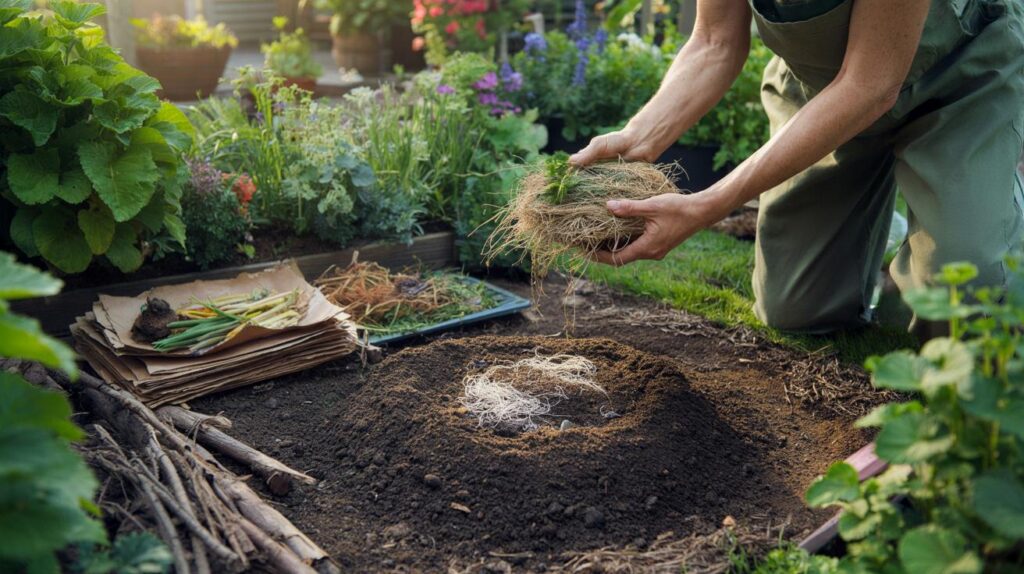
Instead of hauling kitchen scraps to a plastic bin and turning rotting piles with a fork, some gardeners are letting the soil itself take charge. By creating a simple, undercover habitat for decomposers, they’re skipping the compost bin altogether – and watching their borders explode with life.
From bulky compost bin to living soil factory
Traditional composting has a reputation for being worthy but hard work. You need space for a bin, you’re meant to turn the heap, watch the moisture, balance “greens” and “browns”, and then wait months. Many people simply give up or end up with a smelly, slimy mess.

A growing number of home gardeners are switching to a different approach: letting composting happen directly in the ground. No container, no lid, no regular turning. The idea is to create a patch where natural decomposers can thrive, then feed that spot with garden debris and small amounts of raw food waste.
This method turns a corner of your garden into a permanent composting zone, where worms and insects do the heavy lifting.
Instead of managing a heap, you manage a habitat. Once set up, the system runs largely on its own.
How in-ground composting actually works
Beneath the surface, a dense community of organisms is constantly breaking down organic matter. Earthworms shred and mix material, beetles and woodlice chew through tougher bits, and countless fungi and bacteria digest what remains. Their activity releases nutrients in a slow, steady way that plant roots can absorb.
In a bin, this process happens above ground and often needs help. In the soil, conditions tend to be cooler, more stable, and better balanced. Moisture is buffered, temperatures fluctuate less, and the microscopic life that drives decomposition already lives there.
Think of it as outsourcing composting to an underground team that never stops working and never sends you a bill.
Over a few months, layers of leaves and twigs collapse into a dark, crumbly material that smells like forest soil. Roots naturally move into this improved zone, and you start to see stronger growth in nearby beds.
Creating a small refuge for biodiversity
The first step is to choose a quiet, sheltered spot. It does not need to be large. Even a patch the size of a doormat can make a difference in a small garden.
Choosing the right location
- Pick a corner that does not get full midday sun all year.
- Avoid low points where heavy rain collects and causes puddles.
- Stay a short distance from house walls and fences to limit damp problems.
- Keep it accessible enough so you can drop leaves and prunings there easily.
Once you have the spot, the goal is to build a loose, layered pile that invites different species to settle in.
Layering the materials
An easy way to start is with three simple layers:
| Layer | What to use | Role in the system |
|---|---|---|
| Base | Small branches, twigs, chopped stems | Creates air pockets and channels for worms and beetles |
| Middle | Dry leaves, shredded cardboard, straw | Provides carbon-rich material and a soft bedding |
| Top | Finer plant waste, grass clippings in thin layers, vegetable peels | Breaks down quickly, kick-starting microbial activity |
Press the pile down lightly with your hands or feet so it does not blow away, but keep plenty of spaces inside. Airflow matters as much as moisture for clean decomposition.
A “do less” approach that actually works
This method appeals to busy gardeners precisely because it demands so little maintenance. Once the basic stack is in place, you mainly add material and check moisture.
The biggest challenge is resisting the urge to fiddle: the system works best when left alone.
What to avoid adding
Not all waste is suitable for an open, in-ground system. Some items attract rats, foxes or flies, or slow the process dramatically.
- No cooked food, meat, bones or dairy products.
- No glossy magazines, plastic, or “bio” bags unless you are certain they are home-compostable.
- Skip thick branches unless they are cut into small sections.
- Limit large amounts of grass clippings; add them in thin layers or mixed with dry leaves.
Fresh peels, coffee grounds, tea leaves, eggshells, flower heads and soft prunings are all suitable in modest quantities. Many gardeners keep a small kitchen caddy and empty it regularly into this corner, always covering food scraps with a layer of leaves or shredded material.

Signs that the soil is responding
Over time, the pile shrinks. That sinking effect is one of the clearest signs that decomposition is under way. Materials that were once crisp and recognisable become soft, dark and crumbly.
If you lift a small section gently after a few weeks, you may notice pink or dark earthworms threading between fragments of leaf and wood. Fungal threads may be visible as white strands, especially within bits of rotting wood. These are all positive indicators.
Healthy underground composting usually smells of damp woodland, not of rubbish or ammonia.
If sharp odours arise, something is out of balance. Often the cause is too much wet, nitrogen-rich material such as grass or kitchen scraps. Adding a thick layer of dry leaves or shredded cardboard and leaving it alone usually restores equilibrium.
The impact on plant health and garden upkeep
This hands-off technique does more than clear waste. It gradually upgrades the structure of your soil. Organic matter helps particles clump into crumbs, which improves drainage in heavy clay and water retention in sandy ground.
That structural shift has practical consequences. Beds are easier to weed and dig. Plants stand up better to short dry spells because the soil holds moisture slightly longer. Nutrients are released gradually, supporting steadier growth instead of sudden spurts.
Many gardeners notice that borders closest to the decomposition corner become particularly lush. Some start rotating the active patch every couple of years, turning yesterday’s composting area into tomorrow’s planting bed.
Practical examples for different garden sizes
Small patio or courtyard
Even with limited space, a miniature version is possible. Use a deep container without a base, such as an old bottomless bucket, sunk slightly into a planting bed. Fill and manage it in the same way, letting worms move in from below.
Family garden with lawn and beds
Choose a rear corner screened by shrubs. Let autumn leaves, small branches and seasonal prunings accumulate there. Bury small quantities of raw vegetable scraps in pockets beneath the surface to discourage pets and wildlife. Over time, you can move ornamental plants closer to this nutrient-rich hub.
Allotment or larger plot
Some growers set up a series of in-ground composting strips between vegetable beds. Each strip collects crop residues and weeds (without seed heads) for a year or two, then is converted into a productive bed while a neighbouring strip takes over the decomposition role.
Risks, limits and how to stay on the safe side
Like any low-maintenance system, this method has boundaries. In cold climates, decomposition slows in winter, so large amounts of fresh waste may linger for months. Spreading additions throughout the year rather than dumping everything at once helps avoid that backlog.
Rodents are another concern. Bury food scraps a few inches down and always cover with dry matter. If you live in an area with persistent rat problems, keep the focus on garden waste only, or house kitchen scraps in a sealed container and feed them into the soil in smaller, well-covered pockets.
Weed seeds deserve attention too. If you add plants that have already set seed, some of those seeds may survive. Cutting weeds before they flower, or drying them in the sun before adding, reduces the chance of spreading them around your beds.
Helpful terms and extra ideas for curious gardeners
Two words often appear in conversations about this approach: “humus” and “soil food web”. Humus is the stable, dark fraction of organic matter formed at the end of decomposition. It helps soil hold water and nutrients. The soil food web describes the network of organisms in the ground – from bacteria and fungi to worms, beetles and even moles – that interact as predators, prey and decomposers.
By feeding a quiet corner with varied plant material, you are effectively backing that entire network. Combined with other gentle practices – like mulching beds with leaves, avoiding frequent digging, and limiting synthetic fertilisers – in-ground composting can turn an ordinary garden into a resilient, low-effort space where plants and soil life keep each other in balance.