The first time I saw someone casually mixing vinegar and hydrogen peroxide, it was in a tiny, sunlit kitchen that smelled faintly like a hospital and a salad bar at the same time. My friend Lena was scrubbing her wooden cutting board like a mad scientist, two unlabeled spray bottles lined up like secret weapons. She spritzed one, waited, then spritzed the other, nodding with the calm confidence of someone who’s watched a lot of cleaning TikToks at 2 a.m.
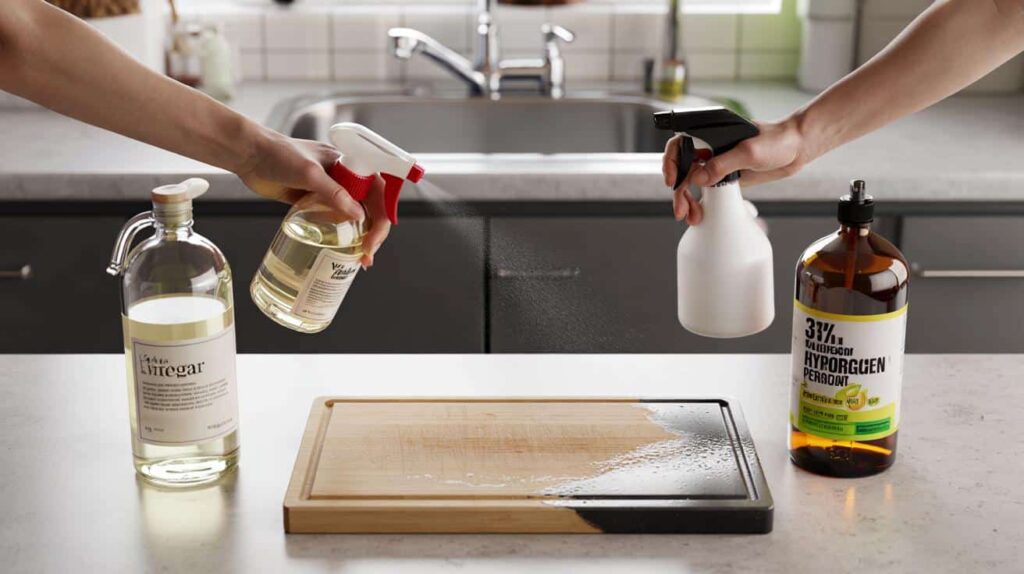
“Best disinfectant combo ever,” she announced, as if she’d discovered penicillin.
I remember leaning closer, catching that sharp, fizzy scent and wondering what, exactly, was happening on that poor cutting board. Was this genius… or a terrible idea in slow motion?
The answer is more surprising than you might think.
Why people mix vinegar and hydrogen peroxide in the first place
Walk into almost any home today and you’ll see the same quiet shift: fewer neon-colored bottles, more humble ingredients with serious reputations. Vinegar. Baking soda. Hydrogen peroxide. They sit on kitchen counters like the comeback kids of cleaning, promising fewer harsh chemicals and a bit more control. The pairing of vinegar and hydrogen peroxide looks especially clever, almost elegant. One is an acid we know from pickles, the other a mild disinfectant we grew up seeing on scraped knees.
Together, they look like the DIY power couple of the eco-cleaning world.
A lot of people discover this combo the same way Lena did: through reels and blog posts swearing it can “kill everything” on your counters, chopping boards, and fridge shelves. A popular method goes like this: fill one spray bottle with white vinegar, another with 3% hydrogen peroxide from the pharmacy. First, you spray the surface with peroxide, wipe lightly, then follow it with vinegar, or reverse the order. Some even alternate twice, like a tiny hygiene ritual.
They use it on cutting boards after raw chicken, on kids’ lunch boxes, even inside the fridge when the yogurt explodes. The feeling is almost intoxicating: low-cost, low-tox, high-satisfaction.
There’s a reason this routine caught on. Used one after the other, vinegar and hydrogen peroxide can give a broad-spectrum hit to bacteria and some viruses. Vinegar brings acetic acid, which disrupts the cell environment of microbes. Hydrogen peroxide releases oxygen radicals that damage cell walls. Two different mechanisms, one squeaky-clean fantasy. But chemistry doesn’t care about TikTok instructions, and that’s where things turn tricky. Because the real problem isn’t what they do separately. It’s what they do when they actually touch.
Why you should never mix them in the same bottle
Here’s the plain truth sentence: mixing vinegar and hydrogen peroxide in one container is a bad idea. The moment you pour them together, acetic acid from the vinegar reacts with hydrogen peroxide and forms peracetic acid. On paper, peracetic acid is a strong disinfectant used in food processing and hospitals. In your kitchen, without control or protection, it’s a corrosive, irritating chemical that can sting your eyes, your throat, and your lungs.
chemistry lab fumes when you wanted a “natural” cleaner.
We’ve all been there, that moment when you think, “I’ll save time and just mix everything into one magic bottle.” That happened to Marco, a young dad who decided to “upgrade” his cleaning spray one Sunday afternoon. He poured vinegar into an almost-full bottle of hydrogen peroxide, screwed on a sprayer, shook it enthusiastically… and immediately noticed a new, piercing smell he didn’t recognize. Ten minutes later, his throat felt scratchy and his eyes burned a little every time he passed the kitchen.
He didn’t know he’d basically created a small, uncontrolled peracetic acid generator. No label. No warning. Just a “DIY cleaner” that was secretly way too intense for everyday use.

Chemically, the reaction is simple but sneaky. Hydrogen peroxide is unstable and loves to break down, especially in the presence of acids. When mixed with vinegar, some of those breakdown products rearrange into peracetic acid. That compound is powerful enough to damage stainless steel over time, irritate skin, and affect your respiratory tract when inhaled in higher amounts. It doesn’t have to smell dramatic to be problematic. *The risk isn’t just theoretical; it quietly builds up each time you spray that “all-purpose” mix around your sink, your stove, or where your kids snack.*
How to use them safely (and when to skip them)
The safer method, supported by food safety researchers, is surprisingly simple: keep vinegar and hydrogen peroxide in separate bottles and use them one after the other, never mixed. One clear bottle with plain 3% hydrogen peroxide, ideally stored in a dark container. One bottle filled with white distilled vinegar, around 5%. To sanitize a surface, you spray one product, wait a minute, wipe, then spray the second and leave it to air-dry if possible. You can switch the order; both sequences work about the same.
This “two-step” routine creates a kind of microbial pincer movement on your cutting boards and countertops, without forming a concentrated peracetic acid soup in your bottle.
The main mistake people make is thinking “natural” means “harmless in any form.” That’s how we end up with unlabeled spray bottles, weird mixes, and headaches after cleaning the bathroom. Another common error: using this combo on every surface, all the time. Wood that’s already dry and cracked, marble countertops, or aluminum fixtures can suffer over months from this repeated acidic and oxidizing hit. Let’s be honest: nobody really does this every single day, and that’s probably a good thing.
If you’re already using a decent kitchen disinfectant or diluted bleach for heavy-duty jobs, you don’t need to add a double acetic–peroxide show on top. Your lungs are not a science experiment.
“The key is not to chase the ‘strongest’ homemade cleaner,” says a home hygiene expert I spoke to. “It’s to use simple products in ways that don’t create new risks you never intended.”
- Use vinegar and hydrogen peroxide from separate bottles only.
- Apply one, wipe or wait, then apply the other on hard, non-porous surfaces.
- Avoid sealed or delicate materials like marble, stone, or unfinished wood.
- Ventilate the room and don’t stand with your face right in the mist.
- Never store them premixed or in an unlabeled container, even “just for a while”.
What this little cleaning trick says about how we live
Behind this story of vinegar and hydrogen peroxide, there’s something very modern. A quiet distrust of industrial products. A craving to take back control with simple ingredients we recognize. At the same time, we’re busier than ever, juggling kids, remote work, late-night emails, and that suspicious smell from the fridge. So we go hunting for shortcuts. A single spray. One fix. The magic combo that kills germs, saves money, and feels a bit like hacking adult life.
That’s exactly where we walk the thin line between smart DIY and accidental self-inflicted chemistry lesson.
Using these two products well means accepting their limits. Vinegar doesn’t replace a proper disinfectant when you’re dealing with serious contamination. Hydrogen peroxide has its own rules: it loses power in light, breaks down over time, and doesn’t love being shaken around in improvised containers. The real strength isn’t in mixing everything together. It’s in choosing the right tool, one moment at a time, and dropping the fantasy that one bottle can solve every mess in your kitchen and your life.
Maybe that’s the quiet invitation in this topic: to slow down for three minutes when you clean, to read the label, to open a window, to ask what you’re really breathing. And then to share what you’ve learned with that friend who’s currently shaking a mysterious cloudy spray over their sink, convinced they’ve found the ultimate hack.
| Key point | Detail | Value for the reader |
|---|---|---|
| Use separately, not mixed | Apply vinegar and hydrogen peroxide from different bottles, one after the other | Gets strong sanitizing effect without creating corrosive peracetic acid |
| Avoid long-term storage of mixes | Premixed solutions can become unstable, irritating, and lose predictability | Protects health, surfaces, and keeps cleaning products safe and reliable |
| Right product for the right job | Reserve the combo for high-risk zones like cutting boards and fridge handles | Saves time, avoids over-cleaning, and focuses effort where it really matters |
FAQ:
- Can I mix vinegar and hydrogen peroxide in the same bottle?No. Mixing them forms peracetic acid, which is corrosive and irritating to eyes, skin, and lungs, especially in enclosed spaces.
- Is it safe to use them one after the other?Yes, using them sequentially in separate spray bottles on hard, non-porous surfaces is the method recommended by food safety researchers.
- What concentration of hydrogen peroxide should I use at home?Stick to 3% hydrogen peroxide, the standard pharmacy strength. Higher concentrations are for professional or industrial use and can be hazardous.
- Can I use this combo on all surfaces?Better to reserve it for countertops, cutting boards, and fridge interiors. Avoid marble, natural stone, untreated wood, and delicate finishes.
- Does vinegar alone disinfect enough for daily cleaning?Vinegar cleans well and reduces some microbes, but it’s not a hospital-grade disinfectant. For raw meat contamination or illness in the home, use approved disinfectants or the vinegar–peroxide sequence correctly.