The argument started with a bin.
Not a shouting match, not police tape across the hedge. Just a blue recycling bin left in the wrong place, blocking the narrow passage that leads to the back gardens of four terraced houses in a quiet English street.
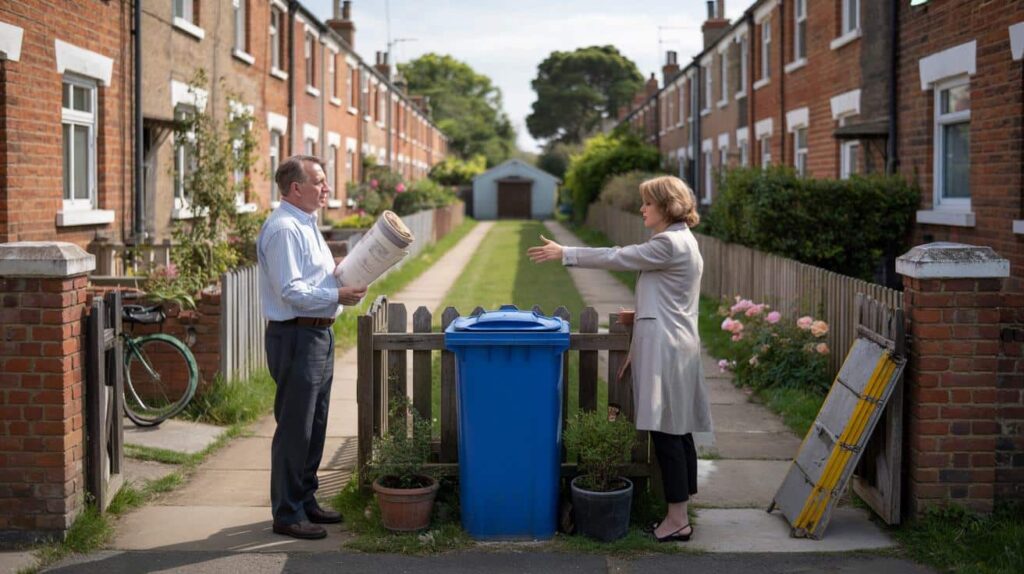
“Can you move your bin, please? I need to get to my garden.”
“Your garden? That path is ours. You’re just using it.”
Old title deeds were dug out of drawers. Someone zoomed in on Google Street View. A neighbour mentioned something about “easements” they’d once read on a forum. The air grew tense over a strip of concrete barely a metre wide.
 People who grew up in unhappy or dysfunctional homes often show these 8 behaviours as adults
By the end of the week, nobody was speaking.
The path was the same. The roses were the same.
But the question had changed everything: does using a route to your garden make it yours?
When a narrow path becomes a battleground
On paper, garden access sounds boring and technical.
In real life, it’s raw and personal. You either feel free to cross that path to the back gate, or you feel watched, judged, slightly trespassy every single time you roll out the lawnmower.
In British streets full of Victorian and 1930s terraces, back access is gold. Those slim “ginnels” and shared side passages weren’t designed for modern living, with bikes, hot tubs and Amazon deliveries. Yet they now carry prams, gas engineers and that friend who always arrives late to the barbecue.
The law sits quietly in the background, but for neighbours the dividing line is emotional. Do I own this bit? Or do I just have the right to use it?
That single word — “use” — is where so many disputes really start.
Take a classic layout: four terraced houses, one central alley, each garden only reachable through that shared passage. The deeds for Number 12 show they own the strip of ground under the passage. The deeds for Numbers 10, 14 and 16 say something more cryptic: “a right of way on foot to the rear garden”.
For years, everyone gets along. People leave bins neatly to one side. Kids cut through with scooters. Then Number 12 builds a shed that nibbles a bit into the alley. “It’s our land,” they say. “We own it.” The neighbours protest: “You’re narrowing the way we’ve always used.”
Soon there are measuring tapes and accusatory WhatsApps. Someone quotes a Facebook law group. Another waves a printout about “easements by prescription”. The core misunderstanding sits quietly in the background: land can be *owned* by one person, but long-standing rights to *use* it can legally belong to others.
What lawyers often see is this: ownership is a bold line on a plan, but use is a story told over decades.
In English and Welsh law, the owner of the soil under that alley may appear to hold all the cards. Their name is on the register. They pay the insurance. They might have the only key to a gate at the front.
Yet easements — rights of way, rights to pass and repass — can cut across that simple picture. These rights can be written into the title, or grow over time through long, uninterrupted use. A neighbour who has quietly wheeled bins, bikes and timber through the passage for twenty years may have more legal protection than the owner expects.
This is where arguments become entrenched. The “I bought this, it’s mine” instinct collides with the slow, almost invisible power of habit and routine. Law doesn’t just count who owns, it notices who uses — and for how long.
Steps to cool a garden access row before it explodes
The most useful move isn’t a solicitor’s letter. It’s a kettle.
Before anyone calls a lawyer, sit down with your neighbour at the kitchen table and put the title plans side by side. Look at the red lines. Look for tiny notes like “right of way” or “subject to rights granted in a conveyance dated…”.
Then talk only about practical use. “I need to get ladders through twice a year.” “I’d like to store my bike without blocking you.” Keeping the conversation on *how* the space works, not “who’s right”, is surprisingly powerful.
 Pension cut stories: the fastest way to locate the real policy document (not the headline)
If you can bear it, take photos together of how wide the path is, where the bins stand, how far a gate opens. That way, if you later need advice, you’re both working from the same shared reality, not half-remembered measurements from a tense Sunday morning.
Some rows start because people quietly change things, hoping nobody minds. A lock appears on a gate. A fence is shifted “just a bit”. A plant pot army creeps further into the path each year. The other side bites their tongue, until they don’t.
Honest, early conversations beat silent resentment. If you want to add a side gate that could affect a shared route, say so out loud. If a neighbour suddenly tells you not to walk where you’ve always walked, ask them to explain calmly, then go away and check your documents rather than snapping back on the spot.
On a human level, the real wound isn’t the legal point, it’s the feeling of disrespect. We remember tone more than technicalities. So speak slowly, leave gaps, and resist the urge to have the last word in the moment.
Soyons honnêtes : personne ne lit vraiment ses actes de propriété ligne par ligne après l’achat.
“People get hung up on the word ‘own’,” says one property solicitor I spoke to. “What matters in these cases is often not who owns the ground, but who has the right to keep using it in a particular way, and whether that use is being unfairly squeezed.”
There are a few simple habits that stop things sliding into all-out war:
- Check your title deeds before you build gates, sheds or fences near shared access.
- Put agreements in writing, even if it’s just an email confirming where bins or bikes will go.
- Keep a light diary of serious incidents: locked gates, blocked paths, threatening notes.
- Use a mediation service before you escalate to full legal action.
- Think long-term: a sale can fall through if there’s an unresolved access dispute.
One quiet truth: *most* garden access rows are less about law than about pride.
Talking openly about what feels fair, what feels safe, and what you can each live with often carries more weight than any case law you could Google at midnight.
Living with the tension between “mine” and “ours”
Once you’ve seen neighbours fall out over a side passage, you can’t unsee it. The thin line between “my land” and “our route” runs through so many British streets, invisible yet constantly walked. It touches how we think about privacy, safety, and what home really means.
Some people will always lean on the language of ownership: “I paid for this place, I decide.” Others are rooted in patterns of shared use: “We’ve all walked here for years, this is how the street works.” Those two instincts don’t naturally fit, and the law sits awkwardly in the middle, trying to respect both.
What makes garden access disputes oddly gripping is that they’re never just about soil and slabs. They’re about childhood memories of playing at the back, about feeling shut in or pushed out, about old class tensions over who “belongs” on a street. On a tiny scale, they mirror a national conversation about land, space and who gets to move freely.
Think of the last time you hesitated before opening a gate, wondering if you were allowed. That small jolt of doubt is what many people feel daily when a dispute is brewing. Sharing stories about these rows — the good resolutions as well as the ugly ones — helps others spot the warning signs earlier.
Some will read this and quietly check their deeds for the first time in years. Others will remember a neighbour they maybe judged too harshly. A few might even decide to knock on a door, offer a cup of tea, and talk about that path at the side before it becomes the street’s next silent war.
| Point clé | Détail | Intérêt pour le lecteur |
|---|---|---|
| Différence entre propriété et usage | Le sol peut appartenir à un voisin, tandis que d’autres ont un droit légal de passage | Comprendre que “posséder” ne donne pas toujours le droit de bloquer l’accès |
| Forces de l’habitude | Un usage long et continu peut créer ou renforcer un droit de passage | Voir comment vos routines actuelles peuvent peser dans un futur conflit |
| Prévenir plutôt que guérir | Dialogue, vérification des titres, médiation avant action juridique | Limiter le stress, les frais et l’impact d’un conflit sur la vie de quartier |
FAQ :
- What’s the basic difference between “ownership” and a “right of way”?Ownership means the land is legally yours. A right of way means someone else can legally use part of that land for a specific purpose, like walking to their garden, even if they don’t own it.
- My neighbour says I can’t use the side passage I’ve always used. Are they allowed to do that?It depends on what your deeds say and how long you’ve been using it. If you have a registered right of way, they can’t just block it. Long, consistent use might also give you legal protection, but you’d need proper advice.
- Can putting a gate or shed across a path actually break the law?It can, if it “substantially interferes” with a legal right of way. Narrowing a path or making it practically unusable is often more of a legal problem than simply putting up a visible gate.
- Should I talk to a solicitor at the first sign of a dispute?Not always. A calm conversation, checking deeds together and maybe using a mediator can solve a lot. If gates are locked, threats made or building work starts, that’s when early legal advice helps.
- Will an ongoing access dispute make it harder to sell my house?Yes, it often does. Buyers and lenders tend to walk away from unresolved arguments over rights of way. Getting things clarified and, ideally, written into the title can protect your future sale.