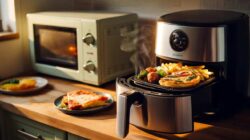
The first time my old microwave really scared me, it wasn’t the burnt popcorn smell. It was the way the plate inside started clanking and the light flickered like a scene from a low-budget horror movie. I slammed the door shut, unplugged it, and just stood there in the half-dark kitchen, bowl in hand, wondering why this buzzing box had so much power over my everyday life.
That night, scrolling on my phone with cold leftovers on my lap, I kept stumbling on the same phrase: “microwave alternative.” Something was clearly bubbling in the world of home appliances.
A quieter, cleaner, smarter way to reheat and cook was starting to appear everywhere.

And it doesn’t look like a microwave at all.
The quiet rise of the multifunction air fryer oven
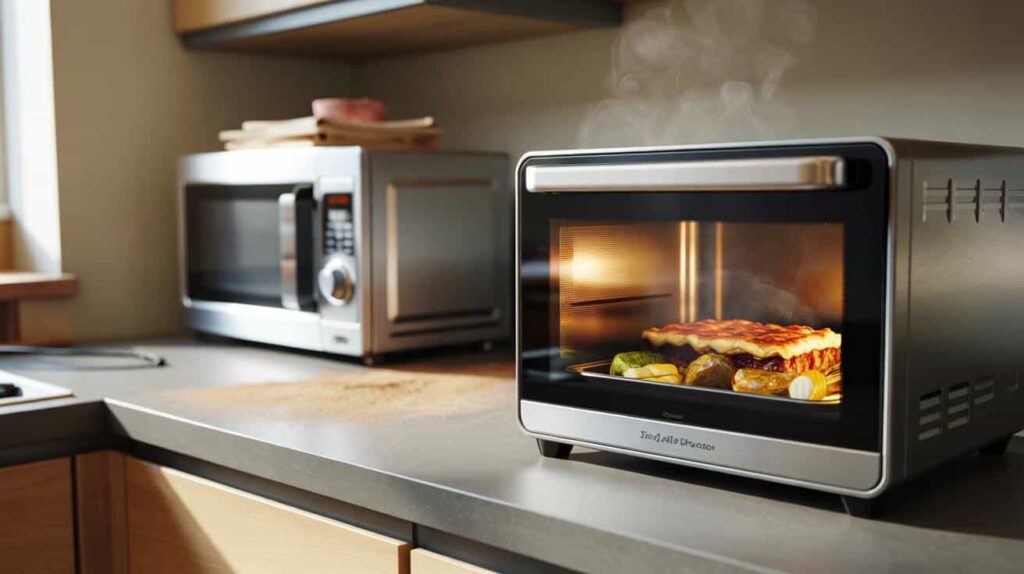
Walk into any small city apartment right now and you’ll likely spot it on the counter: a compact, boxy device with a glass door and a soft digital glow. At first glance, it looks like a mini oven or a fancy toaster. Then you notice the labels: air fry, bake, reheat, roast, dehydrate.
This new generation of **multifunction air fryer ovens** is quietly elbowing the microwave out of the kitchen. They don’t buzz, they don’t splatter food in a plastic dome, and they don’t leave that strange rubbery texture on your leftovers.
They slip into daily life in a way the microwave never really managed to.
A friend of mine, Léa, moved into a studio last year and deliberately chose not to buy a microwave. Her parents thought she was joking. “How are you going to live?” they asked. She bought a mid-range air fryer oven instead, the kind with a front door and removable racks, not the bucket-style basket.
A few weeks later, I watched her reheat lasagna in 8 minutes. No crusty edges, no cold center. The cheese melted like it had just come out of a restaurant kitchen. Next, she tossed in frozen veggies with a tiny bit of oil. Ten minutes later, they came out caramelized and crisp, while my idea of “quick dinner” was still spinning on a plate at home.
She just shrugged and said, “Why would I ever go back?”
There’s a simple reason this new appliance is catching on: it finally solves the compromises we silently accepted with microwaves. Microwaves gave us speed, but at the cost of texture, flavor, and sometimes even safety when it came to plastic containers and uneven heating.
A multifunction air fryer oven uses hot air circulation and precise temperature control, closer to a tiny convection oven than a microwave. Food heats more evenly, browns on the outside, and stays juicy inside. You can actually cook from scratch in it, not just reanimate leftovers.
*It turns out, people don’t just want “hot food fast” anymore — they want “good food that happens to be fast.”*
How to actually live without a microwave (without suffering)
If the idea of unplugging your microwave makes you nervous, start small. The key is to use your new air fryer oven for the exact moments you’d normally press that familiar 30-second button. Reheating pizza? Lay it flat on the tray, 180°C (350°F), 4–6 minutes. Leftover roast chicken or veggies? Same temperature, a few minutes, and they’ll taste roasted again, not steamed.
For hot drinks or soups, heat the liquid in a small saucepan or a kettle, then pour over. It feels slower the first few times. Very quickly, your hands memorize the gestures and it stops feeling like “extra work.”
You’re just swapping one reflex for another.
The biggest trap when switching away from the microwave is trying to use the air fryer oven like a microwave. People throw in a glass container straight from the fridge at full blast, then complain when the top burns and the center is still cold.

Start by spreading food out as much as you can. Break up that block of rice with a fork. Cover drier foods loosely with a bit of foil to prevent them from drying out. Give leftovers a quick stir halfway through if they’re in a deeper dish.
Let’s be honest: nobody really does this every single day. But even doing it most days already transforms those sad, soggy lunches into something you actually want to eat.
One chef I interviewed for a food column told me something that stuck:
“Microwaves taught us to accept mediocre food as the default. These new ovens are reminding people that good texture isn’t a luxury — it’s just better heat.”
To get the most from a multifunction air fryer oven, most people only need a short mental cheat sheet:
- Reheat: 150–170°C (300–340°F), 5–10 minutes, loosely covered for moist dishes
- Crisp: 180–200°C (350–400°F), 8–12 minutes, uncovered for pizza, fries, nuggets
- Cook from raw: follow oven recipes, often cutting time by 20–30%
- Frozen snacks: skip preheating, add 2–3 minutes to package oven times
- Cleaning: wipe the inside while it’s warm, like a small oven, not a plastic box
So is the microwave really on its way out?
Walk through any appliance store and you can almost read the future in the shelves. Microwaves are still there, of course, lined up in dull rows of black and silver boxes. Next to them, though, the air fryer ovens are getting more space, more colors, more smart features, more marketing.
Younger buyers are skipping the microwave entirely. People renovating kitchens are building wall ovens and induction hobs, then adding one compact, efficient countertop unit that can handle both weekday reheats and weekend cooking experiments.
The microwave is starting to look more like a relic of a very specific era: the frozen-dinner, press-start, eat-in-front-of-the-TV era.
This doesn’t mean everyone will toss their microwave into the trash tomorrow. For some, it’s still a lifeline: for carers reheating food quickly, for shared offices, for students living on instant noodles. There’s no moral point in how you heat your leftovers, just practical ones.
What’s changing is the default. When people discover they can reheat fries so they’re actually crisp again, or warm pasta without it turning into a gummy clump, it quietly shifts their tolerance. That buzzing box becomes a backup, not the star.
Some families keep both for a while, just to “see what happens.” A few months later, the microwave mostly gathers dust.
Underneath the gadgets and brand names, something deeper is moving. We’ve all been there, that moment when you open the microwave door, pull out a plate, and immediately feel a bit cheated by what’s in front of you. You know it’s technically “hot food,” but you also know you’re settling.
This new wave of countertop ovens doesn’t only promise faster or healthier; it promises less compromise. **Food that feels cooked, not zapped.** Heating that blends into actual cooking. A kitchen that hums quietly instead of buzzing.
The question is no longer “Can I live without a microwave?”
It’s slowly becoming: “Do I still need one at all?”
| Key point | Detail | Value for the reader |
|---|---|---|
| Multifunction air fryer ovens as microwave rivals | They reheat, crisp, and cook using hot air circulation, like mini convection ovens. | Understand why this single appliance can cover most daily “microwave jobs.” |
| Simple reheating routines | Adjust temperature and time (150–200°C) based on whether you want gentle heat or crispiness. | Reheat leftovers with better texture and taste, without complicated recipes. |
| Gradual transition strategy | Keep the microwave at first, shift common tasks to the air fryer oven, then reassess. | Adopt the new habit without stress, and decide if the microwave still earns its space. |
FAQ:
- Can an air fryer oven really replace a microwave for reheating?For most solid foods, yes. It reheats more evenly and restores crispiness, especially for pizza, fries, pastries, roasted meats, and vegetables. Pure liquids like tea, coffee, or soup are faster on a stove or with an electric kettle.
- Is it slower than a microwave?Usually a bit. Expect 5–10 minutes instead of 1–3. The trade-off is better flavor and texture, plus the freedom to cook many things properly instead of just warming them through.
- Does it consume more energy?Per minute, it often uses more power than a microwave. But because it can replace both a microwave and some traditional oven use, the overall energy footprint for small daily tasks can be similar or even lower.
- What type should I buy to replace a microwave?Look for a front-door, oven-style model with at least 10–15 liters capacity, adjustable temperature, and clear “reheat” or “bake” modes. Basket-only models are great for fries, less practical for full plates.
- Is it safe for kids or teens to use?Yes, as long as they follow basic oven rules: use oven mitts, don’t touch heating elements, avoid overcrowding food. Many models have auto shut-off timers and cool-touch exteriors, which helps in family kitchens.