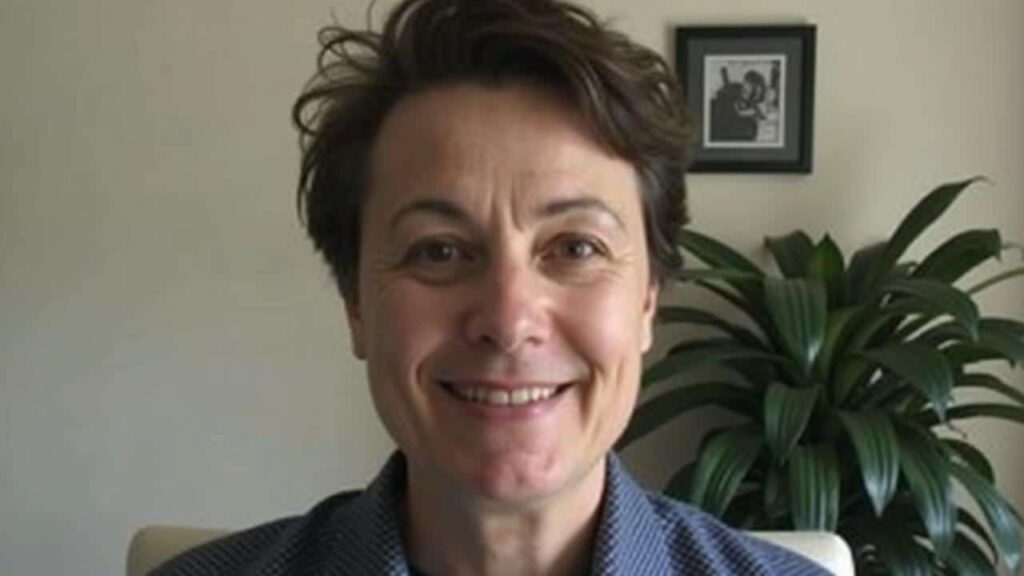
In France, a 44-year-old man who had lived with unrelenting depression since childhood has experienced a striking return of emotion and motivation after receiving a highly personalised brain stimulation implant, in what researchers describe as a “proof of concept” for a new era of precision psychiatry.
A childhood stolen by unbroken depression
The patient’s story begins long before any operating theatre or cutting-edge device. According to the research team, his depressive episode started in early adolescence and simply never stopped.
He reported no clear relief for 31 years. No period of light between the shadows. Just a long, continuous state of mental pain, numbness and deep exhaustion.
 If you feel drained after social interactions, psychology explains what your brain is actually doing
Across those decades, doctors tried everything that current psychiatry has to offer. The man went through around 20 distinct treatment strategies. These included multiple antidepressant drugs, combinations of medications, talk therapies, behavioural approaches and likely several lifestyle-based recommendations.
Despite three decades of care and dozens of therapeutic attempts, his symptoms never improved in a stable, lasting way.
Clinicians eventually categorised his condition as “treatment-resistant major depressive disorder” – one of the most severe and least responsive forms of depression. Around one third of people with chronic depression are thought to fall into this group.
By the time he entered the experimental programme, he showed many classic hallmarks of entrenched, resistant depression:
- Strong apathy and difficulty starting any activity
- Constant negative thinking and mental replay of painful memories
- Social withdrawal and isolation from friends and family
- Impaired decision-making and slower thinking
- Recurrent suicidal thoughts
Standard options had almost run out. Electroconvulsive therapy, transcranial magnetic stimulation and ketamine are sometimes used in such cases, but not everyone responds. For this man, the research team felt a radically different approach was justified.
From drugs to circuits: a new approach to severe depression
The intervention offered to him was not a new pill or a variation of psychotherapy. It was a brain implant, built to track and adjust his emotional circuits in real time.
The protocol, named PACE, uses deep brain stimulation (DBS) – a technique already used for conditions such as Parkinson’s disease – but with a new twist: extreme personalisation.
Rather than placing electrodes in a standard “depression target”, the team first mapped the unique architecture of his brain networks. They focused on circuits involved in mood, motivation, and cognitive control, then adapted the device settings to his own neural patterns.
Three key brain regions under the microscope
The surgery targeted three main areas:
| Brain region | Main role | Why it matters for depression |
|---|---|---|
| Dorsolateral prefrontal cortex | Executive control, planning, decision-making | Often underactive in depression, linked to lack of drive and cognitive slowing |
| Dorsal anterior cingulate cortex | Emotional monitoring, conflict detection | Involved in processing emotional pain and effort; can amplify distress |
| Inferior frontal gyrus | Cognitive regulation, inhibition | Plays a role in stopping negative thoughts and emotional overload |
By placing electrodes across these regions, the researchers aimed to adjust how these networks talk to each other. The goal was not to “switch off sadness”, but to break rigid patterns that had trapped the patient in despair for decades.
The implant constantly listens to the brain and delivers small pulses of stimulation only when certain pathological patterns appear.
This adaptive loop is a major shift from earlier DBS systems, which often deliver static, continuous stimulation. Here, the device measures electrical activity and then fine‑tunes intensity and timing in response to the patient’s real-time brain state.
The first signs of a quiet emotional comeback
Change did not arrive as a dramatic, overnight transformation. Instead, the first weeks after implantation brought subtle but meaningful shifts.
Researchers noticed that the man started showing curiosity about small, everyday experiences. He described faint flickers of pleasure where there had been only indifference before, such as tasting food or stepping outside.
To move beyond impressions, the team collected detailed data using daily mood diaries, standardised psychiatric questionnaires, and cognitive tests. Family members and clinicians also recorded behavioural observations.
The trajectory was not perfectly smooth. Some days remained heavy. Others showed slight regressions. Yet the overall line pointed upward.
After seven weeks of treatment, a critical milestone appeared: suicidal thoughts had stopped. That absence persisted.
By four months, his mood scores had improved by around 59% on standard depression scales. He was more active, more talkative, and more able to plan his day.
Most strikingly, these gains did not vanish. They held for at least 30 months, suggesting a durable shift rather than a brief placebo effect.
A single case, but a powerful proof of concept
The study, shared as a preprint in 2025 and not yet peer-reviewed, describes only one patient. That limitation matters. Science has a long history of striking case reports that never translate into large-scale clinical success.

Researchers stress that this approach is not ready for mass deployment. The surgery is invasive, requiring electrodes to be placed deep in the brain. The equipment is expensive and demands long-term follow-up.
Yet this case acts as a kind of lighthouse. It suggests that when standard treatments fail, precisely tuning specific neural circuits can still shift a seemingly fixed mental state.
How this differs from standard brain stimulation
Non-invasive techniques like transcranial magnetic stimulation (TMS) also stimulate brain regions, but from the outside. They affect broader areas and cannot adapt continuously to the patient’s brain activity.
The PACE protocol stands out in three ways:
- It uses implanted electrodes directly in deep networks, allowing targeted action.
- It personalises the placement and settings based on each person’s unique brain map.
- It operates in a closed loop, adjusting in real time rather than following a fixed schedule.
This type of system sits at the frontier between psychiatry, neurology, engineering and data science. It treats depression not only as a chemical imbalance, but as a malfunctioning circuit that can be measured and modulated.
New hope, real questions
The story naturally fuels hope for millions living with severe depression, especially those who have tried treatment after treatment with little success.
Yet several unanswered questions remain:
- How many patients would respond in a similar way?
- Which circuit patterns predict who will benefit?
- Could long-term stimulation lead to side effects we do not yet understand?
- How should society regulate devices that directly influence mood and behaviour?
Ethical questions stand alongside the medical ones. Adjusting emotional states through an implant touches on autonomy, identity and consent. Patients, families and clinicians will need clear frameworks and safeguards.
An implant that can ease suffering also holds the power to alter personality, memory and motivation; such power demands caution and transparency.
What “treatment-resistant depression” really means
The term “treatment-resistant depression” often sounds vague. In clinical practice, it usually refers to depression that does not respond adequately to at least two different antidepressant strategies, used at the right dose and duration.
For some people, resistance means partial relief but persistent symptoms. For others, like this 44‑year‑old patient, it means decades with almost no improvement, despite comprehensive care.
This group tends to face greater social and medical consequences: job loss, relationship breakdowns, health complications, and a higher risk of suicide. Novel approaches, even invasive ones, are sometimes considered because the alternative is continued, profound suffering.
What this could mean for future mental health care
Researchers working on this case talk about “precision mental health”. That phrase signals a shift from one-size-fits-all treatments to individualised interventions based on brain data, genetics and personal history.
In the coming years, we might see intermediate steps that are less invasive than implants but still more tailored than current care. For example:
- Non-invasive stimulation guided by each patient’s brain scans
- Digital tools that track mood and predict relapses using smartphones and wearables
- Combination therapies where medication, psychotherapy and stimulation are adjusted using real-time feedback
No single technique will cover all needs. Some people may do very well with classic antidepressants and therapy. Others may benefit from ketamine infusions, light therapy or lifestyle interventions such as structured exercise programmes.
For the small but significant group living with decades-long, unresponsive depression, highly personalised brain stimulation might become one option on the table – provided larger trials confirm its safety and effectiveness.
Living with a brain implant: practical scenarios
Life with such a device does not mean instant, permanent happiness. The patient still has ordinary ups and downs. The goal is not a constant high, but the ability to feel a wider range of emotions and to cope with them.
In practice, a typical week for a person with a closed-loop implant could look like this:
- Regular check-ups where clinicians adjust the device settings if needed
- Ongoing psychotherapy to rebuild habits and relationships now that mood has lifted
- Gradual return to work or hobbies, with support to manage stress without relapse
- Monitoring for side effects such as sleep changes or new anxiety symptoms
Stimulation might one day be reduced or switched off at times if brain networks stabilise. Or it may need to continue for years, much like a pacemaker for the heart.
For the 44-year-old man at the centre of this case, the difference is stark. Where life once felt like an unending obligation to endure, he now reports a genuine capacity to enjoy small things and to make plans. For him, and for the scientists following his progress, that shift alone marks a quiet revolution in how severe depression might be treated.