The smell of broccoli hit the kitchen before the steam even escaped the pot. Marie, who had promised herself to “eat healthier this year”, poked the florets with a fork, distractedly scrolling on her phone. Her mother had always boiled broccoli to death, until the water turned green and the vegetables gray. Her best friend, on the other hand, swore by raw salads and “never touching heat” to keep vitamins. Two opposite schools. Zero certainty.
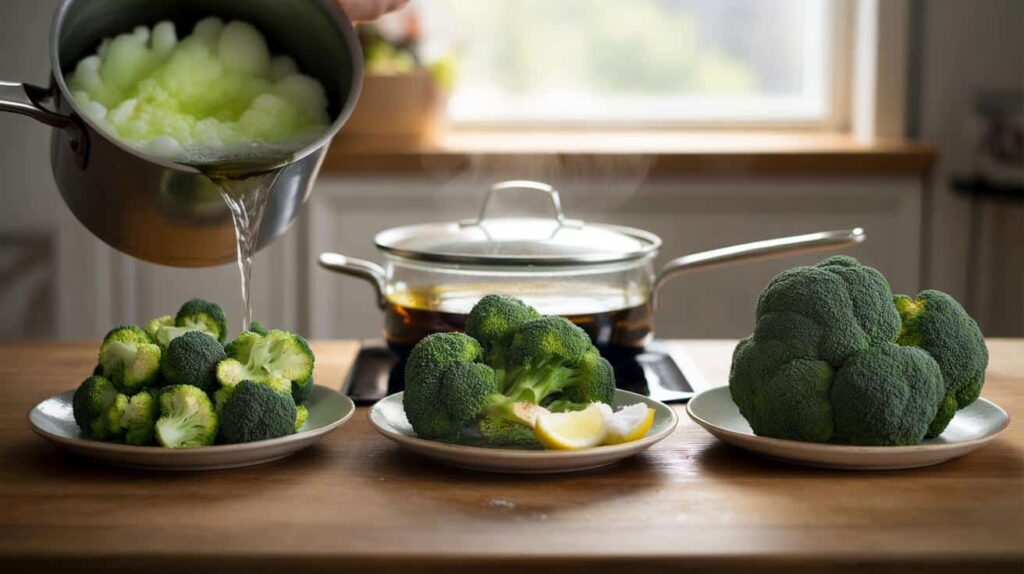
Marie hesitated. Should she really eat it half-crunchy, like the trendy recipes suggest, or go for the soft, comforting version she grew up with? She typed “best way to cook broccoli vitamins” into Google, just as the timer started beeping.
She lowered the heat, hovered her hand over the foggy lid, and thought: there has to be a smarter way than guessing every time.

Why boiled broccoli loses the battle against vitamins
The first shock comes when you drain a pot of broccoli. The water is almost fluorescent green, and that’s not just chlorophyll going down the sink. Many of the antioxidant vitamins in broccoli, including vitamin C and certain B vitamins, slip out into that water as they cook. Long boiling is like giving those precious nutrients a one-way ticket out of your plate.
The texture tells the same story. Broccoli that’s been boiled too long collapses on the fork, its florets mushy, its stalks stringy. The color dulls from bright green to something closer to army khaki. You don’t need a lab to guess what’s happening here. Heat, time, and water are ganging up on the very molecules you bought that broccoli for.
Of course, people boil broccoli because it feels simple and safe. You toss it in, forget it for ten minutes, and you’re done. But nutritionally, that “easy” method is one of the worst. Antioxidant vitamins are both heat-sensitive and water-soluble. Give them too much time in hot water and they quietly evacuate into the cooking liquid. Unless you drink the broth, you lose a big part of the deal.
Now picture a different scene in another kitchen. Leo, 27, office job and gym in the evenings, has decided he’s going “full raw” during the week. His fridge drawers are full of broccoli, carrots, radishes. He chops everything into a huge colorful salad, snaps a photo for his friends, and proudly declares he’s “preserving 100% of the vitamins”. It sounds logical. No heat, no loss, right?
Except the bowl comes back half-eaten. The raw broccoli is fibrous, a bit bitter, and tiresome to chew by the third bite. Leo ends up adding croutons, cheese, and a heavy dressing just to get through it. By Friday, the raw broccoli left in the drawer is limp and starting to dry out. He throws it away, frustrated, feeling like he “failed” at healthy eating again.
On paper, raw broccoli does protect heat-sensitive nutrients. The problem shows up in real life. If the texture and taste don’t work for you, you won’t eat it often enough to benefit. Raw florets can also be harder to digest for some people, causing bloating or discomfort that quickly kills motivation. The best nutrient profile in the world means little if your stomach and your taste buds vote no.
Scientists have looked closely at this boiled vs raw battle. What emerges is more nuanced than social media slogans. Some antioxidant compounds, like sulforaphane, are actually better released when broccoli is lightly heated, not raw. On the other hand, long cooking at high temperatures wrecks vitamin C and several polyphenols.
The key variables are always the same: temperature, time, and contact with water. Boiling hits all three in the worst way. Raw avoids heat but doesn’t unlock everything either. Between those extremes, there’s a sweet spot where the plant structure softens just enough to free certain antioxidants, while leaving the most fragile vitamins intact.
That sweet spot exists. And it doesn’t look like a restaurant technique reserved for chefs. It looks like a pan with a lid, a bit of water, and a timer set for a few short minutes.
The “in-between” method that protects broccoli’s antioxidants
The most vitamin-friendly method sits right between raw and boiled: gentle steaming, ideally short and precise. Think of it as giving broccoli a quick spa session, not a prolonged sauna. You bring a small amount of water to a simmer, place the florets in a steamer basket or a simple metal colander above the water, cover, and let the steam do the work.
The magic window for most studies on antioxidant retention is around 4 to 6 minutes for small florets. Long enough to turn that dull matte green into a vivid emerald, not long enough to soften them into mush. When you pierce a floret with the tip of a knife, it should resist slightly but not feel raw. That’s the exact moment when you’re winning on both texture and vitamins.
If you don’t own a steamer, you can improvise. Put a splash of water in a pan, add the broccoli, cover tightly, and let the trapped steam lightly cook it. This “covered pan” method, done quickly, protects nutrients almost as well as classic steaming. The real enemy is not the technique. It’s overcooking.

There’s a reason nutrition researchers keep coming back to steaming when they compare cooking methods. When broccoli is lightly steamed, its vitamin C levels stay high, some antioxidant compounds become more available, and the texture remains pleasant enough that you actually want to eat it. It’s the rare moment where science and pleasure meet in the same plate.
The other hidden benefit is taste. Steamed broccoli keeps a slightly sweet note that boiling often erases. With a tiny drizzle of olive oil, a pinch of salt, and maybe lemon zest, the florets suddenly taste like real food, not a punishment side dish. That little difference in flavor is what turns “I should eat this” into “I kind of want more”.
Let’s be honest: nobody really steams vegetables with a stopwatch every single day. Sometimes you’re tired, the pan stays on a bit too long, and the broccoli passes that ideal point. The good news is, even if you miss the mark by a minute or two, you’re still light years ahead of a long boil where antioxidants leak out like dye in hot water.
Of course, the perfect method on paper can still trip you up in practice. You might crowd the pan, cut the florets too big, or walk away to answer a message. That’s usually when the color dulls and the kitchen fills with that strong sulfur smell that makes kids (and some adults) run away from the table. At that stage, the vitamins are taking a hit, and your desire to eat broccoli with them.
Another common trap: thinking you have to choose one single method forever. Some days, a crisp, almost raw broccoli salad hits the spot. On others, your body wants something warm and gently cooked. The best rhythm is often a mix across the week, not a rigid rule. You already live in a world of compromises; your vegetables can follow the same logic.
If you tend to overcook, try one tiny change: set a timer as soon as you cover the pan. Four minutes first, then open and poke a floret. If you like it slightly firmer, stop there. If you want it softer, add one or two minutes, not ten. *Tiny adjustments in time do more for your vitamins than any miracle supplement ad you’ve seen on your phone.*
Nutritionists who study cruciferous vegetables often repeat the same core message: don’t declare war on cooking, learn to tame it. The goal is not to turn your kitchen into a lab. It’s to find a method that respects both the plant and the person who’s going to eat it.
“Broccoli doesn’t have to be raw to be healthy, and it doesn’t have to be gray to be comforting. Light steaming gives you the best of both worlds: antioxidants that stick around, and a texture most people actually enjoy,” explains a dietitian who regularly works with patients trying to rebuild healthier eating habits.
To anchor this in your daily routine, think in simple, visual cues rather than rules:
- Color cue – Stop cooking when broccoli turns a bright, intense green.
- Texture cue – Aim for tender but still slightly firm to the bite.
- Time cue – Usually 4–6 minutes of steam, depending on size.
- Water cue – Broccoli above, not drowned in, hot water.
- Frequency cue – Eat it regularly, not perfectly.
Beyond technique: what your broccoli habits quietly say about you
The way you cook broccoli often reflects your relationship with food in general. Some people boil it to death because they grew up in homes where vegetables were a duty, not a pleasure. Others eat it raw because they’re scared that any step of cooking will “ruin” their health efforts. Between those two extremes lies a calmer approach, one that trusts both the science and your senses.
There’s also something strangely reassuring about a simple, repeatable ritual. Cut florets into similar sizes. Bring water to a simmer. Lid on. Timer set. A drizzle of oil, a squeeze of lemon, a pinch of salt. No drama, no guilt, no heroic challenge. Just a small act of care that, repeated twice or three times a week, quietly changes the way your body feels. Those antioxidants don’t shout, but they work in the background.
We’ve all been there, that moment when you stare at a sad, overcooked side dish and wonder why “eating well” feels so complicated. Maybe the shift starts with something as simple as letting broccoli stay vivid, slightly crunchy, and full of life on your plate. Not raw, not boiled to oblivion. Just enough heat to bring out what was already there.
| Key point | Detail | Value for the reader |
|---|---|---|
| Best cooking method | Short, gentle steaming (4–6 minutes) instead of boiling | Preserves more antioxidant vitamins while keeping good texture |
| Boiling vs raw | Boiling leaches vitamins into water, raw can be hard to digest and less enjoyable | Helps choose realistic habits you’ll actually keep |
| Practical cues | Bright green color, slight firmness, minimal water contact | Makes it easy to hit the “sweet spot” without needing complex tools |
FAQ:
- Is steamed broccoli really healthier than boiled?Yes, light steaming tends to preserve more vitamin C and antioxidant compounds than boiling, because the florets are not submerged in water and cook for a shorter time.
- Do I lose vitamins if I reheat cooked broccoli?Some sensitive vitamins can degrade with repeated heating, so it’s best to cook what you’ll eat or reheat gently once, not multiple times.
- Is raw broccoli always better than cooked for antioxidants?Not always. Some compounds, like sulforaphane, are better released when broccoli is lightly cooked rather than totally raw, which is why a mix across the week can be a smart approach.
- Can I keep the cooking water from boiled broccoli?You can use it in soups or sauces to recover part of the vitamins that went into the water, but long boiling still damages some heat-sensitive nutrients.
- What’s the simplest way to steam broccoli without special equipment?Use a pan with a small splash of water, add the broccoli, cover tightly, and let it cook over medium heat for a few minutes until bright green and just tender, keeping the florets mostly above the water level.