From a distance, the girl in the café looked flawless. Her eyebrows were perfectly shaped, her eyeliner neat, and her lips glossy. But as she moved closer to the window, something seemed off. A thick stripe of blush ran beside her nose, as if she had just sprinted up several flights of stairs. The makeup quality was fine, but the placement disrupted her facial harmony. You may have noticed this while scrolling through social media or walking past someone on the street. When blush sits too close to the center of the face, it can make features appear smaller and compressed. What looks fine in a bathroom mirror can look unbalanced in natural light or on camera. A difference of just a couple of centimeters can separate a fresh, healthy look from one that feels crowded. This is not a style preference—it’s simple geometry.
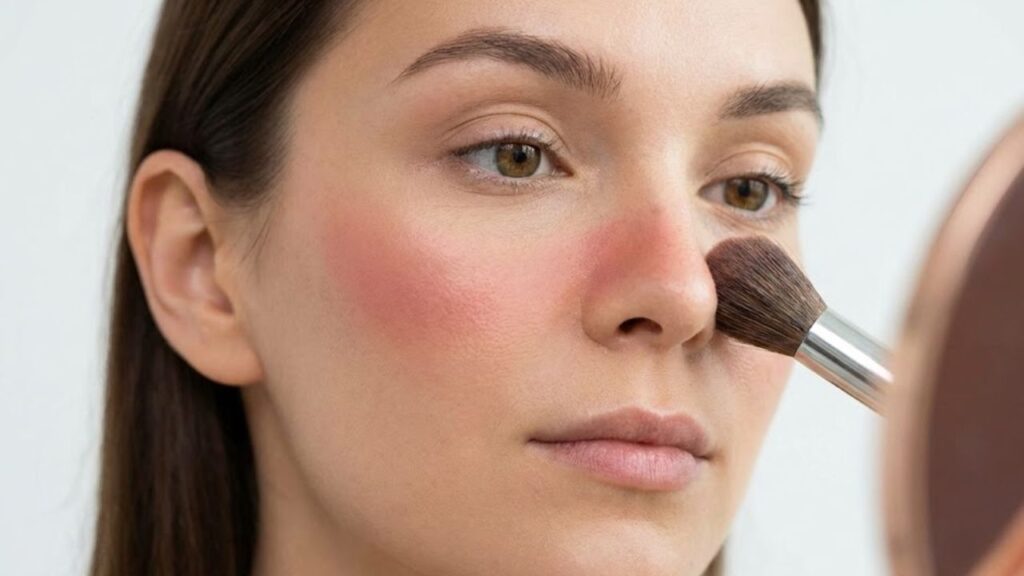
How Blush Near the Nose Affects Facial Harmony
Blush placed too close to the nose can make your face appear narrower and more strained. The center of the face becomes the main focus, while the eyes and cheekbones fade into the background. Instead of lifting features, the color pulls them inward. The outer cheeks can seem to disappear. Blush near the nostrils can also highlight natural redness, making the skin look tired rather than radiant. From afar, this placement can appear puffy or crowded instead of soft and flattering. Harsh lighting or phone cameras can amplify the effect, turning blush into a solid block of color that flattens the face. Professional makeup artists avoid this “danger zone” around the nose, especially under studio lights, which is why red carpet blush is always placed higher and further out. Blush placement affects the perception of vertical and horizontal lines on your face. When placed too close to the nose, the forehead-to-chin line looks shorter and compressed.
Strategic Blush Placement for a Lifted Look
Start by imagining a vertical line from the center of your eye. This is your inner boundary. Your blush should never cross this line toward the nose. Instead, apply blush on the part of your cheek that naturally curves outward when you give a slight smile. Blend the color outward toward the top of your ear in a gentle comma shape. Apply thin layers, as it’s easier to build up color than remove excess. Leaving a small gap of bare skin between your nose and blush prevents the face from looking crowded. Many people apply blush too close to the nose because they take the “apples of the cheeks” advice too literally. On round faces, this makes the cheeks look fuller instead of lifted. On angular faces, it can make the center of the face appear harsh and distract from the cheekbones. Textured skin can also trap color near the nose in pores and fine lines, creating a flushed or tired appearance. Often, the issue is placement rather than the amount of blush used.

Simple Tips for Balanced Blush
- Leave at least one finger width of bare skin between the blush and the nose.
- Angle your brush slightly upward instead of straight across the face.
- Remove excess product from the brush before applying.
- Blend more on the outer edge than the inner edge.
- Step back from the mirror and view your face from arm’s length.
These visual guidelines are easier to follow than complicated contour instructions and work with any blush type, from cream sticks to luxury powders, even when you’re in a rush.
Finding Your Personal Facial Balance
There is no one-size-fits-all approach to blush placement. Slightly closer placement to the nose can create a youthful, flushed effect on certain faces. However, going too far inward looks unbalanced. Each face is unique, and personal preference determines how much color to show. Some people enjoy bold, central blush for a playful look, while others prefer a subtle hint high on the cheekbones. The key is understanding how placement affects your overall appearance and making intentional choices rather than following habits. A useful exercise is to apply blush on one side of your face normally, and on the other side slightly higher and outward toward the temple. Step back and take a photo in natural light to compare. Notice which side enhances your eyes, balances your nose, and feels more authentic to your style. This process is not about criticism; it’s about seeing how color guides attention. Blush placement is a small detail, but it has a significant impact. Understanding this principle allows you to adjust intensity and placement to highlight your features naturally.
| Key Focus Area | Updated Guidance | Why It Matters |
|---|---|---|
| Space Near the Nose | Keep a narrow section of bare skin between the nose and blush placement | Avoids a congested center and maintains natural facial balance |
| Blush Positioning Rule | Stop application before reaching the vertical line below the eye’s center | Creates a lifted effect rather than a weighed-down or puffy look |
| Blending Direction | Diffuse color outward and gently upward toward the temples | Visually opens the face, defines cheekbones, and looks flattering on camera |