The cool floor presses gently against your forearms, and your toes dig into the mat as your legs engage. Your breathing finds a steady rhythm, and your mind hones in on a single question: “How long should I hold this plank?” While some suggest ten seconds, others push for two minutes, but the truth is that planks interact with your body differently at every stage of life. What feels simple at eighteen may demand focus at forty-eight or careful adjustment at sixty-eight. Your core remains your foundation, supporting your spine, protecting your back, and allowing comfortable movement. Choosing the right duration begins with knowing your body exactly as it is today.
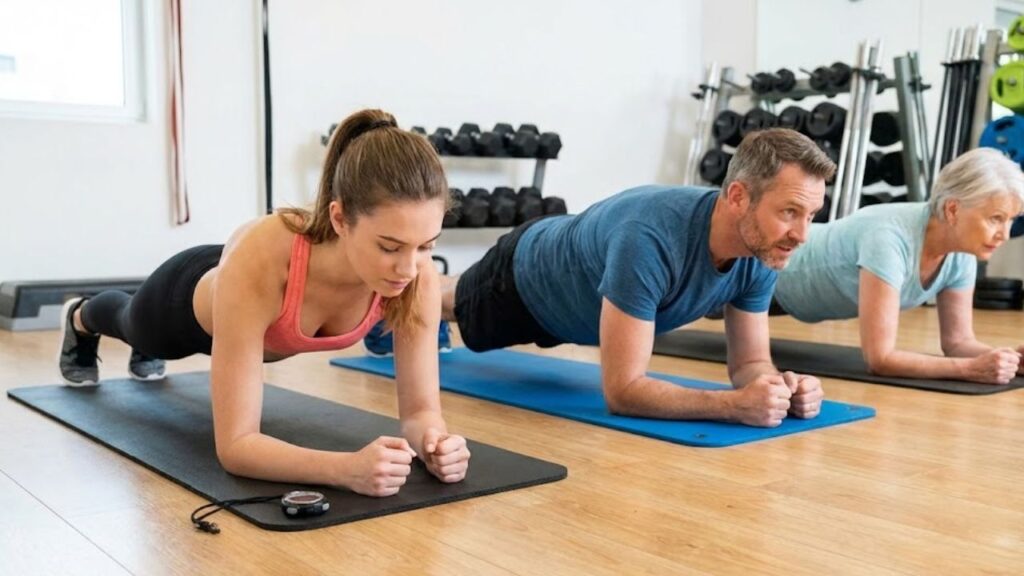
The Subtle Power of Your Core
Unlike noisy workouts filled with clanging weights and heavy steps, planks arrive quietly. You align your body in one long shape: shoulders over elbows, heels stretching back, and head floating naturally. To an observer, it may look effortless, but inside a quiet storm of stabilization is underway. Your transverse abdominis tightens like a supportive belt, the multifidus shields the spine, the diaphragm links breath to effort, and the pelvic floor maintains steady support. These muscles thrive on calm, precise engagement rather than drama. That’s why quality outweighs quantity. A tense minute-long plank is less effective than a twenty-second hold where your body feels aligned, strong, and in control. Time matters, but only in harmony with your form.
Why Long Planks Aren’t Always Better
Fitness culture often glorifies extremes: two-minute planks, five-minute challenges, viral clips of trembling bodies. The reality is simpler. Beyond a certain point, holding a plank longer increases discomfort tolerance more than core strength. Studies and seasoned trainers agree that short, focused holds repeated regularly build more meaningful results than occasional marathon efforts. Long planks aren’t inherently harmful, but the risk of fatigue and misalignment grows. With age, the goal shifts from pushing through to supporting your body efficiently and safely.

Age, Body Changes, and Plank Duration
As years pass, the body’s needs evolve. Recovery slows, tissues become less forgiving, and balance requires more attention. A plank that once felt easy may now demand deliberate effort. Instead of a one-size-fits-all rule, it’s best to follow flexible ranges that stop just before form begins to falter. Below is a general guide for healthy adults with no major injuries:
| Age Range | Suggested Hold Time (per set) | Sets | Weekly Frequency |
|---|---|---|---|
| Teens (13–19) | 20–40 seconds | 2–4 | 2–4 days/week |
| 20s–30s | 30–60 seconds | 2–4 | 3–5 days/week |
| 40s | 20–45 seconds | 2–4 | 3–4 days/week |
| 50s | 15–40 seconds | 2–3 | 2–4 days/week |
| 60s–70s+ | 10–30 seconds | 2–3 | 2–4 days/week |
Your 20s and 30s: Maximizing Strength
In your twenties and thirties, your body often recovers quickly, tissues are resilient, and strength comes naturally. Thirty to sixty-second holds can be ideal if performed with perfect alignment. The subtle risk is ignoring minor breakdowns: hips sagging, shoulders creeping, or lower back tension. Dividing effort into several short, focused planks usually provides more benefit than a single, exhausting attempt.

Your 40s: Strength With Mindful Awareness
In your forties, old injuries may resurface and stiffness appears sooner. Your strength remains, but body feedback becomes clearer. Twenty to forty-five-second holds, repeated a few times, strike a balance between effort and sustainability. Some days you may exceed this range comfortably; other days, stopping early is wiser. The key is protecting spinal alignment, posture, and daily mobility for long-term health.
Your 50s, 60s, and Beyond: Controlled, Resilient Practice
Later decades redefine strength. Muscle mass may decrease, balance can shift, and recovery takes longer—but planks remain valuable. Shorter holds of ten to thirty seconds with excellent form can be highly effective. Variations like knee planks or incline planks are smart adjustments, not compromises. Each well-supported second strengthens stability, posture, and confidence in movement.
Listening to Your Body
Your body signals when a plank shifts from productive to risky. Signs include lower back sagging, shoulders tensing, breath holding, or facial strain. Stopping at the first indication of form loss is skillful, not quitting. Regular, mindful practice allows your nervous system to optimize efficiency and maintain strength over time. By weaving short, precise planks into daily life—before coffee, after work, or before bed—you build sustainable core power. The true benefit lies in standing taller, moving confidently, and supporting your body through everyday life. Hold with integrity, rest, and repeat; that is where lasting strength resides.