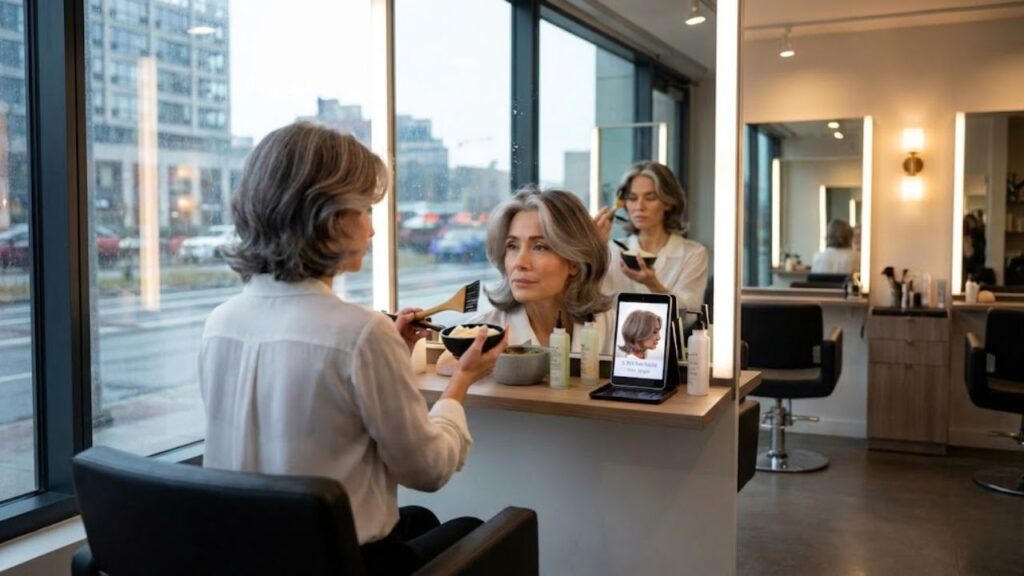
On a rain-soaked Tuesday inside a narrow city salon, a woman in her fifties studies her reflection. Under harsh neon lights, silver roots glint through the remnants of chestnut dye from her last visit. She exhales as the colorist prepares another bowl of sharp-smelling chemicals, that familiar mix of ammonia and quiet resignation. Around her, phones glow with before-and-after photos. Not dramatic reds or icy blondes, but softly blended greys that somehow make faces look lighter, fresher, more at ease. Her fingers pause on a saved image labeled “soft transition hair.” She hesitates, then finally speaks: “Could we try something more natural The colorist nods, reaches for a different set of tools, and the sharp scent of dye slowly fades. Something small, but meaningful, has shifted.
Why harsh dyes are fading and gentle greys are rising
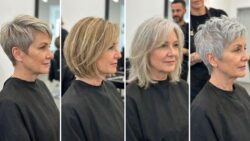
Look closely on any busy street and you’ll notice it: hair that exists in the middle ground. Not fully dyed, not fully grey, but softly blended, dimensional, alive. No helmet-like finish. No solid blocks of color. People are exhausted by constant root touch-ups and the ritual of watching dark pigment rinse down the drain every few weeks. They want hair that moves with them, that ages quietly instead of announcing concealment. The emerging philosophy is simple: stop fighting grey hair and start working with it.
Claire, 47, spent years booking color appointments every four weeks without exception. The first time she delayed one, a coworker casually remarked, “You look tired.” Less than a centimeter of silver had appeared, yet it was enough to change how she was perceived.

Frustrated, she visited a new colorist who suggested abandoning solid brown altogether. Instead, they added fine highlights and lowlights near her natural tone, blurring the harsh boundary between silver and color. Two sessions later, comments shifted. People asked if she’d changed her skincare routine.
The quiet science behind softer, younger-looking hair
A single opaque shade tends to flatten the face, deepening shadows under the eyes and around the mouth. Grey hair, especially when healthy and toned, reflects light differently.
By combining natural silver with translucent pigments and glosses, colorists create subtle dimension around the face. The eye perceives depth and freshness rather than stark regrowth lines. This is why reducing coverage to 60–80% in strategic areas often makes people look younger than full, heavy coverage ever did.
How to cover grey naturally without losing yourself
First comes the base: translucent, gentle color instead of dense dye. Plant-based pigments, low-ammonia formulas, or professional gloss treatments that sit on the hair’s surface rather than penetrating deeply.
Next is placement. Around the face, ultra-fine highlights blend silver strands with the original shade instead of erasing them. At the crown, slightly lighter tones lift the overall expression. At the nape, more natural grey is often left untouched since it reflects less light.
The biggest mistake is trying to undo years of dark dye in one session. That’s when unwanted orange, muddy, or green tones appear. It’s chemistry, not failure.
Another common misstep is treating grey hair as neglect. Grey strands are drier and more porous. They need moisture and toning, not repeated layers of pigment.
A realistic transition means stretching out appointments, switching to semi-permanent formulas, and gradually replacing full coverage with glosses and lowlights.

“Grey hair isn’t the issue,” explains Ana, a Paris-based colorist who specializes in transitions. “Contrast is. When roots are silver and the rest is flat brown, the eye only sees the line. So we soften it, and suddenly people say, ‘You look rested.’”
Smart techniques colorists are using now
Switch to semi-permanent or tone-on-tone color
Softens grey without harsh regrowth lines and is kinder to the scalp.
Use lowlights instead of full coverage
A few darker strands among silver add depth and healthy-looking shine.
Add a monthly gloss or toner
Neutralizes yellow tones and boosts shine without long-term commitment.
Brighten subtly around the face
Light near the hairline reflects onto the skin, creating a natural soft-focus effect.
Prioritize care over pigment
Hydrating masks, toning shampoos, and scalp care keep grey hair luminous.
A different way of aging, one strand at a time
This trend goes beyond hair color. It challenges the reflex that grey equals giving up. When color becomes softer and more honest, people stop apologizing for their age.
There’s confidence in blended silver at the temples, in hair that tells a story rather than hides one. The focus returns to the face, the expression, the person, not the roots.
| Key point | Detail | Value for the reader |
|---|---|---|
| Gentle blended color | Uses semi-permanent, plant-based pigments with highlights and lowlights | Softens regrowth lines and creates a youthful, natural frame |
| Gradual transition | Moves step by step away from heavy dye instead of one drastic change | Reduces damage, unwanted tones, and emotional shock |
| Grey as texture | Focuses on hydration, toning, and shine rather than concealment | Transforms grey into luminous, confidence-boosting hair |