Your core is one of the most constantly working muscle groups in the body. Often called the body’s central support system, it stabilizes the spine and pelvis, improves posture, and plays a key role in balance. Nearly every daily action—walking, standing, bending, or reaching—depends on core strength to feel steady and controlled.
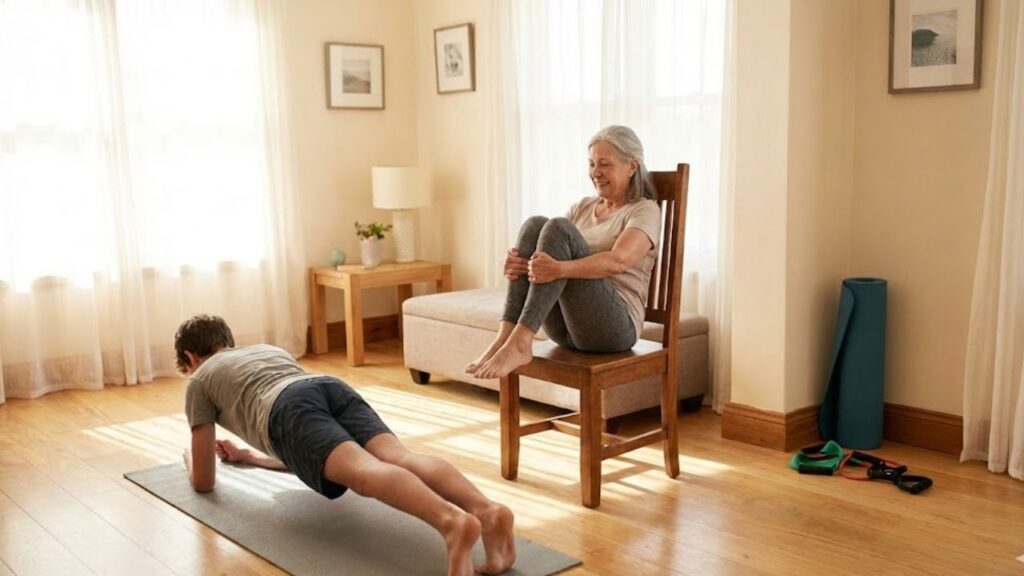
As we get older, maintaining core strength becomes even more important because it directly affects safety, mobility, and confidence in everyday life. To understand the most effective way to strengthen this area after 60, we spoke with Eric North, widely known as The Happiness Warrior. He is a wellness speaker, coach, and advocate for aging with strength, purpose, and emotional well-being. North developed a simple seven-minute chair routine that he says can build core strength more effectively than traditional planks for older adults.
Why Chair-Based Core Workouts Are So Effective
According to North, chair-based core exercises often outperform planks for adults over 60 because they emphasize safety, accessibility, and functional movement. Using a chair allows people to engage their muscles consistently without the strain of floor work or holding long, demanding positions.

This method provides a stable base, reduces pressure on joints, and focuses on movements that closely mirror real-life activities. Chair routines are also easy to modify, making them suitable for a wide range of fitness levels and ideal for maintaining long-term consistency.
“When physical barriers are removed and exercises support everyday movement, a chair routine helps older adults build a stronger, more supportive core that improves posture, balance, and independence,” North explains.
Seven-Minute Chair Routine for Core Strength
Seated Knee Lifts
Sit upright with your feet hip-width apart and flat on the floor. Lift your left knee toward hip height, then lower it slowly with control. Switch to the right leg and continue alternating in a smooth marching motion.
Continue for 30 to 60 seconds, focusing on controlled movement.
Seated Bicycle Crunches
Sit near the edge of the chair and place your hands lightly behind your head. Lean back slightly and begin pedaling your legs as if riding a bicycle. Rotate your torso, bringing the right elbow toward the left knee, then switch sides.
Perform for 30 to 60 seconds, keeping the movement steady and controlled.
Seated Russian Twists
Sit tall with your hands clasped together or positioned behind your head. Keep your feet flat on the floor, or lift them slightly to increase intensity. Slowly twist your torso from side to side, engaging the obliques.

Continue for 30 to 60 seconds with controlled motion.
Heel and Toe Taps
Sit upright and brace your core. Extend one leg forward and tap the heel on the floor, then pull the toes back toward you. Alternate legs while keeping your posture tall and core engaged.
Continue for 30 to 60 seconds.
Chair Sit-to-Stands
Sit at the front edge of a sturdy chair with your feet positioned under your knees. Lean slightly forward and stand up without using your hands. Slowly lower yourself back into the chair with control.
Repeat for 30 to 60 seconds or as many controlled repetitions as you can manage.
Seated Side Bends
Sit upright and place one hand behind your head while reaching the opposite arm down toward the floor. Bend gently to the side without leaning forward, keeping your torso aligned.
Complete one side, then switch. Continue for 30 to 60 seconds per side.
Cool-Down Stretch
Finish by gently stretching. Lace your fingers together and extend your arms forward, rounding slightly through the upper back. You may also add a cross-body shoulder stretch to release tension and relax the muscles.