The first thing that greets you is the stillness. A winter afternoon settles softly, pale light resting on kitchen tiles, a sink of dishes waiting without complaint. An orange sits in your palm. You roll it slowly, your thumb tracing the pebbled skin. When the peel breaks, something small and bright happens—a fine spray of oil, a sudden lift in the air. For an instant, the room smells like holidays, like a childhood kitchen, like the sunniest part of the year. And it becomes clear: the orange peel understands something your air freshener never could.
The Little Secret Hiding in Your Compost Bowl
Most of us toss orange peels straight into the bin or compost without a second thought. The fragrant sparks released while peeling fade quickly, and the rinds disappear beneath coffee grounds and eggshells. It’s a subtle kind of waste—easy to ignore until one day you pass by that bowl, catch a lingering citrus note, and pause. Could this have been more? There’s often a moment—maybe after cleaning or cracking a window to let winter air drift in—when you want your home to smell not just clean, but alive. Not a manufactured “citrus burst” or “fresh linen,” but something that once knew sun, soil, and rain. That’s when orange peels quietly step back into the picture. Boiling orange peels is a humble, almost forgotten ritual. It feels inherited, like something a grandparent once did without explanation. You take what you were about to discard and gently draw out every bit of fragrance it holds. The pot murmurs, steam rises, and the mood of the house slowly shifts. Not with a sharp perfume, but with a soft, warming brightness. No special tools are required. No complicated instructions. Just a pot, water, and peels from oranges you were already enjoying. In a world crowded with plug-ins and sprays, this simple act feels grounding—like choosing a real fire over a digital one.
The Scent Story Inside an Orange Peel
Before the peels ever meet the water, it helps to understand their quiet power. Look closely at an orange peel and you’ll notice tiny dots scattered across the surface. These are oil glands—microscopic pockets filled with aromatic compounds. When the peel bends or tears, those pockets burst open. The familiar rush of fragrance comes largely from limonene, an essential oil that smells bright, clean, and unmistakably citrus. Other compounds—myrcene, linalool, citral—add soft floral, herbal, and lemony layers your nose recognizes even if your mind doesn’t name them. Simmering the peels gently releases these oils. Heat loosens them; steam carries them upward. Instead of a quick flash that vanishes, the scent unfolds slowly, filling rooms for hours and sometimes lingering faintly into the next day. Unlike synthetic fragrances that dominate a space, citrus steam feels familiar and gentle. It hints at fruit stands, warm days, sticky fingers, and sunlight. That familiarity turns scent into atmosphere—and atmosphere into feeling.

Gathering Your Citrus: Fresh, Leftover, or Both?
Fresh peels from just-cut oranges offer the strongest aroma, rich with oils ready to rise. But this ritual works beautifully with leftovers too. You can save peels from breakfast or snacks in a container in the fridge, adding to them over a few days. Even refrigerated peels hold plenty of fragrance. If they dry out a bit, they still contribute—just more softly. Mixing fresh and slightly dried peels creates a balanced, layered scent. This reuse adds quiet satisfaction. You’re not just scenting your home—you’re extending the life of something that would have been thrown away. It’s a small partnership with nature, and it feels good.
| Type of Peel | Best Use | Scent Strength |
|---|---|---|
| Fresh orange peels | Simmer immediately | Strong and bright |
| Refrigerated peels (2–3 days) | Collected over time | Moderate to strong |
| Partially dried peels | Blend with fresh or spices | Soft background scent |
How to Boil Orange Peels for a Natural Citrus Glow
Picture entering your kitchen and being met by a gentle citrus warmth—not sharp or artificial, but comforting, as if it belongs there. That’s the heart of this practice.
Step 1: Prepare the Peels
Use peels from 2–4 oranges, depending on your space. Rinse and lightly scrub the fruit first, especially if it isn’t organic. Wide strips release scent slowly; smaller pieces act faster.
Step 2: Fill the Pot
Place the peels in a small or medium saucepan. Add water to cover them by an inch or two. This depth helps the fragrance last.
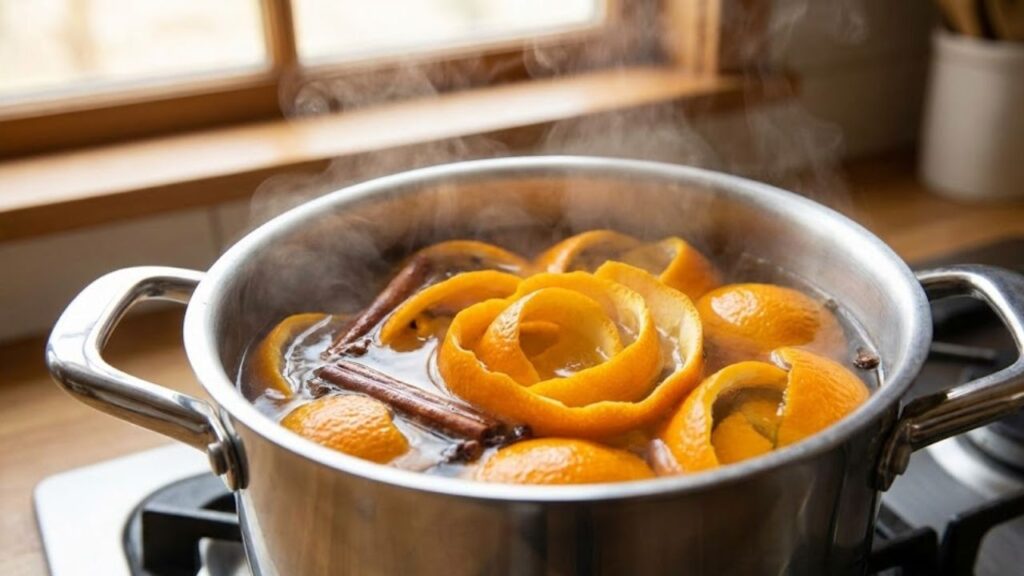
If you like, add a cinnamon stick, cloves, ginger, or rosemary. These additions shift the mood—cozy, spicy, or herbal—but orange alone is enough.
Step 3: Simmer Gently

Heat until small bubbles appear, then reduce to a soft simmer. Let it go for 30–60 minutes, checking water levels occasionally. Add more water as needed.
The scent spreads quietly, slipping into corners and hallways. You may notice your breathing slow, your shoulders drop.
Step 4: Reuse and Release
Turn off the heat and let the pot cool. The next day, add water and simmer again if fragrance remains. When the peels fade, compost them—used fully, nothing wasted.
Why This Ritual Feels So Comforting
On the surface, you’re just heating water and peels. In practice, you’re tending your space. The scent is gentle, never overpowering. It blends with your home instead of masking it. You can see the source right there—the fruit you touched and tasted. That honesty matters. And the rhythm of checking the pot, lifting the lid, inhaling the steam feels grounding, almost meditative.
Layering Orange with the Seasons
Orange peel alone is warm and bright, but it adapts easily. In winter, add spices for depth. In spring, pair with mint or lemon. In summer, rosemary or thyme creates a garden-like freshness. The core stays the same: citrus, water, and a small choice to let simplicity be enough.
Small Details That Change Everything
Never leave the pot unattended for long. Adjust peel quantity to your space. If the scent feels strong, lower the heat or move the pot off the burner. You can even set the warm pot on a trivet in another room to let residual heat continue the scent. Over time, this ritual may attach itself to moments—after cleaning, on quiet Sundays, as a weekly reset.
Beyond Scent: Quiet Benefits
Citrus aromas often lift mood and sharpen focus. The steam also adds a touch of moisture to dry winter air. And gradually, oranges become more than a snack—they become a two-part gift. You pick one up at the store and think not just of eating, but of an evening kitchen, fogged windows, and a soft breath of orange as the light fades.