On a sticky Thursday night in São Paulo’s East Zone, the fish counter at a humble neighborhood market is packed. Not with salmon, not with imported cod, but with a silvery fish that once drew side-eyes and snickers. A woman in a faded Corinthians T‑shirt lifts a tray, smells it, and nods to the seller. “I’ll take a kilo of sardinha. My kids are crazy about it now.” Around her, price boards tell a quiet story: everything has gone up, except this.
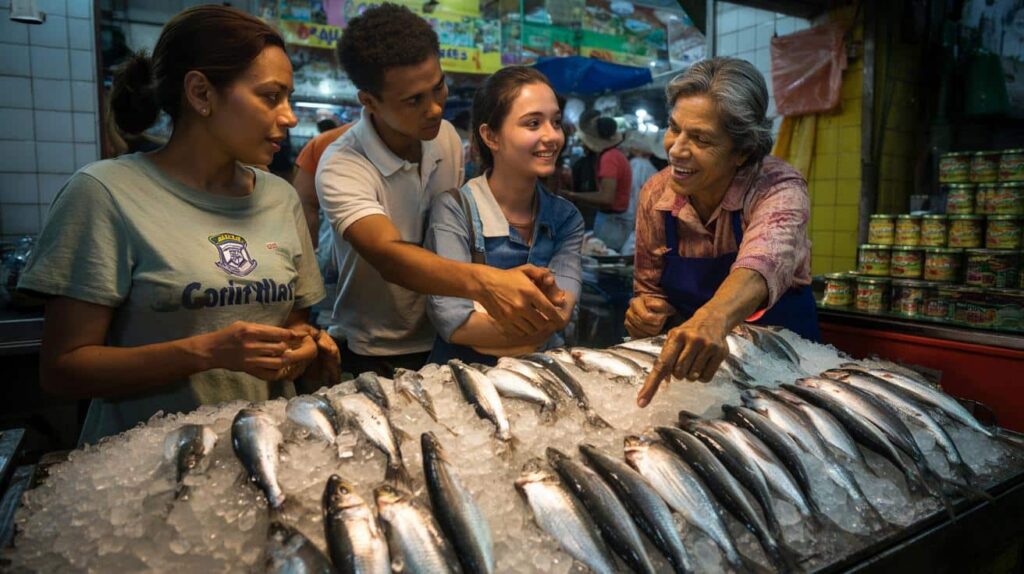
The seller, Marcelo, shrugs when asked about the sudden buzz. “People got scared of the expensive stuff,” he says. “Now they’re coming back to the old fish. The safe one.”
Sardines, the “poor people’s fish” of old Brazil, are having a very modern comeback.
Something big is shifting on those ice beds.

From “poor man’s plate” to proud Brazilian staple
At the peak of Brazil’s inflation shock, many families did something simple and radical at the same time. They walked right past the glossy salmon fillets and fancy tilapia, and stopped at the humble sardine. The same fish many associated with cheap canned lunches and their grandparents’ “days of hardship” started filling shopping carts again.
At first, some did it out of pure survival. Beef felt like a luxury, chicken prices climbed, and imported fish suddenly looked like an unnecessary risk. Then something unexpected happened. People rediscovered that sardines are rich, flavorful, filling, and loaded with nutrients that nutritionists drool over. The stigma began to crack.
A fish that once screamed “I’m broke” is quietly becoming a smart, almost proud choice.
Take Rio de Janeiro’s suburban rail line at 6 p.m. You’ll see the change in plastic bags dangling from tired hands. Where there used to be frozen nuggets and mystery sausages, there’s fresh sardine, still smelling of the sea. At a small stall near Madureira, a handwritten sign shouts: “Sardinha fresca: segura, saudável, R$ 12,99 o quilo.”
The seller says he doubles his order on Thursdays and Fridays now. Young couples ask how to clean and bake them. Older customers share tricks they learned from their mothers. Supermarket chains are reporting spikes in sardine sales, both fresh and canned, as Brazilians look for “safe protein” in the middle of recurring food contamination scandals. Numbers tell one story. The shopping basket tells another.
There’s a simple logic behind this quiet revolution. Sardines are small, fast-growing, and low on the marine food chain. That means less time to accumulate heavy metals, fewer toxins, and more resilience in the face of polluted waters than large predatory fish. Nutritionists keep repeating the same line to anyone who will listen: sardines deliver omega‑3, protein, calcium, vitamin D and B12, all at a price that doesn’t punch your wallet.
So while social media flaunted sushi boats and grilled salmon for years, the economic squeeze pushed people back to what coastal communities always knew. **If you want fish that feeds you well, doesn’t break the bank, and feels reasonably safe, you go small and local.** Sardines are exactly that.
How Brazilians are relearning to buy, cook and trust sardines
In many Brazilian kitchens, the “sardine comeback” started with a nervous, practical gesture. People opened the fridge, did the math on the month, and realized the usual protein rotation wasn’t going to work. So they turned to sardine recipes half-remembered from childhood. A quick escabeche. A tomato‑rich oven bake. That fragrant grilled version from beach kiosks.
The trick is in the handling. Fresh sardine should shine, literally, with clear eyes and a smell of the sea, not of old fish. Rinsed gently, dried well, salted with intention. A drizzle of lime, a lot of garlic, and hot oil or a very hot oven. Suddenly, what was “cheap food” becomes something worthy of a Sunday table. One well-seasoned tray can feed a family of five without drama.

A lot of people confess they were scared at first. Scared of the bones, of the “strong” smell, of getting it wrong and wasting even those few reais. We’ve all been there, that moment when you’re staring at a whole fish and thinking, “What now?” The shame of not knowing how to clean or fillet it runs deep for a country with such a long coastline.
The learning curve is real. The most common mistake is overcooking, which dries the flesh and intensifies the fishiness. Another is rinsing under warm water or soaking in lemon for too long, which breaks the texture. **Let’s be honest: nobody really follows all the textbook rules every single day.** So the modern Brazilian solution has been very human: watch a two-minute video, call your mother, ask the lady at the fish counter, experiment once a week until it stops being scary.
This new intimacy with sardines isn’t just about price. It’s about trust and control. After a series of food fraud scandals and questions over imported products, a lot of consumers feel safer seeing the whole fish and knowing exactly what they’re eating.
“People arrive here saying they’re fed up with not knowing what’s inside processed food,” says Ana Paula, who runs a small fish stall in Recife. “With sardine, they see the animal, they clean it at home, they cook it in front of the kids. There’s no secret, and that calms people down.”
Alongside that search for transparency, a new kind of “sardine literacy” is spreading:
- Choosing smaller sardines for grilling and larger ones for stews and baking
- Leaving the bones in for calcium when feeding children and older adults
- Rotating fresh and canned sardines to balance cost, time and convenience
- Using sardine leftovers in pasta, farofa or sandwich fillings to stretch the budget
*This is how a “poor people’s fish” quietly turns into a skill, almost a badge of resilience.*
The quiet power of a cheap fish in a tense country
Sardines are not going to fix Brazil’s cost-of-living crisis or erase the inequality baked into supermarket aisles. They won’t suddenly turn food deserts into paradise. What they do offer is something more modest and strangely powerful. A reliable, nutrient-dense, relatively safe protein that most families can still afford, even when beef feels like a distant dream.
There’s also a cultural repair job happening. People who once felt ashamed to serve sardines to guests now speak about their recipes with a kind of calm pride. Coastal traditions long dismissed as “pobre” are being rebranded as clever, sustainable and deeply Brazilian. **What was once hidden at the back of the pantry is now taking center stage on the table.** That shift says as much about dignity as it does about nutrition.
| Key point | Detail | Value for the reader |
|---|---|---|
| Affordable nutrition | Sardines deliver high-quality protein, omega‑3, calcium and vitamins at a much lower price than beef or salmon. | Shows how to protect health even when the budget is tight. |
| Greater food safety | Smaller, local fish tend to accumulate fewer contaminants than large imported species and are easier to inspect visually. | Helps readers feel more confident and in control of what they’re eating. |
| Kitchen skills, not status | Relearning how to buy, clean and cook sardines turns a “poor” food into a versatile, flavorful staple. | Empowers readers to stretch meals, reduce waste and cook with less stress. |
FAQ:
- Are sardines really safer than bigger fish?Often, yes. Because they’re small and short-lived, sardines usually accumulate fewer heavy metals and toxins than large predatory fish like tuna or swordfish.
- Fresh or canned sardines: which is healthier?Both have value. Fresh sardines keep texture and flavor, while canned ones retain most nutrients and add convenience, especially when packed in water or olive oil.
- What about the bones – do I need to remove them?For fresh sardines, you can eat small bones when cooked well, or fillet them if you prefer. In canned sardines, the bones are soft and edible, and they’re a great source of calcium.
- How many times a week can I eat sardines?For most healthy adults, two to three portions a week fit comfortably into a balanced diet, alongside other protein sources and plenty of plants.
- How do I know if my sardines are truly fresh?Look for bright, shiny skin, clear eyes, firm flesh and a clean sea smell. Dull color, cloudy eyes or a strong “old fish” odor are signs to walk away.