The sky over the city went the color of bruised peaches hours before sunset. People on the tram lifted their phones at the same time, trying to photograph the strange orange light, half amused, half uneasy. On the platform, a woman wiped sweat from her child’s neck with a grocery receipt. It was 9 p.m. and still 34°C.
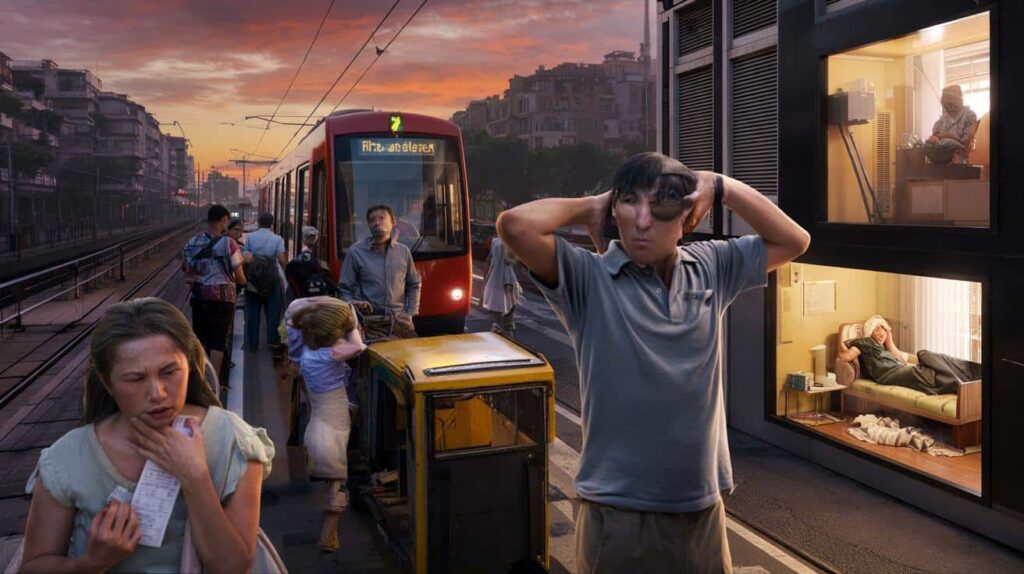
The announcer’s voice said there were “minor disruptions due to the heat.”
The man next to me muttered, “Guess this is just summer now.”
He sounded resigned, like someone accepting higher rent or slower Wi-Fi.

Scientists say that kind of shrug is exactly what should scare us.
The quiet damage our bodies pay for extreme weather
We call it a heatwave, like a passing thing, a mood the weather will grow out of. Then the nights stop cooling down and the air feels like wet cotton pressing on your chest. Your T-shirt clings to you inside the supermarket and the fridge aisle suddenly feels like a luxury resort.
People keep going, because life doesn’t pause for 40°C. We walk dogs on burning sidewalks, queue at bus stops that feel like low-budget saunas, open apps to see “feels like 44°” and scroll away.
There’s this strange split-screen in our heads: the forecast saying “record-breaking” and our routines pretending nothing really changed.
In Seville, Spain, researchers followed hospital admissions during a 2023 heat dome that sat over the city for 10 days. They saw strokes, kidney failure, heart attacks jump. Not by a little, but by tens of percent. Many of the cases came from people who never stepped into the sun.
A woman in her 70s told a local paper she had stayed in her apartment with the shutters down. No fan, too expensive to run all day. When she fainted in the kitchen, the tiles were 39°C. By the time the ambulance arrived, her body temperature was almost the same.
The report didn’t go viral. It sat in a PDF on a health department website while social feeds turned that same heatwave into sunset selfies and jokes about “global boiling.”
Climate scientists and doctors keep repeating the same message: our bodies evolved for a much narrower comfort band than our language suggests. We throw around words like “extreme” and “record” so often that they blur, but your heart, kidneys, lungs don’t get used to that.
Heat makes blood thicker. Heart rate rises. Sweat glands pour out salt and water, and your organs fight to keep the brain online. At 35°C with high humidity, your internal cooling system starts losing the race.
Call that “the new normal” often enough and we forget that every extra degree has a measurable biological price tag.

Why “getting used to it” is not a survival strategy
One quiet survival skill scientists recommend is almost embarrassingly simple: treat hot days like we treat illnesses. You slow down. You cancel heavy tasks. You schedule outside chores before 10 a.m. or after sunset.
On official heat alert days, some hospitals in France now tell cardiac patients to “plan for fewer steps, more glasses of water, and one cool room.” That can be a bedroom with a fan, or a neighbor’s living room with an old AC unit. It just has to exist.
They compare it to organizing for a storm. You wouldn’t go windsurfing in a hurricane. Why keep jogging at noon in 38°C?
The tricky part is emotional, not technical. We’re bad at listening to invisible limits. You still have emails, kids, deadlines, school runs. The lawn is dying, the dog is restless, the boss is “sure you can hop into the office.”
We’ve all been there, that moment when you realize you’re dizzy but tell yourself you’re just hungry or tired. Ten minutes later, your fingers tremble when you try to text. That’s not character. That’s thermoregulation failing.
Let’s be honest: nobody really cancels all their plans the moment the weather app tells them to. So the advice needs to fit messy, real lives, not ideal ones.
Scientists are starting to use a different phrase instead of “extreme weather”: they talk about “chronic shocks” to the body. As one epidemiologist put it, “Your nervous system doesn’t care if the heatwave is trending on Twitter. It only cares how long you’ve been above your safe zone.”
- Listen to early signals
Headaches, nausea, racing heart, unusual fatigue in the heat are not “being soft.” They’re early red lights. - *Create one cool refuge*
Even a single room 3–4 degrees cooler than the rest of your home gives your heart and brain a break. - Rotate responsibilities
Share school runs, dog walks, and grocery trips on red-alert days to cut individual exposure. - Change your language
Swap “it’s just hot” for “this is a stress event for my body.” That tiny shift makes protective choices feel legitimate. - Check on one person
An elderly neighbor, a colleague in a top-floor flat, a friend with asthma. One message can literally lower mortality.
The real cost starts where the forecast ends
A strange thing happens after every flood, wildfire, heatwave or ice storm. The news cameras leave, the roads reopen, hashtags fade. The people who lived through it don’t go back to baseline. Sleep changes. Blood pressure inches up. Kids’ asthma gets worse.
In a study following survivors of the 2021 German floods, researchers found elevated inflammation markers in the blood months later. Not from injuries, but from stress hormones stuck in a higher gear. One woman described it as “my body still expecting the water to come back.”
The same pattern shows up in neighborhoods hit by smoke from Canadian wildfires or repeated “once-in-a-century” storms in the U.S. South. The body quietly keeps the score.
| Key point | Detail | Value for the reader |
|---|---|---|
| Extreme weather is a biological event | Heat, smoke, and floods trigger measurable stress on organs and immune systems | Helps you treat alerts as health warnings, not background noise |
| “New normal” is a dangerous phrase | Normalizing record events hides rising risk and everyday damage | Encourages you to adjust behavior instead of forcing your body to adapt alone |
| Small shifts matter | Cool rooms, changed schedules, and language tweaks lower long-term strain | Gives concrete actions that fit real, imperfect lives |
FAQ:
- Question 1Is my body really at risk if I feel “fine” during a heatwave?
- Answer 1Yes. People often feel okay until dehydration and strain on the heart or kidneys suddenly tip over into crisis. Feeling fine doesn’t mean your organs aren’t working overtime.
- Question 2What’s worse for health: heat or air pollution from fires?
- Answer 2They’re dangerous in different ways, and together they’re especially harmful. Heat stresses the cardiovascular system, while smoke particles inflame lungs and blood vessels, raising risks for heart attacks and strokes.
- Question 3Can healthy, young people ignore most of these warnings?
- Answer 3Young bodies cope better, but not infinitely. Athletes, outdoor workers, and delivery riders are seeing more heat-related injuries and kidney problems, even in their 20s and 30s.
- Question 4Does “acclimatizing” to heat protect me?
- Answer 4Your body can adapt a bit — you may sweat earlier and manage heat slightly better — but that doesn’t erase the underlying risk when temperatures and humidity cross certain thresholds.
- Question 5What’s one change I can start this season?
- Answer 5Pick one: schedule outdoor tasks for cooler hours on red-alert days, set up a shared cool space with neighbors, or decide in advance that certain temperatures mean “no hard exercise.” Small rules beat vague intentions.