The first time I heard that a simple bowl of vinegar could “eat” bad smells overnight, I laughed. It sounded like one of those Internet hacks you scroll past while waiting for your pasta water to boil. Then one winter evening, after cooking fish in a tiny apartment with zero ventilation, I got desperate enough to try it. I poured white vinegar into a cereal bowl, left it in the middle of the living room, and went to bed wondering if my home would reek like a salad bar by morning.
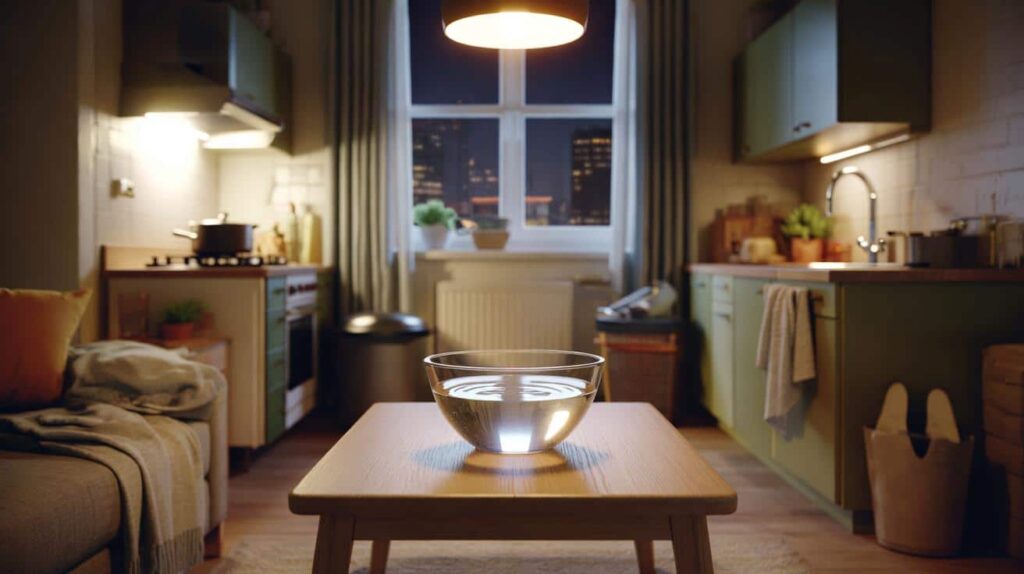
The next day, something strange had happened.
The fish smell was gone.

The place didn’t smell like vinegar either. It just smelled… neutral. Quiet. Almost as if the air had been reset during the night.
That’s when I started paying attention to this odd little trick.
What really happens when you leave vinegar out overnight
If you’ve ever gone to bed in a house that smells like fried onions, litter box, or damp laundry, you know the vague dread of waking up to the same stale air. Smells don’t just sit still, they soak into fabrics, cling to curtains, and float in a way you can’t quite escape. A bowl of vinegar seems like such a small gesture against all that. Yet by morning, the whole room can feel unexpectedly lighter.
It’s not magic. It’s chemistry working silently while you sleep, one invisible particle at a time.
Picture a small city kitchen after a heavy dinner: garlic, sizzling steak fat, a splash of red wine that boiled over. You open the window for twenty minutes, close it when you’re cold, and hope the smell will somehow finish the job. It rarely does.
One reader told me she started leaving a bowl of white vinegar on top of her fridge after cooking. “My partner hates the smell of yesterday’s food,” she said. “The first time I tried it, he walked in the next morning and asked if I’d cleaned the whole place. I hadn’t touched a thing.”
What changed was the air, not the furniture.
Vinegar is mostly water and acetic acid. Those acid molecules bind with some of the compounds that create strong odors: sulfur notes from cabbage or fish, amine compounds from garbage, the sour hints from stale smoke. Instead of just masking them with a scented spray, vinegar helps neutralize or alter them so they don’t hit your nose in the same aggressive way.
That said, it’s not a miracle worker. It won’t erase heavy mold problems, deep carpet smoke, or a week-old trash can that’s never been cleaned. *Think of it more like a night-shift assistant for your nose, not a full cleaning crew.*
 Psychology explains why certain people feel emotionally tired without being physically exhausted
How to use a bowl of vinegar so it actually helps
The method itself is almost suspiciously simple. Take a clean, wide bowl or glass baking dish and pour in plain white distilled vinegar. Around one cup is enough for a bedroom or small kitchen. Set it down on a stable surface somewhere near the center of the room, away from walls and fabrics, and just leave it there overnight.
For a larger living room or open-plan space, you can use two or three smaller bowls instead of one big one. Spread them out like quiet little air sentries.
Most people’s first mistake is choosing the wrong vinegar. Skip the fancy balsamic, the apple cider, the herb-infused kind. Those are for salads, not your hallway. White distilled vinegar is your best friend here: cheap, sharp, and less likely to leave a lasting food-like aroma.
Another common misstep is expecting this to fix a room without tackling the source. If the trash bag is still open, the litter box is full, or yesterday’s pan of oil is sitting in the sink, the vinegar can only do so much. We’ve all been there, that moment when you’d love a miracle hack that lets you avoid actual cleaning. Let’s be honest: nobody really does this every single day. But doing a quick “smell triage” before you set out your vinegar will change the result in the morning.
Sometimes what people read as “vinegar magic” is really just a combination of light cleaning, fresh air, and a little acid chemistry doing quiet work, an environmental health expert told me. “The bowl doesn’t scrub your walls. It just takes the edge off what’s floating around.”
- Best spotsNear the room center, or close to the main source of odor: near the kitchen after cooking, in the hallway by the shoe pile, or in a musty guest room before visitors arrive.
- How long to leave itOvernight works well. For stubborn smells, you can leave it 24–48 hours, replacing the vinegar if it starts to weaken or absorb dust.
- Smell managementIf the vinegar scent feels sharp at first, place the bowl higher up (on a shelf or fridge) or start with half a cup. The odor will usually fade as it works.
- What to do afterThrow the used vinegar down the drain or toilet. It can even help freshen the pipes slightly.
- When it’s not enoughIf you wake up and the smell is still intense, you may be dealing with moisture issues, hidden mold, or textiles that need washing, not just air that needs “resetting.”
Rethinking how your home smells when you wake up
There’s something oddly intimate about the way a home smells first thing in the morning. It tells the story of the night before: what you cooked, whether you left laundry in the washer, if someone smoked on the balcony, if a pet had an accident you didn’t notice. A humble bowl of vinegar won’t erase those stories, but it can soften their echoes.
Some people end up weaving this tiny ritual into their evenings, like turning off lights or checking doors. Not obsessively, not as a rule, but as an easy option when the air feels heavy.
The more you experiment, the more you’ll notice patterns. Different rooms respond differently. A bathroom with no window might clear up dramatically. A teenager’s bedroom might need a bit more help: some laundry, an open window, maybe a second bowl. Over time, the trick becomes less about vinegar itself and more about paying attention to the invisible climate inside your walls.
You might even catch yourself noticing how your place smells when guests walk in, or when you come back from a weekend away, with a new kind of curiosity instead of quiet embarrassment.
There’s no need to turn this into a rule or a chore. Some nights you’ll cook something strong and just live with it until morning. Other nights, when the air feels thick and tired, you might reach for the bottle under the sink and fill a bowl without thinking twice. That small act says: I care about how tomorrow will feel. It’s low-tech, low-effort, almost old-fashioned. And yet, when you wake up in a room that smells like nothing at all, it can feel unexpectedly luxurious.
| Key point | Detail | Value for the reader |
|---|---|---|
| Use plain white vinegar | Distilled white vinegar neutralizes odors better and leaves fewer food-like notes | Cleaner, more neutral indoor air without buying special products |
| Place bowls strategically | Center of the room or near the main odor source, overnight or up to 48 hours | Maximizes the effect while you sleep, with almost no effort |
| Support it with basics | Quickly remove trash, ventilate, tackle moisture and textiles when needed | Turns a simple trick into a more reliable routine for fresher mornings |
FAQ:
- Doesn’t my home end up smelling like vinegar instead?In most cases, the vinegar smell fades as it reacts with odor molecules and as the air circulates. If it feels too strong, use a smaller amount or place the bowl higher up and farther from where you sleep.
- Can I use apple cider or cleaning vinegar instead of white vinegar?Apple cider vinegar can work but may leave a fruity, fermented note. Cleaning vinegar is stronger and not always food-grade. For regular use in living spaces, plain white distilled vinegar is usually the safest and least intrusive choice.
- Is this safe around pets or kids?Yes, as long as the bowl is out of reach. Vinegar is not toxic in small amounts, but you don’t want a cat drinking it or a toddler knocking it over on fabrics or electronics.
- Will vinegar remove smoke or mold smells completely?It can soften light smoke or musty odors, yet it won’t fix deeply soaked carpets, walls, or a real mold problem. For those, you need cleaning, sometimes professional help, and better ventilation.
- How often can I repeat this trick?You can do it as often as you like: after cooking, post-party, during humid spells, or when a room feels stuffy. Just change the vinegar each time so it doesn’t sit there saturated and dusty for days.