When I begin working with a new senior client, the very first exercise I introduce is the wall plank. This simple yet effective movement targets the deepest core muscles, which play a key role in supporting the back and hips, maintaining good posture, and keeping the body stable during everyday activities. As we age, muscle mass, bone density, and balance naturally decline. Strong deep core muscles become even more important during this stage of life, helping to reduce the risk of falls, strains, and other injuries.
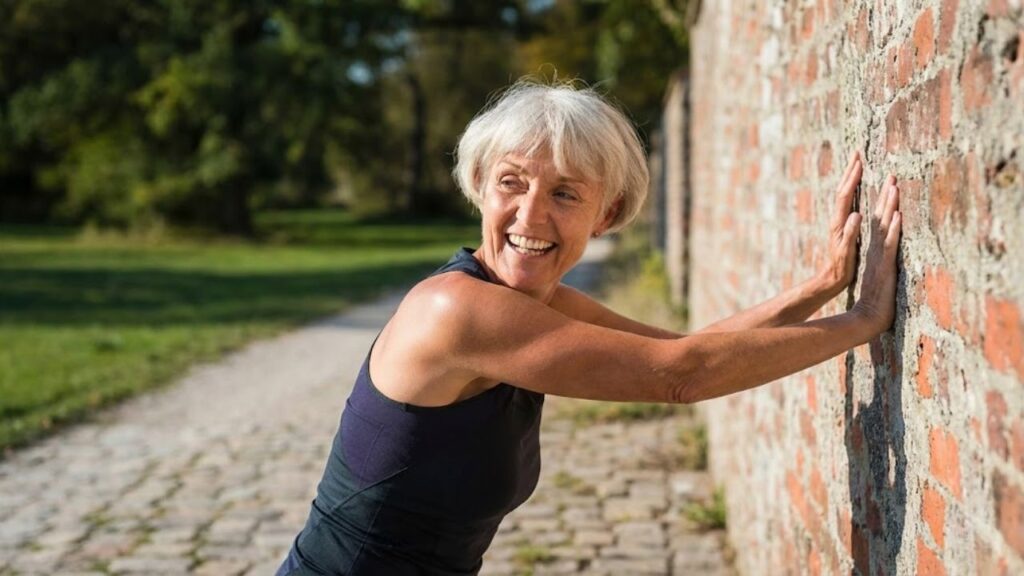
The Wall Plank Is Safe and Accessible
The wall plank works well for all fitness levels. It is easy to adjust, simple to progress, and safe enough to practice regularly. All you need is a clear wall and a few minutes of time. Because the exercise is performed standing upright, it’s especially suitable for people who are uncomfortable exercising on the floor.
Important Disclaimer
Always consult your doctor before starting any new exercise routine. A certified trainer can also help ensure proper form and suggest modifications if needed.

How to Do a Wall Plank
Stand facing a wall with your feet hip-width apart, about six inches away.
Lean forward and place your forearms on the wall, keeping elbows, forearms, and shoulders aligned.
Form a straight line from your head to your heels without letting your hips shift back or collapse forward.
Gently brace your midsection to activate your core muscles.
Hold the position for the desired duration while maintaining steady breathing.
How Long and How Often to Practice
Start with a 15-second hold and gradually build up to 60 seconds over time.
Beginners should aim for one set, two to three times per week. As strength improves, work toward two to three sets, five to seven days per week.
Make the Wall Plank Easier
If the exercise feels challenging, try placing your hands on the wall instead of your forearms, or step your feet closer to the wall to reduce intensity.
Make the Wall Plank More Challenging
To increase difficulty, step your feet farther away from the wall. Once you can comfortably hold the plank for 60 seconds with good form, progress to a lower surface such as a chair or bed.
Why Wall Planks Are Especially Beneficial for Seniors
Traditional floor planks are excellent for strengthening the transverse abdominis, a deep core muscle that stabilizes the spine and pelvis. However, many seniors find floor exercises difficult due to joint discomfort, limited mobility, or previous injuries. Wall planks provide a standing alternative that activates the same deep core muscles, helping improve balance, posture, and overall stability without the need to get down on the floor.