At CES 2026, the annual tech ritual that sets the tone for the year’s gadgets, TV makers are preparing a sharp change of direction. After a decade of hype around OLED and Mini‑LED, a new term is about to hit shop shelves and marketing banners: Micro RGB.
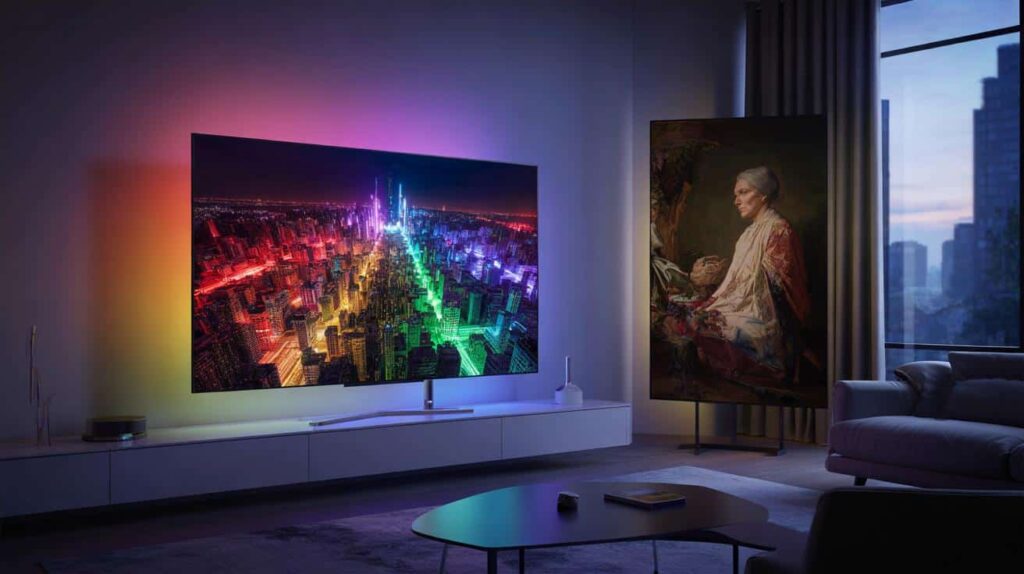
Micro rgb: the next step after oled and mini-led
Television technology tends to move in waves. Plasma gave way to LCD, LCD added LED backlights, then OLED took the spotlight with its inky blacks. Mini‑LED tried to bring premium contrast to cheaper price tags. CES 2026 now marks the moment TV brands push Micro RGB as the new flagship badge.
Micro RGB panels use a different approach from today’s mainstream sets. Instead of a white or blue backlight shining through colour filters, each tiny LED on the panel emits red, green and blue light directly.

Micro RGB displays aim to produce colour using self‑emitting microscopic RGB LEDs instead of relying on filtered white light.
This structure brings three immediate benefits: richer colours, cleaner bright highlights, and more accurate control over each part of the image. Brands are promising a visible jump in colour volume and brightness, particularly in HDR content.
How micro rgb actually works on the screen
LG and Samsung have confirmed that their first Micro RGB TVs use LEDs under 100 microns wide. That’s thinner than a strand of human hair. Each pixel can be driven with greater precision, because the light source itself produces the final colours.
By avoiding a strong white or blue backlight, manufacturers can fine‑tune colour balance more easily. This should reduce common problems like washed‑out reds or oversaturated greens, especially at high brightness levels.
Brands say the absence of a harsh white or blue backlight helps Micro RGB maintain colour fidelity even in very bright scenes.
Another promised gain is motion clarity. Traditional LCD panels sometimes show a faint “ghost” or trail behind fast‑moving objects. With Micro RGB, TV makers are highlighting reduced persistence, which should help sports, gaming and action movies look cleaner.
Naming chaos: micro rgb, true rgb, mini-led rgb…
While the core idea is similar, every brand wants its own label. That creates confusion before the products even hit the shelves.
- LG and Samsung: “Micro RGB”
- Sony: “True RGB”
- Hisense: “Mini‑LED RGB” or “RGB‑MiniLED”
These names all refer to a comparable generation of panels, but the overlap with existing terms is awkward. Mini‑LED already describes TVs using very small LEDs as a backlight, not as individual RGB emitters. Adding “RGB” beside “Mini‑LED” risks blurring the line between the two.
Shoppers will need to look beyond the logo on the box and understand what kind of light source the TV actually uses.
Micro rgb vs micro led: not the same bet
One subtle but crucial distinction sits between Micro RGB and Micro LED. Micro LED screens, heavily teased in past years, use self‑emissive LEDs at the pixel level, capable of completely turning off for perfect blacks and extreme contrast. They also carried eye‑watering price tags and complex manufacturing challenges.
Micro RGB borrows some elements, but aims for a more realistic balance. Blacks may not match the absolute depth of a true Micro LED wall, yet production costs and yields look more manageable. For TV makers burned by slow Micro LED adoption, Micro RGB could offer a way to refresh the high‑end market without repeating that expensive mistake.
Beyond picture quality: tvs turn into framed art and smart hubs
CES 2026 is not only about pixels. Brands also want to change what a TV looks like when it’s off. The familiar blank rectangle is seen as wasted space in the living room.
LG, for instance, is pushing a “Gallery TV” concept. These sets are designed to be hung like a framed print and can display a catalogue of around 4,500 artworks when not in use. Other manufacturers are preparing similar “art mode” features, with curated photography and motion‑sensitive display options.

Televisions are shifting from passive black slabs to digital canvases that stay visually active even when you are not watching a film.
Wireless display systems also feature strongly in early CES talk. Several prototypes aim to cut the visible cables by moving power, video and audio connections into a separate box or base station, leaving the panel itself almost cable‑free on the wall.
Where artificial intelligence fits into ces 2026 tvs
AI marketing will be everywhere in Las Vegas, and TV lines are no exception. But beyond buzzwords, brands are working on specific use cases.
AI‑based image processing will analyse each scene in real time, adjusting sharpness, colour tone and contrast differently for a dark drama than for a daytime football match. Ambient sensors will measure room brightness and colour temperature to tweak the picture automatically throughout the day.
On the content side, recommendation engines will mine viewing habits and household profiles to build personalised home screens. Some manufacturers hint at AI‑generated artwork and dynamic themes that adapt to the time of day or mood playlists.
Price, durability and what buyers should watch for
One of the big unknowns heading into CES 2026 is price. Micro RGB sits above today’s Mini‑LED and most OLED models in terms of technology, so expectations lean towards premium tags at launch.
Brands are also pitching these panels as more durable. OLED buyers sometimes worry about burn‑in on static logos or game HUDs. Micro RGB’s LED‑based architecture could limit that risk, especially for users who leave news channels or dashboard screens on for hours.
| Display type | Main strength | Main concern |
|---|---|---|
| OLED | Deep blacks, slim panels | Burn‑in over very long use |
| Mini‑LED LCD | High brightness, good value | Blooming around bright objects |
| Micro RGB | Richer colours, sharper motion | Early pricing and terminology confusion |
For buyers, the challenge will be reading spec sheets with a critical eye. Terms such as “colour volume,” “peak brightness” and “local dimming zones” still matter as much as the big marketing logo on the front of the box.
What micro rgb means for gamers, streamers and home cinema fans
For console and PC gamers, Micro RGB could bring some specific benefits. Low persistence and tighter control over each pixel should reduce blur during quick camera pans, especially at 120Hz and above. Higher brightness helps HDR titles stand out in well‑lit rooms.
Film enthusiasts may notice cleaner gradations in dark scenes and more accurate skin tones, assuming studios master content to take advantage of the extra colour range. Sports fans could see sharper ball tracking and less haloing around players in stadium floodlights.
Streaming services also stand to gain. As Netflix, Disney+ and others push HDR as their default for major releases, Micro RGB sets could show that content closer to how grading suites intended, without the muted colours sometimes seen on cheaper HDR TVs.
Key terms and scenarios for everyday use
A few technical phrases are likely to appear on CES banners and in spec sheets:
- Colour gamut: the range of colours a TV can produce. Micro RGB panels aim to cover wider cinema‑grade spaces like DCI‑P3.
- Colour volume: how well a TV keeps colours vivid at different brightness levels, rather than fading under strong highlights.
- Peak brightness: the maximum brightness for small highlights, crucial for realistic reflections, flames and HDR effects.
Imagine a typical evening at home: a bright living room with a window still letting daylight in, kids watching cartoons, and a football match starting later. A Micro RGB TV would try to punch through the ambient light without washing colours, then shift tone mapping and motion handling automatically once the match begins, and later dim down for a late‑night series binge.
There are still trade‑offs. Higher peak brightness can increase energy use if energy‑saving modes are disabled. Early‑generation models may also carry early‑adopter pricing. Yet the combination of more precise light control, fresh industrial design and AI‑assisted optimisation gives CES 2026 a clear visual theme: screens are not just getting thinner. They are getting smarter, more adaptable, and a little harder to ignore.