Glasses clinked, cutlery murmured, and every few minutes a plate of something creamy and golden drifted past, trailing steam and garlic. At the corner table, three chefs on their night off were joking over wine, zesting their stories with swear words and gossip. When the waiter came to take orders, all of them barely glanced at the same section of the menu before flipping the page. No one said anything. No one had to. There’s one dish they almost never touch.
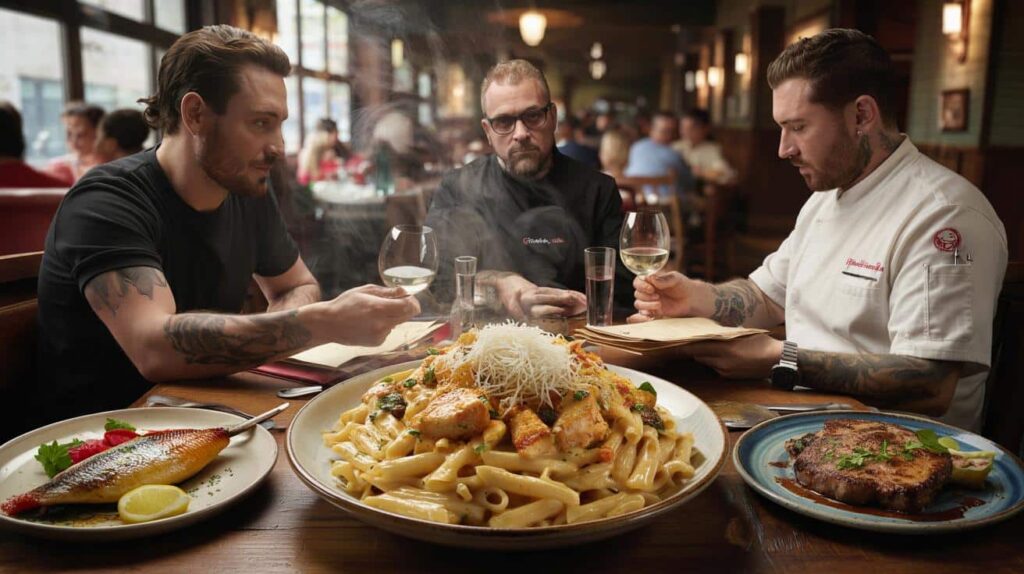
Strangely, it’s not because it tastes bad. In most restaurants, it’s rich, comforting, almost impossible not to like. Your mum might order it. Your colleague who “doesn’t really like trying new things” definitely will. Yet for people who work in kitchens, this plate has become a quiet red flag. It’s not about flavour, or fashion, or being snobbish.
It’s about what’s happening where you can’t see.

The one dish chefs quietly dodge
Ask a group of chefs what they never order when they eat out and the same answer keeps coming back: the restaurant’s creamy chicken pasta. Or whatever version of “cream-based sauce with something” is on the menu. It might be chicken Alfredo, carbonara-style, seafood linguine in a rich white sauce. They’ll smile politely when friends order it, while steering their own choice elsewhere. Not because they secretly hate cream.
They dodge it because they know how those sauces often live their lives. Stored in big plastic tubs. Reheated again and again on a busy service. Thickened, stretched, nudged back from the edge of splitting. A workhorse dish that can be batched on Monday and still limping along on Thursday. Once you’ve seen that backstage, the gloss on the plate looks different.
One London chef told me she practically plays bingo with menus. “If I see ‘creamy garlic chicken pasta’ or ‘four-cheese penne bake’, I know there’s a 90% chance that sauce was made in bulk,” she said. On a hectic Saturday service, that makes sense for the kitchen. Cream sauces are forgiving. They hold on the heat, they can be revived with a splash of stock, they mask a lot. Diners love them. They’re comfort in a bowl, and they sell like crazy.
But comfort food has a dark logistics side. Cream, butter, cheese and chicken are fragile ingredients when handled carelessly. Once they’re cooked, cooled, and reheated, the food safety clock starts ticking. The more times a container of sauce goes in and out of the fridge or bain-marie, the more the risk quietly climbs. Not in some dramatic, “you’ll get sick tonight” way. Rather in a slow erosion of freshness, texture, and nutritional value.
For chefs, the issue isn’t snobbery. It’s visibility. They know that this particular category of dish is where many mid-range restaurants cut corners without meaning to. Need a profitable, popular item that’s easy for junior staff to plate? Creamy chicken pasta is right there, ready to be ladled. Portions can be upsold with garlic bread, extra cheese, side salad. Margins look great. Nobody complains. Until you’ve spent years watching these tubs of beige cling to life in the walk-in fridge, the decision not to order it feels less like fussiness and more like self-preservation.
What chefs order instead – and how you can read the menu like they do
On their nights off, many chefs go hunting on a menu for signs of fresh cooking. They gravitate to dishes that are tricky to batch. A grilled whole fish. A steak with a quick pan sauce. A salad with seasonal ingredients that change often. These plates are harder to fake, and that’s exactly the point. They require the kitchen to actually cook for you, not just reheat for you.
They also watch the wording. A simple “roasted chicken with lemon and herbs” tends to signal a more honest plate than “creamy garlic chicken pasta bake with chef’s special sauce”. The more vague adjectives piled on, the more suspicious they get. *What exactly is “chef’s special sauce”, and how many times has it seen the inside of a microwave this week?* It’s not paranoia, just pattern recognition from years in the trade.
If you want to see the restaurant through a chef’s eyes, start with a tiny ritual: before you order, take ten seconds to scan for “house specials” and seasonal dishes. These are often the safest bets for freshness. Then look at the “crowd-pleaser” section of the menu: burgers, creamy pastas, anything smothered in cheese. Those can be great, obviously. But this is often where you’ll find the big-batch workhorses hiding in plain sight, engineered more for margin than for magic.
The trick isn’t to live in fear of cream sauces for ever. It’s to use them as a clue. If a place leans heavily on variations of the same rich, beige, saucy comfort dishes, that tells you something about how the kitchen is organised. In many chain restaurants, one central kitchen preps the base sauce, which then travels chilled to multiple outlets. Staff just add protein and garnish. That doesn’t make it “bad” automatically. It just means the romance of “made fresh just for you” doesn’t really apply.
Chefs know this, and they adjust. They’ll order the dish that looks like it forced someone to pick up a pan a few minutes ago. And they quietly leave the creamy chicken pasta to the rest of us.
How to spot a risky dish before it lands on your table
The next time you sit down at a restaurant, treat the menu like a little puzzle. Start by counting how many dishes rely on the same base materials: cream, cheese, white wine, mushrooms. If you see three, four, five different pastas all swimming in what looks like variations of the same sauce, a picture starts to form. That base was almost certainly made in a big batch.

Look for the workhorses: items that appear across starters, mains, and sides. The same cheese sauce on nachos, over chicken, and in the macaroni bake. The same “creamy garlic” note echoing through half the dishes. That’s not always sinister. In a busy bistro, it can be smart prep. Still, it nudges the odds toward something that’s been sitting around a while rather than whipped up to order.
Another small tell is the promised waiting time. When a server warns, “The roast chicken takes 25 minutes, is that okay?”, it’s easy to feel impatient. Chefs, oddly, see that as a green flag. That delay means either the dish is cooked from scratch or finished properly in the oven. A creamy pasta that hits your table seven minutes after ordering on a heaving Friday night? That speed has a cost hidden in the back-of-house maths.
Be kind to yourself when you read all this. On a tired Wednesday, your brain might just scream: “I want the huge bowl of creamy carbs and I want it now.” You are not failing at life because you sometimes order the safe, beige thing. On a lot of days, that’s exactly the hug you need on a plate. The point is not to become the food police. It’s simply to know what you’re really getting.
Restaurants are juggling rent, wages, skyrocketing ingredient costs, and impatient customers. Batch-cooking sauces is often how they survive. Some do it well, chilling and reheating carefully, tasting each time. Others cut it closer. That’s where the quiet risk creeps in: not just food poisoning, but flat, tired flavours you only notice once you’ve tasted the real thing. Soyons honnêtes : nobody has the energy to interrogate every menu choice every time they go out.
One experienced head chef put it bluntly:
“If a dish looks like something you could mass-produce in a school canteen, then in a busy mid-range place, they probably are. I’m not judging it. I’m just not ordering it for myself.”
So how do you use that without turning dinner into homework? A few quick rules of thumb help you keep the pleasure and skip the panic:
- Scan for multiple “creamy” dishes that sound eerily similar.
- Favour grilled, roasted, or pan-fried mains over heavily sauced bakes.
- Ask one simple question: “What do you cook fresh here?”
- Watch how the staff talk about a dish – do their eyes light up or glaze over?
- When in doubt, choose the seasonal special over the all-year, all-day crowd-pleaser.
Why this tiny choice says a lot about how we eat now
There’s something quietly revealing about the fact that chefs dodge creamy chicken pasta and similar dishes when they’re off duty. It speaks to a gap between what we think we’re buying – a personal, almost home-style meal – and the industrial dance that often sits behind it. Once you’ve worked the line on a Saturday night, you can’t unsee how much of restaurant food is logistics dressed up as generosity.
That doesn’t have to kill the joy. If anything, it can make the good stuff feel more precious. When you find a place where the cream sauce really is made in a small pan for each order, where the chicken isn’t pre-cooked and held, where the chef can tell you exactly when the stock was simmered, that bowl of pasta feels like a small miracle. You taste the difference in the way you feel afterwards. Lighter, somehow. Less weighed down by salt and shortcuts.
On a more personal level, dishes like the eternal creamy chicken pasta are a mirror of how we deal with comfort in our own lives. Easy, predictable, filling. Not always the freshest thing for us, not always made with the most care, but reliably there when we’re tired and hungry and just want to stop thinking. On a tough day, many of us will pick that over the risky, flaky whole fish that might arrive overcooked. On a braver day, we might flip the script.
We’ve all had that moment where a plate lands on the table and, before you even take a bite, you know what you’re in for. The smell of cream and garlic, the heavy shine on the sauce, the mountain of parmesan snow on top. It’s nostalgic, almost childlike. No wonder restaurants lean on it. And no wonder chefs, who see the backstage version of that nostalgia, sometimes step gently away.
Next time you sit down and hover over that creamy, comforting option, maybe you’ll pause for half a second. Not to feel guilty. Just to ask yourself: is tonight a “hug in a bowl” night, or is it a “show me what this kitchen can really do” night? Both are valid. Both can be joyful. That quiet choice is where your power as a diner lives – even if the person at the next table is happily twirling their fork through the one dish the chefs themselves almost never touch.
| Point clé | Détail | Intérêt pour le lecteur |
|---|---|---|
| Les chefs évitent les plats crémeux type “chicken pasta” | Ces sauces sont souvent préparées en grande quantité et réchauffées plusieurs fois | Aide à comprendre ce qui se passe vraiment en cuisine |
| Lire le menu comme un pro | Repérer les bases de sauce répétées, les plats trop “vagues” et les vrais plats cuisinés à la minute | Permet de choisir des plats plus frais et souvent plus savoureux |
| Rituels simples à adopter | Privilégier les spéciaux, poser une question au serveur, observer les délais annoncés | Offre des gestes concrets sans gâcher le plaisir de manger au resto |
FAQ :
- Is creamy chicken pasta always a bad choice?Not at all. In some restaurants, the sauce is made fresh in small batches and handled carefully. Chefs avoid it mainly because it’s the dish most likely to be bulk-cooked and reheated, not because it can’t be good.
- How can I tell if a sauce is made fresh?Look for menus with fewer dishes and more seasonal specials, and don’t be shy to ask, “Is this sauce made to order or from a batch?” The way the server answers usually tells you a lot.
- Are other dishes risky in the same way?Yes. Large trays of lasagne, creamy gratins, and some burger sauces can follow the same batch-cooking pattern. Any dish that’s easy to scoop and serve in seconds is a candidate.
- Is reheated food automatically unsafe?No. Reheating can be perfectly safe if temperatures and timings are respected. The issue is that in very busy kitchens, those rules are sometimes bent, which can affect both safety and quality.
- What do chefs usually order when they eat out?Many go for grilled fish, steaks, simple roasts, or seasonal dishes that clearly need to be cooked to order. They like plates where they can “see” the work, not just the sauce.