Most of us own a nail clipper, use it on autopilot, then toss it back in a drawer without a second thought.
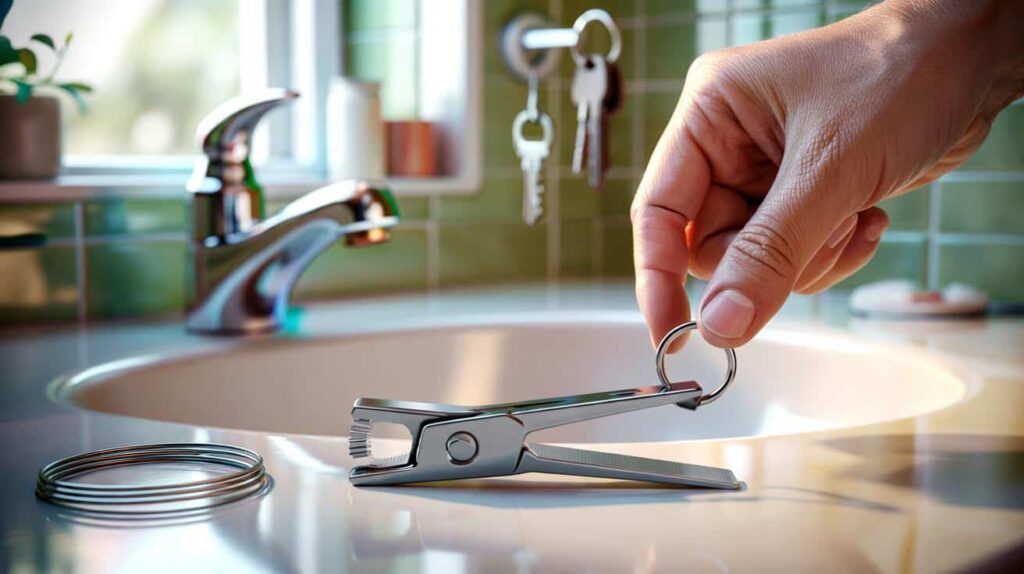
Look closely, though, and you’ll spot a tiny design detail that rarely gets any attention: a small round hole at one end of the clipper. It looks decorative, almost like a manufacturing quirk. Yet that opening has several surprisingly practical uses that can make the tool safer, handier and far harder to lose.
The tiny hole most people never question
If you check the nail clipper on your bathroom shelf or key tray, you’ll probably see it: a little perforation in the metal arm or in one of the jaws. Many people assume it’s there for show, or simply to save a fraction of a gram of metal.

That small hole is primarily a mounting point, turning a humble nail clipper into a portable, hangable, multi‑purpose tool.
Manufacturers add it so the clipper can be fixed to a keyring, a lanyard, a chain or a simple metal loop. Once attached, it no longer rattles around loose in handbags, backpacks or wash bags. For frequent travellers, parents or anyone who hates rummaging through a cluttered drawer, this tiny detail changes how the clipper is used.
Keeping nail clippers where you can actually find them
Nail clippers are small, dense and oddly good at vanishing into the depths of a home. The built‑in hole gives you several ways to stop that happening.
Smart ways to use the hole for storage
Instead of leaving your clipper to migrate between rooms, you can assign it a fixed “parking spot”. The hole makes it easy to:
- clip it to your main keyring, so it travels with you
- hang it from a hook in the bathroom or medicine cabinet
- attach it to the zipper of a toiletry bag for travel
- fix it on a small carabiner with other grooming tools
Kept on a visible hook or keyring, a nail clipper turns from a “where did I leave it?” object into a reliable, always‑ready tool.
This simple change can be particularly useful in shared flats or family homes, where clippers often “wander” between rooms or vanish into teenagers’ bedrooms. A designated hanging point helps everyone know where to put it back.
On‑the‑go grooming without rummaging
Attaching the clipper to keys or a travel pouch isn’t just about order. It also helps with hygiene and convenience. A clipper rolling loose in a handbag can pick up dust, crumbs or cosmetic residue. Fixed to a ring or strap, it stays more exposed to air and easier to wipe clean.
For people who travel frequently or work long shifts, being able to sort out a snagged nail in seconds — without emptying out a bag — can prevent small problems turning into painful tears or infections.
The “hidden” hardware trick: bending cables and wires
There’s another, less obvious use for that hole, one that has nothing to do with grooming. Because it’s a small, round opening in sturdy metal, it can serve as a makeshift bending tool for thin wires and cables.
If you thread a fine electrical wire, jewellery wire or similar material through the hole and then rotate the clipper body, you get a clean, controlled curve rather than a kink. The metal edges guide the bend, spreading the force more evenly.
Used gently, a nail clipper can produce smoother bends in thin wire than fingers alone, especially when you lack professional tools.
This can help with occasional household tasks: adjusting a wire hook, shaping a thin cable for a DIY fix, or tweaking a metal tag. It does not replace proper pliers and should not be used on thick or live electrical cables, but for light jobs it can be surprisingly handy.
Where that trick has limits
The steel in a nail clipper is designed for cutting keratin, not for absorbing the strain of heavy metalwork. Forcing thick or hard wire through the hole can damage the clipper, blunt the cutting edges or warp the arm.
A simple rule of thumb:
| Material | Use with clipper hole? |
|---|---|
| Thin jewellery wire | Generally fine, with gentle pressure |
| Soft electronics leads (non‑live) | Possible, but avoid crushing insulation |
| Thick steel wire or coat hangers | Best avoided — use proper pliers |
| Live electrical cables | Never — serious safety risk |
More built‑in functions than you’d expect
Once you start looking closely, many nail clippers reveal extra elements beyond the hole. The most common is a folding nail file, usually mounted along the side of the lever arm. It’s handy for smoothing rough edges after clipping or fixing a minor snag when you’re away from home.

Some models also tuck in a small metal pick or spatula‑shaped tip. That single piece of metal often gets used to:
- clean dirt from under fingernails
- gently nudge back soft cuticle tissue
- pry open envelopes or stubborn plastic seals
- turn or tighten very small screws in glasses or gadgets
In a pinch, people also use this tip for light cable stripping or cracking soft nutshells, though you run the risk of bending or dulling the tool. The overall picture is clear: what looks like a basic nail cutter often doubles as a compact multi‑tool.
Why proper use of a nail clipper matters for health
The nail clipper, in something like its current form, dates back to the late 19th century. It was designed to cut nails more precisely than knives or scissors, which often left jagged edges and uneven shapes.
Correct clipping technique lowers the chance of ingrown nails, painful tears and long‑term deformation of fingers and toes.
Specialists generally recommend a rounded or slightly curved cut that follows the natural line of the fingernail. For toenails, many podiatrists advise a straighter cut with gently softened corners to reduce the risk of the nail growing into the surrounding skin.
What research says about decorated and stressed nails
Recent scientific work has looked at how nails react to decorative treatments and chemicals. A study published in the journal Physical Biology analysed how extra coatings, extensions and aggressive shaping affect the forces inside the nail plate.
The researchers warned that strong chemicals and extreme shapes can damage the nail structure and, over time, alter the health of hands and feet. They suggested avoiding overly sharp or exaggerated edges, recommending straight or parabolic (gently curved) cuts instead.
The study highlighted that when the balance between growth forces and the way the nail adheres to the nail bed is disturbed, residual stresses can build up. These stresses may change with time and contribute to splitting, deformation or painful conditions such as ingrown nails.
Using a clipper or nipper that allows for clean, controlled shaping reduces these hidden stresses compared with tearing or biting the nail, or using dull blades that crush rather than slice.
Practical scenarios: using the hole to build better habits
Thinking about the small hole as a design feature, not a quirk, can encourage more thoughtful routines around nail care.
One simple scenario: a family installs a small hook inside the bathroom cabinet specifically for the nail clipper, which is attached via its hole to a ring. Weekly nail checks become part of a Sunday evening routine. Because the clipper is always visible and in the same spot, nobody needs to ask where it went, and nails get trimmed before they break or catch.
Another example: a frequent business traveller clips a lightweight nail clipper onto a toiletry bag zip. The same tool follows them from hotel to hotel, reducing the temptation to chew off a broken nail when one appears in a meeting or on a flight.
Risks, hygiene and small details that matter
Using the hole to keep the clipper on display also makes cleaning more likely. A tool sitting at the bottom of a drawer rarely gets wiped down; one that hangs at eye level is easier to inspect for rust, dirt or nail dust.
Regular disinfection with a little alcohol or hot soapy water, followed by thorough drying, limits the spread of fungi and bacteria — especially if the clipper is shared between several people. Sharpening or replacing a worn clipper is another overlooked step: a blunt edge crushes the nail, creating rough surfaces where microbes can lodge and where stresses concentrate.
Seen this way, that tiny hole is more than a convenience. Used thoughtfully, it supports better storage, cleaner tools, tidier nails and fewer avoidable problems. A barely noticeable detail ends up holding together quite a lot of everyday care.