That slow shift is exactly why long Amtrak journeys are rising in popularity, especially with travellers burnt out on airports. But if you’re used to planes and highways, your first overnight train in the US can feel surprisingly confusing unless you know how the system actually works.
Coach on Amtrak is not like flying economy
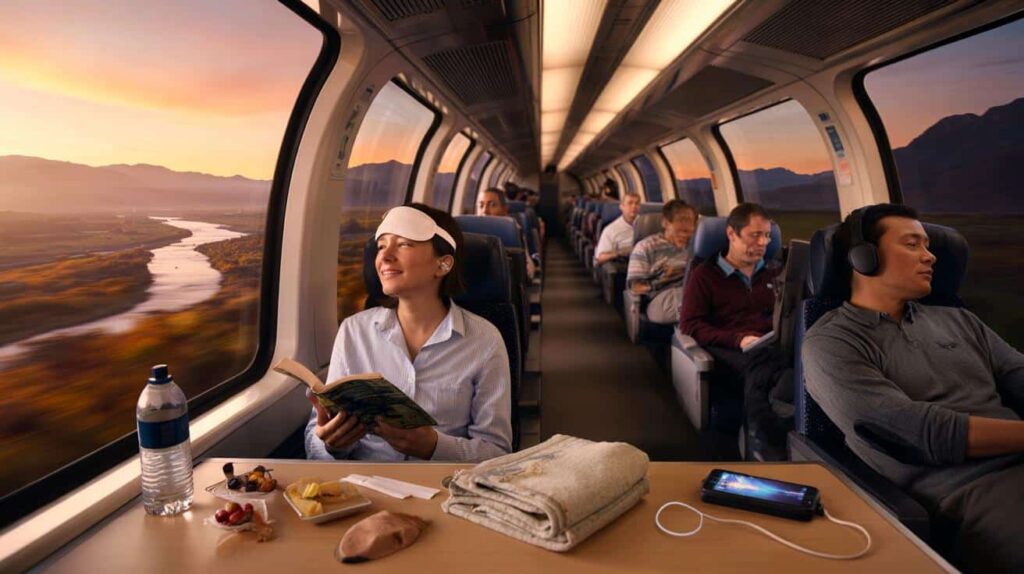
Most first-timers picture cramped airline-style seats and a fight for overhead space. Long-distance Amtrak coach is different. Seats are wider, legroom is generous, and you can walk around freely for much of the trip.
On many long routes the conductor assigns seats during boarding rather than letting you choose. You might be directed to a specific car and seat number, especially on busy services. That means window spots and quiet corners are not guaranteed.

Go in assuming you might not get your ideal seat, and plan how you’ll be comfortable anywhere in the carriage.
The noisiest place tends to be near the doors between cars. These slam and hiss all night as people walk through, and you’ll hear the rush of air from the vestibule. Light sleepers should pack earplugs or noise-cancelling headphones in case they are placed near those doors.
Keep a “seat bag” with everything you actually need
Amtrak’s generous baggage rules tempt people into bringing half their wardrobe. The trap is that big suitcases often end up on racks at the end of the car or in checked luggage, far from your seat.
Use a backpack or tote as your dedicated seat bag. That is your lifeline during the journey.
- Medication and any health essentials
- Reusable water bottle and some snacks
- Toothbrush, toothpaste and wet wipes
- Sleep kit: eye mask, earplugs or headphones
- Light change of clothes and socks
- Offline entertainment: book, magazine, cards, downloaded shows
Most long-distance coach seats have enough room to slide a bag under the seat in front. Many experienced riders also sleep with a small money belt or waist pack on, keeping phone, ID and bank cards literally on their person.
Beat the power scramble with your own charger
In theory, there is an outlet at or near each pair of coach seats. In practice, some are loose, some don’t work perfectly, and in an aisle seat you might have to drape a cable over your seatmate to reach it.
Bring a small power bank and a short charging cable for your phone. A multi-port USB charger is useful if you’re travelling as a pair and do manage to grab a working wall socket.
Assume train power is a bonus, not a guarantee, and you’ll never end up at your stop with a dead phone and no ticket screenshot.
Turn your seat into a sleeper
Pack warmth in clever, compact layers
Long-distance trains can feel chilly at night, especially near doors or windows. Instead of dragging a full duvet on board, think in layers:
- Light jacket or puffer that doubles as a pillow
- Small fleece throw or packable travel blanket
- Inflatable neck pillow or compressible pillow
- Slip-on shoes and warm socks
Wear soft, loose clothing you’d be happy to sleep in. You’ll still look presentable in the café car, but you won’t be wrestling with jeans at 3 a.m. when you decide to curl up and recline fully.
Build a simple pre-sleep ritual
Coach lights never go fully dark. Narrow strips of lighting run through the car so people can walk safely at night. An eye mask makes a huge difference, especially if you end up in an aisle seat where the glare can feel direct.
Many regulars swear by a basic routine: recline the seat, lift the footrest, slip on an eye mask, and queue up calming music or a meditation app. That consistent pattern helps your body understand that it’s time to sleep, even as the train rattles through freight yards and small towns.
The observation car is your secret upgrade
On classic long-distance trains like the California Zephyr or the Southwest Chief, a glassy, high-windowed observation lounge sits near the middle of the consist. This car, open to coach passengers, is where many say the “real” trip happens.
The observation car turns a simple journey from A to B into a rolling cinema of mountain passes, deserts and river valleys.
Seats face the windows rather than the aisle, and there are tables for laptops or card games. Light and space here feel very different from the dim, nap-focused coach cars.
| Time of day | Why the observation car shines |
|---|---|
| Morning | Soft light, fewer people, quiet reading or remote work |
| Afternoon | Best for big landscapes and casual chats with fellow travellers |
| Sunset / evening | Striking colours over plains, mountains, coasts; great for photos |
Arrive early in the day to claim a good spot, especially on scenic stretches. Bring your snacks, water and a jumper: you might decide to stay for hours.

Coach dining: think like a picnic, not a restaurant
Why a small cooler changes everything
Unless you book a private room, you likely will not have access to the full-service dining car with table-served meals. For coach passengers, food usually means the café car: microwaved items, packaged snacks, drinks and coffee at airline-style prices.
A compact soft-sided cooler or insulated tote can completely change your experience. Stock it before you board with foods that travel well and feel like a treat:
- Hard or semi-soft cheeses, cured meats, olives
- Cut fruit, cherry tomatoes, carrot sticks
- Crackers, nuts, small chocolate bars
- Premade salads in leak-proof containers
- Canned or bottled cold brew or iced tea
Freeze a water bottle to act as an ice pack at the start. Once thawed, you can drink it and then refill with ice from the café car. Pack a few zip-top bags for any leftovers so your seat area stays clean.
One social rule is worth stressing: be mindful with strong smells. Blue cheese, tuna and reheated fast food can turn a shared carriage into an unpleasant space for everyone else.
Use station stops as your fresh-food window
Many long-distance trains stop for 10–30 minutes at major stations. On certain routes you’re allowed off the train during these “smoke breaks” or servicing stops, as long as you stay close.
That short window is perfect for grabbing fresher food from station vendors or nearby shops if they exist. In some cities, local markets or bakeries are within a quick walk, letting you bring regional snacks back on board. Just keep a close eye on the time; trains do leave without late passengers.
Know the bathroom situation before you really need it
Coach restrooms on double-decker Superliner cars tend to be on the lower level. They are functional but tight, and not ideal for full outfit changes or complicated grooming routines.
Look for a dedicated changing or dressing room at the end of the lower corridor: it often has more space, a sink and a larger mirror.
This extra room is easy to miss; signage can be subtle. Once you’ve located it, you’ll have a much more comfortable spot to brush your teeth, swap into fresh clothes and generally feel human again after a night in the seat.
Timing, etiquette and expectations on long-haul routes
Amtrak runs on tracks usually owned by freight rail companies. That means long-distance trains can face delays as they wait for freight traffic. Build margin into your plans, especially if you have onward flights or tight connections.
Inside the train, basic etiquette keeps everyone sane on overnight legs. Keep phone calls short and quiet, use headphones for music or films, and dim laptop screens at night in darkened cars. Most conductors will nudge people toward quiet behaviour after a certain hour, but a little self-awareness goes a long way.
If you’re nervous about solo travel, trains tend to feel less isolated than intercity buses. You’ll often see the same faces moving between coach, café and observation cars throughout the day, and casual conversation with strangers is quite normal. That shared experience can make long routes feel almost like a rolling hostel.
When a roomette might be worth the splurge
For travellers used to hotels, coach can sound rough. In reality, many people find they sleep reasonably well after the first night once they get used to the sway and sounds.
That said, a roomette — a small private cabin with seats that convert to beds and access to the dining car — can be worth the extra cost if you:
- Are on a two-night or longer journey
- Need guaranteed quiet for work calls or rest
- Are travelling with a partner and value privacy
- Have mobility issues that make walking the train difficult
Think of coach as the baseline. With smart packing, a small cooler, and a willingness to roam into the observation car, many people find it comfortable enough for one- or two-night trips. For longer, more complex itineraries, upgrading part of the route to a roomette can be a strategic way to arrive less exhausted.
Approached with the right expectations, a long Amtrak ride becomes less of a chore and more of a moving retreat: time to read, sleep, watch the landscape change and see how big the country really is, one slow mile at a time.