Many people in their 60s, 70s and beyond still want to slim down – but the way they do it can backfire badly.
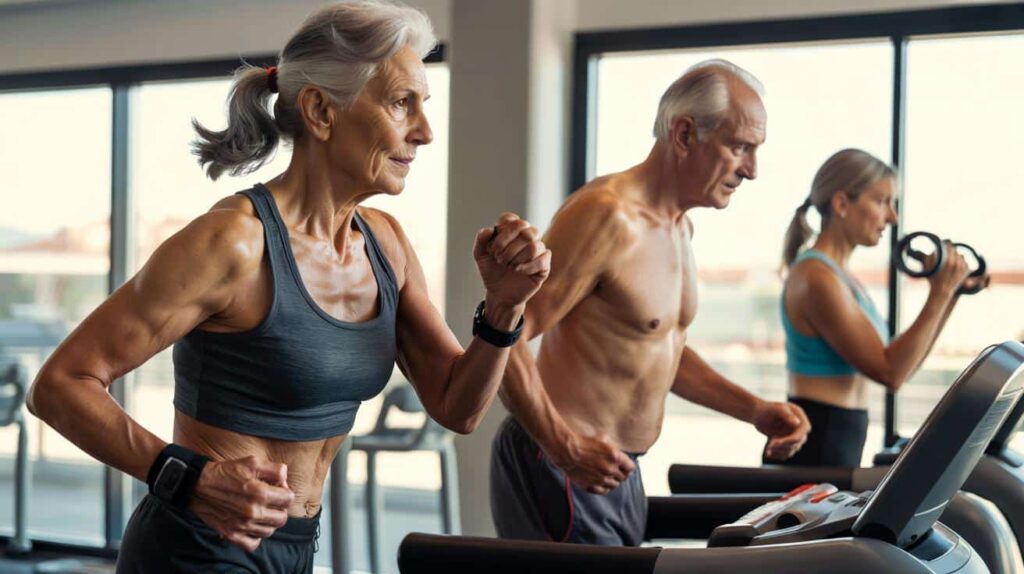
Weight loss later in life is not just about shrinking your waistline. The wrong approach can quietly strip away the very muscles that keep you walking, climbing stairs and living independently. A new Australian study is now challenging long‑held advice about “gentle” cardio and pointing towards a tougher, but surprisingly effective, alternative.
Why losing weight gets trickier with age
Carrying extra kilos places strain on joints, raises blood pressure and fuels type 2 diabetes. For older adults, though, simply eating less and walking more can come with a hidden cost: muscle loss.

The key problem is sarcopenia, the gradual decline of muscle mass and strength that begins as early as our 40s and accelerates with each decade. By your 70s, you can have lost a quarter or more of the muscle you had in your youth.
For seniors, the question is no longer just “How do I lose fat?” but “How do I lose fat without sacrificing muscle?”
If a diet slashes calories but is not paired with the right exercise stimulus, the body breaks down muscle as well as fat. The number on the scale goes down, yet walking speed, balance and grip strength often fall too. That raises the risk of falls, fractures and loss of independence.
Inside the study: low, moderate and high intensity compared
Sport scientists at the University of the Sunshine Coast in Australia set out to test how different types of cardio training affect body composition in older age. Their work, published in the journal Maturitas, followed 123 healthy adults aged 65 to 85 for six months.
Participants were randomly assigned to one of three programmes, all supervised and carefully controlled:
- Low‑intensity training (LIT): light movement, balance and stretching, three times a week for 45 minutes.
- Moderate‑intensity training (MIT): classic steady‑state treadmill walking, 45 minutes three times a week at around 60–70% of maximum heart rate.
- High‑intensity interval training (HIIT): treadmill intervals totalling 40 minutes, three times a week, with four short bursts at 85–95% of maximum heart rate, separated by recovery periods.
They were asked to avoid other strenuous activity before testing, keep medication routines unchanged and skip heavy meals, caffeine and alcohol for several hours before assessments. Body composition was measured using DXA scans – a precise X‑ray method that distinguishes between fat, bone and lean tissue – at the start, after three months and after six months.
The surprise: moderate cardio trimmed muscle as well as fat
All three groups moved more than before, and that alone made a difference. Fat levels dropped across the board, though not dramatically. The real shock came when researchers looked at what had happened to lean mass.
Only the high‑intensity interval group managed to lose fat while preserving lean mass. The moderate group lost both.
The low‑intensity group, focused on gentle activity and mobility, did not change their body composition in a meaningful way. They neither lost much fat nor gained muscle, although the sessions may still have helped with flexibility and confidence in movement.
The moderate‑intensity group – the sort of steady treadmill or brisk walking sessions often recommended to older people – did succeed in shedding fat. Yet they also lost muscle mass over the six months. For people already at risk of sarcopenia, that is a worrying trade‑off.
Only those doing HIIT held on to their lean tissue while still reducing fat. In plain terms: they got leaner without becoming weaker.
Why muscle quality beats the number on the scales
The authors argue that for older adults, the focus should shift from chasing a specific weight to protecting what they call “muscle quality” – the combination of muscle size, strength and function.
A lighter body with weaker muscles can leave an older person worse off than a slightly heavier body with strong legs and hips.
Short, intense intervals appear to send a stronger “stay useful” signal to muscles than long, gentle sessions. Higher effort recruits more muscle fibres, stresses the cardiovascular system briefly but powerfully, and may trigger hormonal responses that help preserve lean tissue.
That does not mean every 75‑year‑old should be sprinting up hills. It does suggest that a safe level of intensity, tailored to the individual and closely monitored at first, matters more than many guidelines currently acknowledge.
What high‑intensity means when you are over 65
The phrase “high‑intensity” puts many older people off, conjuring images of boot camps and breathless workouts. In research terms, though, it simply describes exercise segments where your heart rate climbs close to its personal maximum for short spells.

For a fit 30‑year‑old, that might be fast running. For a 78‑year‑old with arthritis, it might be quicker pedalling on a stationary bike or walking uphill on a treadmill while holding on to the rails.
| Type of session | How it feels | Main effect |
|---|---|---|
| Low‑intensity | Comfortable, can chat easily | Mobility, light activity |
| Moderate‑intensity | Breathing faster, can talk but not sing | Fat loss, some fitness, risk of muscle loss if done alone |
| High‑intensity intervals | Hard work in short bursts, talking difficult | Fat loss plus muscle preservation |
A common starting pattern for seniors looks like this:
- 5–10 minutes very gentle warm‑up.
- 30 seconds of “hard but safe” effort (for instance, fast pedalling on a bike) followed by 90 seconds of easy movement.
- Repeat this cycle for 10–20 minutes, then cool down slowly.
All of this needs medical clearance first, particularly for people with heart disease, lung conditions or balance problems. Early sessions should ideally be supervised by a physiotherapist or exercise professional who understands ageing bodies.
When HIIT is not suitable: the role of strength work
Some older adults will never be candidates for high‑intensity intervals, whether due to heart issues, severe joint disease or advanced frailty. That does not mean they are shut out from better body composition.
Combining steady cardio with full‑body strength training can blunt muscle loss, even without intervals.
A practical pattern used in many clinics and rehab settings is:
- Twice a week: 30–40 minutes of strength training that covers major muscle groups – legs, hips, back, chest, shoulders and arms.
- Immediately followed by about 30 minutes of moderate walking or cycling.
Strength exercises can be done with machines, resistance bands or simple body‑weight moves such as sit‑to‑stands from a chair, wall push‑ups and step‑ups. The aim is to reach a point where the last few repetitions feel challenging without causing pain.
This mixed approach may not match the fat‑loss efficiency of HIIT, but it creates a solid base: slower decline in muscle, better balance, more stable joints and improved blood sugar control.
What “muscle quality” actually means day to day
The term can sound abstract, so it helps to link it to real‑life tasks. Higher muscle quality means you can carry shopping bags without needing a rest, get out of a low chair without using your arms and climb stairs without fear of your legs giving way.
Lower muscle quality shows up as slower walking, difficulty rising from the floor, trouble catching yourself after a stumble and growing reliance on handrails or other people. These changes are not just annoying; they strongly predict hospital stays, nursing home admission and loss of independence.
For many people over 70, the real goal of training is not a “beach body” but the ability to live at home, unaided, for as long as possible.
Seen through that lens, the Australian findings give older adults and their doctors a sharper tool. Rather than prescribing “some gentle walking” for everyone, they point towards more targeted plans: intervals where possible, or at least strength paired with cardio.
Practical scenarios: adjusting the idea to real lives
Consider three fictional readers. Margaret is 82, has osteoporosis and worries about falling. For her, supervised intervals on a recumbent bike, with a belt and back support, might provide the higher‑intensity stimulus without the danger of tripping.
James is 70, overweight but with healthy joints, and already walks daily. He might shift two of those walks into short hill intervals: one minute uphill at effort, two minutes back down at an easy pace, repeating six to eight times.
Samir is 76 with heart failure and cannot safely raise his heart rate very high. His best path may be gentle but consistent strength training twice weekly, paired with flat, moderate walks, focusing less on intensity and more on regularity and confidence in movement.
None of these people has to chase perfection. Even small improvements in leg strength and fitness are linked with better survival and less disability. The core message from the new research is that the way older adults train shapes not just their body fat, but their future independence – and that a bit of carefully managed intensity might be worth the effort.