The first thing you hear is the clanging. A sick, metallic shudder running up through the hull, followed by a stunned silence on deck. Off the bow, a tall black dorsal fin cuts through the gray Atlantic like a knife. Then another. Then three more. The skipper of the 42-foot sailboat grips the wheel, eyes locked on the glossy back of an orca sliding alongside the rudder. Someone mutters that they’ve heard about “those attacks in Spain,” the way people talk about urban legends. The ocean feels suddenly very small.
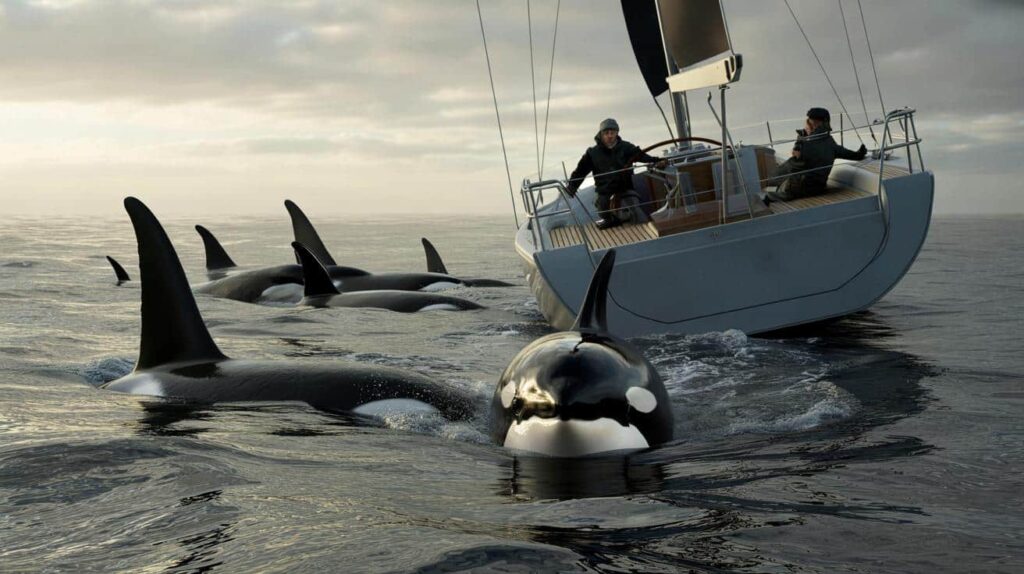
One of the whales nudges the rudder. Then rams it. The wheel jerks out of the skipper’s hands. A loud crack echoes under everyone’s feet. The boat spins, helpless.
On the radio, a voice from shore repeats the same phrase, calmly and firmly.

“Do not engage with the orcas.”
A new pattern that has scientists sitting up straight
Out on the water, people are used to surprises. Storms roll in fast, engines fail, dolphins show up out of nowhere and surf the bow. Orcas, though, used to be the dream encounter. The kind of moment that has everyone dropping their phones and just staring. Lately, that dream has turned into a knot in the stomach for crews from Portugal to Alaska.
Marine biologists tracking these encounters say something has shifted. Not just in how often orcas are approaching boats, but in what they do once they arrive. This doesn’t look like random curiosity anymore. It looks deliberate. And that scares people who know these animals best.
Off the Iberian Peninsula, especially around the Strait of Gibraltar, sailors have been reporting a strikingly similar story. A group of orcas approaches, heads straight for the stern, then targets the rudder like it’s on a to-do list. Within minutes, fiberglass cracks, steering fails, and the boat drifts, spinning in circles until rescue arrives. Spanish and Portuguese authorities have now logged hundreds of such incidents since 2020.
It’s not only there. In recent months, yachts off Scotland, fishing boats off the Pacific Northwest, and even whale-watching vessels have reported unnervingly close orca “interactions.” Some last only a few seconds, some drag on for an hour, with the animals returning again and again. The strange part is how specific their focus seems to be. They aren’t just bumping the hull. They’re going for the parts that make the boat work.
Biologists are careful with words, but their concern leaks through. The leading hypothesis is almost cinematic: a single orca may have had a traumatic encounter with a vessel, then began repeating the behavior, which spread socially through its pod. Orcas are cultural animals. They learn from one another, pass on hunting techniques, even “fashion trends” like wearing dead salmon on their heads. So a new behavior around boats, once picked up, can move through a group like a meme.
This doesn’t mean orcas are plotting revenge like villains in a movie. It does mean we’re watching a large, intelligent predator actively rewriting its playbook around human technology. That’s a big deal for anyone who spends time at sea.
How humans are quietly rewriting their own rules at sea
Maritime agencies along busy orca corridors are now sending out new playbooks to captains, skippers, and weekend sailors. The advice sounds counterintuitive at first: slow down, stay quiet, and don’t try to “shoo” the animals away. Speeding up or spinning the wheel like crazy can trigger more interest, not less. The recommended move is almost passive. Reduce speed, keep a straight course if possible, and avoid sudden maneuvers that might look like play or prey.
Some crews also dim deck lights and cut music when orcas appear. The goal is to make the boat boring. No chase, no drama, nothing worth investigating. It’s less about dominating the situation, more about gently opting out of the interaction.

This runs hard against the grain for a lot of people on the water. We’ve all been there, that moment when adrenaline spikes and your hands want to do something, anything, just to feel in control. Some sailors admit they’ve tried banging pots on the hull, spraying hoses, even shouting at the animals out of sheer panic. Those tactics don’t just fail, they can escalate the encounter or increase the risk of injury to both orcas and humans.
Rescue operators now repeat a quiet mantra during distress calls: stay calm, keep distance if you can, and don’t treat the animals like a problem to be solved in real time. *You’re not going to outsmart a 6-ton predator with a boat hook and some shouting.*
Marine biologist Carla Pérez, who has been following the Iberian orcas for years, put it bluntly: “These whales have grown up in a world full of ships. From their point of view, we changed the rules first. They’re only responding to the game we brought into their home.”
At briefing sessions for recreational sailors, experts now repeat a handful of plain, almost boring guidelines that can dramatically lower risk:
- Slow your vessel and avoid sharp turns if orcas appear near the stern.
- Cut music and reduce unnecessary noise to keep the encounter neutral.
- Stay away from the edge of the deck and keep hands and feet clear of the water.
- Report any close interactions to local authorities with time, location, and behavior.
- Respect exclusion zones and seasonal advisories, even when the sea looks empty.
Let’s be honest: nobody really reads every single notice to mariners before a sunny weekend sail. Yet those dry bulletins are where the new “how not to bother an orca” rules are quietly being written.
What this uneasy dance really says about us
Spend enough time listening to orca researchers, and the story starts to sound less like “killer whales attacking boats” and more like a mirror we didn’t ask for. These animals are smart, tightly bonded, and wildly observant. They notice vessel traffic getting heavier, engines louder, fishing lines fuller. They notice when a boat injures a pod member. They remember.
Some scientists talk about “behavioral adaptation,” others talk about “cultural transmission,” and a few whisper words like frustration or experimentation. Either way, what we’re seeing is an apex predator adjusting to our presence, not the other way around. That should give us pause.
When a group of orcas learns how to disable a boat’s steering in minutes, it doesn’t just change insurance premiums and shipping routes. It changes the emotional climate of the sea. Skippers who once slowed down to watch a pod glide by now tense up, fingers hovering near the radio. Families booking whale-watching tours ask, “Is it safe?” And biologists worry that any harm done to orcas during these scares will be blamed on the animals, not on the long buildup of noise, pollution, and crowding we’ve brought into their world.
This new phase of orca–vessel encounters isn’t a tidy story with heroes and villains. It’s a live, messy negotiation between species that share the same space, but not the same rules. How we respond in the next few years—on policy papers, on fishing decks, on private yachts—will quietly redraw the map of that relationship. The question isn’t just what the whales are learning about us.
It’s what we’re willing to learn about them, while there’s still time to listen.
| Key point | Detail | Value for the reader |
|---|---|---|
| Orca behavior is shifting | More frequent, targeted interactions with rudders and sterns in several regions | Helps readers understand why recent headlines feel different from older “whale encounter” stories |
| Humans need new sea habits | Slower speeds, quieter decks, and calm reactions can reduce risky encounters | Gives practical steps for anyone who sails, fishes, or tours in orca waters |
| The relationship is evolving | Orcas are culturally adapting to human presence and vessel traffic | Invites deeper reflection on how our behavior shapes wildlife behavior over time |
FAQ:
- Are orcas really “attacking” boats on purpose?Researchers avoid the word “attack” because it suggests clear intent, like revenge. Current evidence points to learned, socially transmitted behavior that may be linked to curiosity, play, or a past negative encounter with a vessel, but the exact motivation is still under study.
- Has anyone been killed by these recent orca–boat incidents?No human deaths have been directly linked to the new wave of rudder-focused interactions. The main impacts so far are damaged boats, shaken crews, and a growing sense of unease among people who work or travel at sea.
- What should I do if orcas approach my boat?Reduce speed, avoid sudden course changes, cut unnecessary noise, keep everyone away from the waterline, and call local authorities or coast guard if the animals begin pushing or ramming the vessel. Staying calm and predictable helps lower the risk.
- Are these behaviors happening everywhere or only in Spain and Portugal?The most concentrated and well-documented series of rudder-focused interactions has been recorded off the Iberian Peninsula, but sporadic reports of close, unusual orca behavior with vessels have surfaced in other regions too, including the North Atlantic and the Pacific Northwest.
- Could these encounters lead to new protections for orcas?Possibly. Some agencies are already considering seasonal speed limits, rerouted traffic, and expanded exclusion zones in key orca habitats. As data grows, pressure may build for stronger legal safeguards—and for changes in our everyday behavior at sea.