The first time you watch ladybugs quietly strip a tomato stem of aphids, you start questioning every spray bottle in your shed. The scene always begins the same way: a drooping leaf, a sticky residue on your fingers, that sinking feeling when you flip it over and see a whole colony feasting on your hard work. For a second, you picture giving up on “organic” and just nuking the bed with chemicals. Then the garden surprises you. A hoverfly lands on a purple flower nearby, a lacewing drifts in at dusk, and suddenly the balance shifts without you lifting a finger. The more you look, the clearer it gets. Some plants are not just pretty — they’re tiny, living magnets for garden bodyguards. And they’re very good at their job.
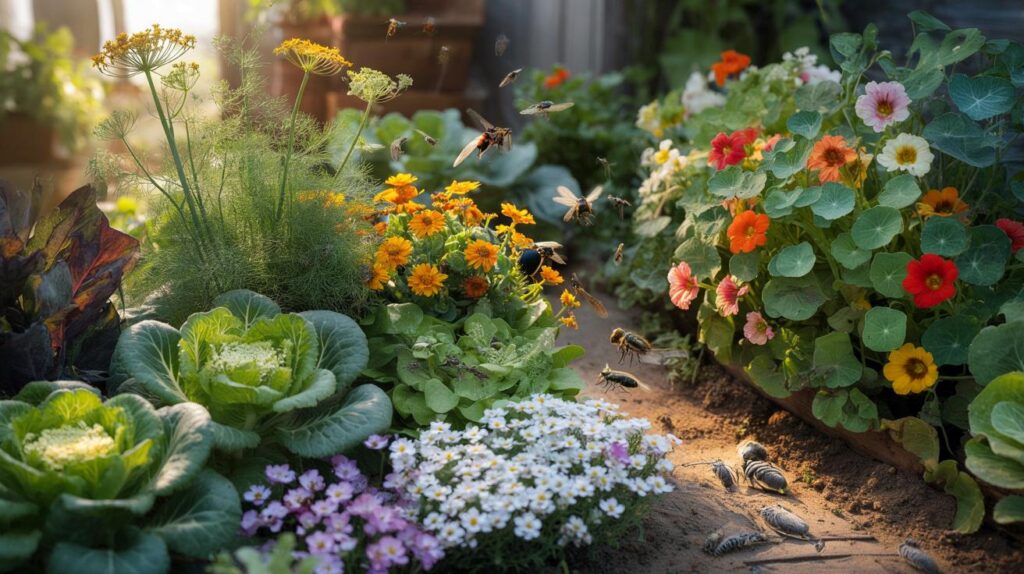
1. Sweet alyssum: the tiny carpet that feeds garden bodyguards
At first glance, sweet alyssum looks like a decorative afterthought, the kind of thing you tuck along the edge “just to fill space”. Then one warm morning you lean in and realize those white and lilac cushions are buzzing like a quiet airport. Minute wasps, hoverflies, little beetles you don’t even recognize yet — they’re all refueling there between patrols. Alyssum blooms early and keeps going, throwing out nectar-rich flowers while your tomatoes and peppers are still getting their act together. That continuous buffet is what pulls in **beneficial insects** and keeps them hanging around instead of passing through.
Picture a narrow bed of lettuces and kale in late spring. Usually, this is peak aphid drama. One gardener in Brittany tried a simple tweak: a ribbon of sweet alyssum every 60–80 cm along the row, nothing fancy, just direct-sown in gaps. By midsummer, aphids still showed up, but their explosions never lasted. Hoverfly larvae — those tiny, slug-like hunters — were all over the leaves, cleaning up colonies before they spread. No soap sprays, no crushed garlic concoctions, just a low white border humming quietly with life. It looked ornamental. It behaved like a security system.
 Emergency declared in Greenland after orcas are spotted dangerously close to rapidly melting ice
The magic is fairly logical. Beneficial insects need two things: shelter and food, especially nectar and pollen with easy access. Alyssum’s flowers are wide open, perfectly shaped for small parasitic wasps that lay eggs inside caterpillars and aphids. Those wasps don’t care about your vegetables. They care about a place to drink and rest. You’re essentially paying their salary in nectar, and they’re paying you back in pest control. The plant’s dense, low habit also offers hiding places for ground beetles that hunt slugs and soil-dwelling larvae. One small edging plant, several layers of silent work going on underneath.
2. Calendula: the bright decoy that lures pests away from your crops
If alyssum is the quiet helper, calendula is the loud, orange traffic cone saying, “Over here, pests.” Gardeners call it pot marigold, and that old-fashioned charm hides a sleight of hand. Aphids, whiteflies, and some beetles flock to calendula like kids to a candy stand. Instead of fighting that, you can use it. Plant calendula just off your main vegetable rows and it becomes a trap crop, pulling pressure away from beans, brassicas, and salad greens. The petals are edible, the flowers are generous, and the insects seem far more interested in chewing on its soft growth than your careful seedlings.
There’s a gardener I know who always plants calendula in a wide arc around his tomato patch. By June, those sunny flowers are crawling with aphids. At first glance, it looks like a disaster. Then you step into the tomato rows and realize they’re nearly clean. Ladybugs and hoverflies gather first on the messy calendula, where prey is easy to find, then slowly migrate into the rest of the garden. He treats the calendula like sacrificial shields: snipping down the most infested plants and tossing them into a hot compost pile before the pests can wander too far. It’s controlled chaos, and it works surprisingly well.
The trick with calendula is understanding you’re not trying to eliminate pests. You’re trying to manage them. A few aphids on calendula means there’s food for predators, which means those predators have a reason to permanently move into your garden. That’s how you build a stable ecosystem instead of a yo-yo of outbreak and panic. Calendula also exudes scents from its roots that some nematodes dislike, bringing a subtle layer of underground protection. Nothing miraculous, just quiet, cumulative advantages stacking up around a plant that looks like it’s only there for color. *The garden loves double-duty plants far more than show-offs.*
3. Dill and fennel: the airy umbels that host an entire insect city
If you’ve ever watched a dill plant bolt and thought, “Well, that’s wasted,” you might be throwing away your best allies. Let one or two dill or fennel plants go tall and feathery, and suddenly your vegetable beds gain a second story. Those umbrella-shaped flower heads — umbels — are irresistible to parasitic wasps, hoverflies, lacewings, and even tiny predatory beetles. The structure is like a landing pad with a bar attached. Sow a patch at the back of your beds or near the compost corner and just let them do their thing. You’ll notice the traffic above them long before you connect the dots.
One small urban garden I visited had a single bronze fennel plant towering over a mix of peppers and eggplants. It was hardly a “designed” choice; the plant had self-seeded and been left alone. By July, its chocolatey stems and frilly leaves were backlit at sunset, dotted with hovering insects. When cabbage whites started fluttering in, tiny wasps arrived soon after, and caterpillar damage on nearby brassicas stayed oddly low all season. The gardener hadn’t sprayed once. He joked that the fennel was like an apartment building for beneficial insects, with nectar on every floor and a view over the whole block.

There’s a simple logic behind umbel flowers being so effective. Their shallow, clustered blooms give short-tongued insects easy access to nectar; no complicated petals to navigate, no deep tubes. That means more species can feed there, from minuscule wasps to adult lacewings. Dill and fennel also flower over a fairly long window, stretching that nectar supply across crucial weeks when your crops are most vulnerable. If you cook with them, that’s a bonus, but even if you don’t, they earn their space by recruiting **natural predators** that would never show up for lettuce alone. Think of them as your garden’s open-air food court.
4. Nasturtiums: edible shields that warn you early
Nasturtiums are the plant equivalent of that friend who texts you when something’s going wrong. You tuck a few at the feet of tomatoes, cucumbers, or cabbage, and they act like early warning flags. Flea beetles, aphids, cabbage worms — plenty of them would rather chew nasturtium leaves than tougher, waxier crop foliage. Start seeds near the edge of the bed so they can trail and climb a little, forming loose skirts under your vegetables. You’ll get peppery leaves and flowers for salads, and at the same time a living dashboard that tells you which pests are arriving this week.
The emotional trap with nasturtiums is expecting them to stay perfect. They won’t. By midsummer, many gardeners panic when those round leaves start to look like lace and the flowers get speckled. That’s the whole point. Nasturtiums soak up a lot of damage that might otherwise be spread across your brassicas, beans, or squash. The key is rotation: pull out plants that are completely overrun and replace them with new seedlings, like swapping worn shields for fresh ones. Let’s be honest: nobody really inspects every single plant every single day. Nasturtiums do some of that silent monitoring for you.
“We used to chase pests,” one small-scale grower told me, leaning on her hoe. “Now we plant nasturtiums, watch where the trouble hits them first, and adjust the rest of the garden around that. The plants are basically telling us the story in real time.”
- Plant placement — Tuck nasturtiums at the front of beds, near pathways, where you can glance at them without hunting.
- Succession sowing — Sow a handful of seeds every three weeks through early summer so new, vigorous shields are always coming up.
- Edible bonus — Use the least damaged leaves and blooms in salads or pesto before renewing heavily infested plants.
- Mix of colors — Different varieties can attract slightly different insect mixes, giving you a broader picture of what’s moving in.
- Patience with holes — A chewed nasturtium is not a failure; it’s proof the trap strategy is working as planned.
Letting the garden do more of the work
Once you start planting for insects instead of just for yourself, the whole mood of the vegetable patch shifts. You stop aiming for spotless leaves and start looking for balance. Alyssum carpets, calendula shields, towering fennel, trailing nasturtiums — taken together, they turn a quiet, rectangular bed into something closer to a living neighborhood. Pests arrive, sure, but so do patrols. Instead of reacting with fear every time you spot damage, you begin to wonder which allies will show up next.
We’ve all been there, that moment when a crop looks doomed and the first instinct is to reach for something fast and harsh. These four plants offer another way: build shelter, offer nectar, allow some sacrifice, and let time and diversity do part of the heavy lifting. The funny thing is, neighbors will likely notice the color and scent first, not the ecological engineering going on underneath. Over a season or two, you may find yourself spraying less, watching more, and trusting that a slightly wild-looking bed is not neglect, but strategy. The kind you can taste in every harvest.
| Key point | Detail | Value for the reader |
|---|---|---|
| Sweet alyssum | Provides near-continuous nectar for small predators and parasitoids | Helps stabilize beneficial insect populations and reduce aphid flare-ups |
| Calendula | Acts as a colorful trap crop for aphids and whiteflies | Pulls pest pressure away from vulnerable vegetables while feeding allies |
| Dill, fennel, nasturtium mix | Vertical umbels plus ground-level shields and signals | Creates layered habitat that boosts natural control and offers edible bonuses |
FAQ:
- Question 1Where should I place these plants in a small vegetable garden?
- Question 2Do I need to avoid any of these near specific crops?
- Question 3How long before I notice fewer pests?
- Question 4Can I still use mild organic sprays with these plants?
- Question 5Will these plants become invasive or hard to control?