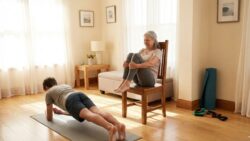
The plank to side plank is a powerful dynamic core exercise that blends the stability of a traditional plank with the lateral challenge of a side plank. Instead of holding one static position, this movement requires controlled transitions that activate the core across multiple planes. It helps build functional strength, improve balance, and enhance coordination, making it especially useful for people who want more than basic core endurance.
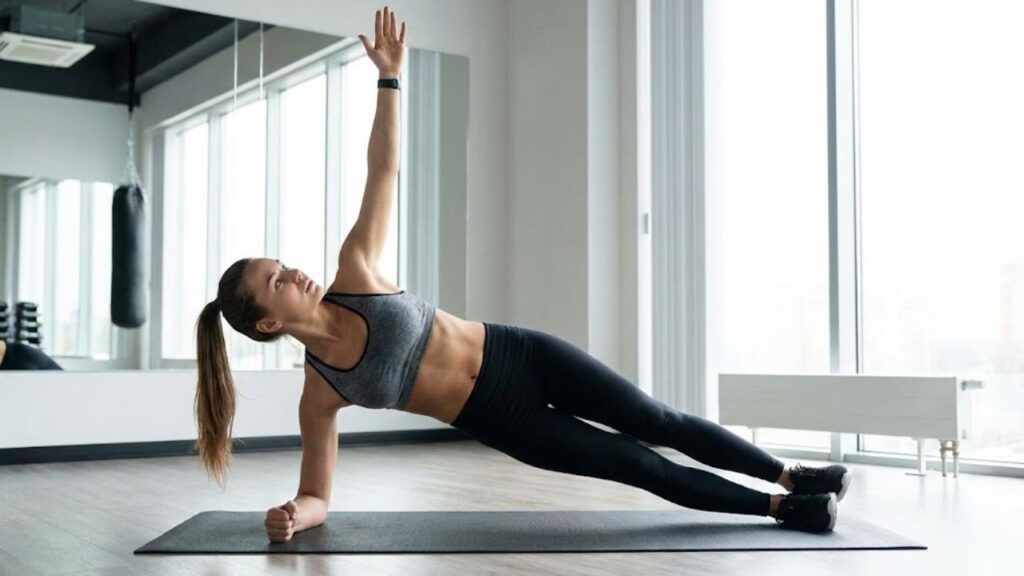
Because the body is constantly adjusting during the transition, proper form becomes essential. Errors such as dropping the hips, twisting too quickly, or losing shoulder alignment can reduce the benefits and increase strain. When performed correctly, this exercise strongly targets the obliques and transverse abdominis while improving overall body control.
About Plank to Side Plank
The plank to side plank is not a single pose but a smooth, controlled sequence. You begin in a high plank position and rotate into a side plank, then either hold briefly or return to the plank before switching sides. Unlike standard planks that mainly train resistance to forward flexion, this variation introduces rotational and lateral demands.
It is commonly included in programs focused on core conditioning, athletic performance, and injury prevention. The exercise is best suited for individuals who already have basic plank strength. Since it relies only on bodyweight and floor space, it can be performed anywhere and adjusted by changing hold times or repetitions.
Why Plank to Side Plank Is Becoming Popular
As functional fitness gains attention, exercises that improve real-world movement and control are increasingly valued. The plank to side plank trains the core to resist rotation and lateral flexion, which are essential during running, lifting, twisting, and sports activities.
Another reason for its popularity is its ability to highlight left-to-right strength imbalances. Because each side is loaded independently during the side plank phase, weaknesses become more noticeable than in symmetrical exercises. This makes it especially useful for developing balanced core strength and stability.
Approaches and Key Differences Between Plank Variations
| Exercise Type | Primary Focus | Advantages | Limitations |
|---|---|---|---|
| Standard Plank | Anterior core stability | Beginner-friendly and builds endurance | Limited oblique activation |
| Side Plank | Lateral core strength | Targets obliques and hip stabilizers | Balance can be challenging for beginners |
| Plank to Side Plank | Dynamic multi-plane control | Improves coordination and functional strength | Requires good technique and baseline strength |
Key Performance Factors to Monitor
To get the most benefit from the plank to side plank, pay attention to the following elements:
Body Alignment: Keep a straight line from head to heels throughout the movement.
Transition Control: Rotate slowly and smoothly rather than rushing.
Hold Duration: Start with 15–30 seconds per side and progress gradually.
Breathing: Maintain steady breathing instead of holding your breath.
Shoulder Position: Keep shoulders stacked over wrists or elbows for joint safety.
Pros and Cons
Activates the entire core, including obliques and deep stabilizers.
Improves balance, coordination, and body awareness.
Reveals and helps correct side-to-side strength differences.
Requires no equipment and minimal space.
Supports long-term movement resilience through lateral stability.
Limitations:

Not ideal for beginners without basic core strength.
Poor form may cause shoulder or lower-back discomfort.
Transitions can feel awkward during early practice.
Progress is harder to quantify compared to weighted exercises.
How to Use Plank to Side Plank Effectively
Follow these steps to integrate the exercise safely into your routine:
Confirm you can hold a standard plank for at least 30 seconds with good form.
Practice static side planks on each side before adding transitions.
Use mirrors or video recordings to check alignment.
Move with control rather than speed to increase muscle engagement.
Avoid hip dropping, shoulder twisting, or breath holding.
Increase duration or repetitions only after maintaining clean form.
Stop if sharp pain occurs; mild muscle fatigue is normal.
Cost and Practical Value
This exercise requires no financial investment, equipment, or gym access. Its efficiency lies in combining multiple core challenges into one movement, saving time while increasing functional demand. Compared with machines or paid programs that target similar outcomes, the plank to side plank delivers excellent results at zero cost.
Alternative Exercises for Comparison
| Exercise | Best For | Main Benefit | Possible Drawback |
|---|---|---|---|
| Pallof Press | Anti-rotation strength | Highly targeted rotational control | Requires bands or cables |
| Russian Twists | Oblique endurance | Easy to scale intensity | Risky if spinal control is poor |
| Dead Bug | Beginner core control | Low impact and safe | Less lateral strength emphasis |
| Plank to Side Plank | Dynamic stability | Trains multiple planes without equipment | Technique-sensitive |
User Experience and Feedback
Many people report feeling stronger core engagement and improved balance after regular practice. Improvements in posture and daily movement confidence are commonly mentioned. Initial challenges often include maintaining hip height and managing shoulder fatigue, which usually improve with better alignment and gradual progression.
Safety and Maintenance Guidelines
Warm up the shoulders and core before performing the exercise. Use a stable, non-slip surface to avoid hand or foot movement. If wrist discomfort occurs, switch to a forearm-based version. For rehabilitation or medical conditions, guidance from a qualified professional is recommended.
Conclusion
The plank to side plank is an effective, equipment-free exercise for developing dynamic core stability, balance, and lateral strength. It is ideal for individuals who have mastered basic planks and want to progress toward more functional movement patterns. By focusing on proper form and gradual progression, this exercise can support long-term core strength, symmetry, and overall movement quality.