The air has that sharp, metallic edge again. Not the gentle bite of winter, but the kind that sneaks through double-glazed windows and under three layers of socks. In Chicago, in Warsaw, in rural Canada, people are already texting each other screenshots from weather apps, little purple and blue blobs spilling down from the Arctic like a bruise. The phrase “polar vortex” pops up again, half-joke, half-threat, as if it’s some dramatic villain in a movie we’ve watched too many times.
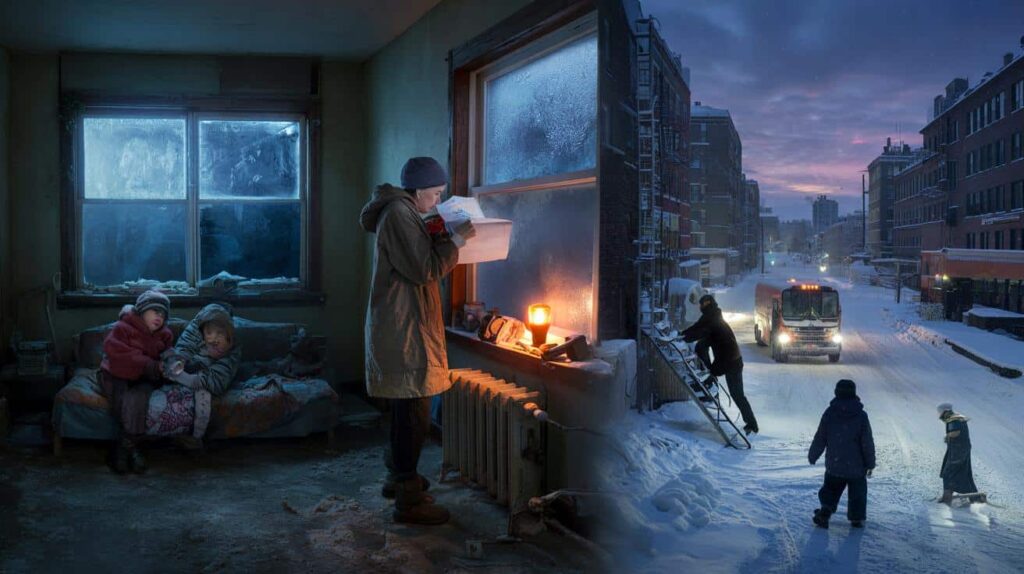
Kids will still have to wait for school buses in the dark. Nurses will still walk to night shifts on ice-glazed sidewalks. Delivery drivers will still climb frozen stairwells with someone’s dinner balanced in one hand.
Far above them, something is breaking.

The sky is splitting, and the bill is coming to your doorstep
A historic disruption of the polar vortex is brewing high over the Arctic, in that strange, thin slice of atmosphere where jet streams twist and pulse like restless snakes. Meteorologists call it a “sudden stratospheric warming”, a dry phrase for something that can send deadly cold plunging across entire continents. You will feel it not in statistics, but in the way your breath hurts when you step outside.
Scientists are already watching the stratosphere spike, temperatures leaping by dozens of degrees up there, while at ground level, people reload weather maps with a quiet sense of dread. What happens 30 kilometers above our heads soon plays out on your gas bill.
Picture one concrete street on one ordinary morning. A woman in Cleveland, already two paychecks behind, cranks her ancient thermostat at 5 a.m. because the forecast has shifted overnight: “Extreme cold warning. Frostbite in minutes.” Her boiler wheezes like a tired animal. She hesitates, then chooses warmth over a slightly less terrifying energy bill, just this once.
That same morning, stock traders in warm offices refresh dashboards of natural gas futures as the coming polar plunge ripples through markets. Utility companies quietly prepare for “peak load events” and “demand surges”. The language is neutral, glossy. Yet for millions of people, those words mean one thing: next month’s bill will land with the weight of the cold itself.
The physics is brutally simple. When the polar vortex weakens or splits, the usual ring of westerly winds that keeps Arctic air locked in place wobbles and breaks. Cold that “belongs” near the pole spills south, while milder air pushes north, disrupting familiar weather patterns. The irony is almost cruel.
A warmer planet, heated by decades of burning fossil fuels, seems to be nudging this delicate system into more erratic behavior. Sea ice shrinks, the Arctic warms faster than the rest of the globe, pressure patterns shift. Everything that was once relatively stable starts to stutter, like an old engine pushed too far. The result feels nothing like “global warming” when you’re scraping ice from the inside of your bedroom window.
What ordinary people can actually do when the vortex comes knocking
When meteorologists start dropping phrases like “historic disruption” and “major outbreak of Arctic air”, regular people don’t get to rewrite climate policy. They get to survive the next three weeks. That begins with preparation that’s boring, unsexy, and painfully practical.
The small things stack up. Draft stoppers at the base of doors. Plastic film over leaky windows. Heavy curtains closed tight at night and opened on sunny days to trap any scrap of warmth. Checking that the carbon monoxide alarm still works. Topping up prescription meds so you don’t have to stand in line during an ice storm. This isn’t “prepper” fantasy. It’s just staying one step ahead of a weather system that doesn’t care if you can’t afford a new boiler.
Energy poverty already shapes how millions of families experience winter. People heat one room and seal off the rest of the house with blankets pinned across doorframes. They choose between running an electric heater or cooking a proper dinner. Let’s be honest: nobody really does this every single day with perfect timing and planning.
A deep polar blast exposes all the hairline cracks in that fragile balance. The old fridge that was “fine” suddenly draws too much power on a strained grid. The landlord who never insulated the roof becomes an invisible third presence in every conversation about money. If your social feeds fill up with glistening icicle photos and jokes about “Arctic cosplay”, there’s also a quieter feed, offline, where people are counting coins and silently dreading the meter reading.

There’s one plain-truth sentence that tends to hover in the background of all this: the ones who did the least to heat the planet are usually the ones now paying the highest price in the cold.
“The polar vortex doesn’t read income statements,” climate scientist Dr. Jalisa Monroe told me on a recent call. “But our systems do. The climate shock hits everyone, yet the financial shock lands very unevenly.”
- Seal and layer your living space before the cold hits, not during the first night of frostbite warnings.
- Talk with neighbors about ride-shares, shared heaters, or warm spaces; mutual aid outperforms slogans in a blizzard.
- Screenshot your energy bills and note unusual spikes; those records matter if pricing or supply becomes a political fight later.
- Follow local alerts for warming centers, transit changes, and blackout risks; these are often quietly announced and quickly forgotten.
While the world freezes, the real winners stay warm
There’s a strange double exposure when a polar vortex disruption grips the news cycle. On one layer, you see images of iced-over power lines, farmers trying to keep livestock alive, parents huddled with kids under shared blankets. On another, you see quarterly reports from oil and gas giants announcing record profits, helped along by “weather-related demand spikes”. Both are real. Only one pays a price.
The language used to describe extreme cold often blurs the line between accident and design. We hear about “acts of God” and “unprecedented events”, as if the fossil fuel industry hadn’t spent decades undermining climate policy, lobbying against efficiency standards, and pouring billions into messaging that smooths over this connection. *A sudden stratospheric warming might be a twist of nature, but the level of vulnerability on the ground is completely man-made.*
A broken polar vortex isn’t just a meteorological story; it’s a justice story. When grids fail, when people die in unheated apartments, the post-mortem is almost always the same: old infrastructure, poor regulation, no political appetite for long-term investment. Yet the same politicians who plead budget constraints for weather-proofing schools and hospitals rarely question subsidies flowing to fossil projects or the tax arrangements of major polluters.
We’ve all been there, that moment when you’re standing in a supermarket aisle checking prices on basic food staples, knowing that a few days of extreme cold will push those numbers up again. Frozen crops. Disrupted transport. Extra energy costs baked quietly into everything from bread to bus tickets. Meanwhile, corporate risk is hedged, insured, spread across portfolios. Personal risk sits at the kitchen table with you.
Some experts now argue that repeated polar vortex disruptions could become a kind of slow-motion social stress test. How we handle them reveals who our systems were truly built to protect. One more brutal freeze means more people pushed into arrears on their utility payments, more tenants scared to complain about broken heating, more small businesses knocked sideways by a week of closures and higher operating costs.
And **yet the largest polluters, the ones that profited from the emissions driving these chaotic swings, rarely see a courtroom, let alone a cut in their bonuses.** Climate lawsuits are rising, yes, but they move at a glacial pace in a world of instant weather shocks. By the time a judgment lands, a whole generation will have already stood in too many cold kitchens, wondering how the sky breaking miles above their heads led to one more “final notice” letter in the mail.
Where we go from here, standing in the cold together
This coming February, as the polar vortex contorts into yet another strange shape, there will be two kinds of conversations. One will happen on TV and in policy briefings, about anomalies, oscillations, and probabilistic forecasts. The other will play out in WhatsApp groups and neighborhood chats: who has a spare heater, who can pick up medicine for the older neighbor on the third floor, whose pipes have already burst.
The shock of the cold might pass in a week or two. The memory of the cold will linger in bank accounts, in school attendance records, in quiet decisions like “we won’t turn the heat up that high again, even if the kids complain.” Yet this isn’t just a story of hardship. It’s also a story of what people build between them when the wind picks up: mutual aid networks, community fridges, shared rides, petitions for fairer pricing and insulation programs that actually reach those who need them.
The sky is splitting again, that much seems certain. The real question isn’t whether the polar vortex will punish ordinary people. It’s how long we’ll accept a world where that punishment becomes routine, while those who heated the planet can still step from a chauffeured car into a perfectly warmed lobby, untouched by the storm their profits helped to brew.
| Key point | Detail | Value for the reader |
|---|---|---|
| Polar vortex disruption is linked to our warming world | Sudden stratospheric warming events may be becoming more frequent as Arctic regions heat faster than the global average | Helps readers connect “freak cold” to climate change, rather than seeing it as random weather |
| Ordinary households carry the heaviest burden | Higher heating bills, energy poverty, and fragile infrastructure turn cold waves into financial and health crises | Shows why personal anxiety over bills and safety is not just “individual failure” but a systemic pattern |
| Big polluters remain largely shielded | Fossil fuel companies profit from demand spikes while societal costs of climate chaos fall on public budgets and low-income communities | Gives readers language and context to question who really benefits from every new “historic” cold event |
FAQ:
- Question 1What exactly is a polar vortex disruption, in simple terms?It’s when the tight ring of strong winds that usually traps cold air over the Arctic weakens or splits, letting that deep-freeze air spill south into North America, Europe, and Asia for days or weeks.
- Question 2How can extreme cold be connected to global warming?As the Arctic warms faster than the rest of the planet, sea ice shrinks and temperature contrasts shift, which can destabilize the jet stream and the polar vortex, making wild swings of cold and warmth more likely.
- Question 3What can I do at home before a polar cold wave hits?Seal drafts, layer curtains, prepare an emergency kit (water, food, meds, flashlights, power banks), check smoke and carbon monoxide alarms, and talk with neighbors about sharing rides or warm spaces.
- Question 4Why do my energy bills jump so much during these events?Demand for heating surges while supply can be strained by frozen infrastructure and market speculation, and those combined pressures filter down to household bills.
- Question 5Is there anything beyond personal tips that really changes this pattern?Yes: pushing for building insulation programs, fair energy pricing, stronger regulation of utilities, and holding large emitters accountable through policy, campaigns, and legal action all chip away at the root causes.