Wild winter weather had already scattered debris across Cornwall’s coastline when one resident glanced outside and froze in disbelief.
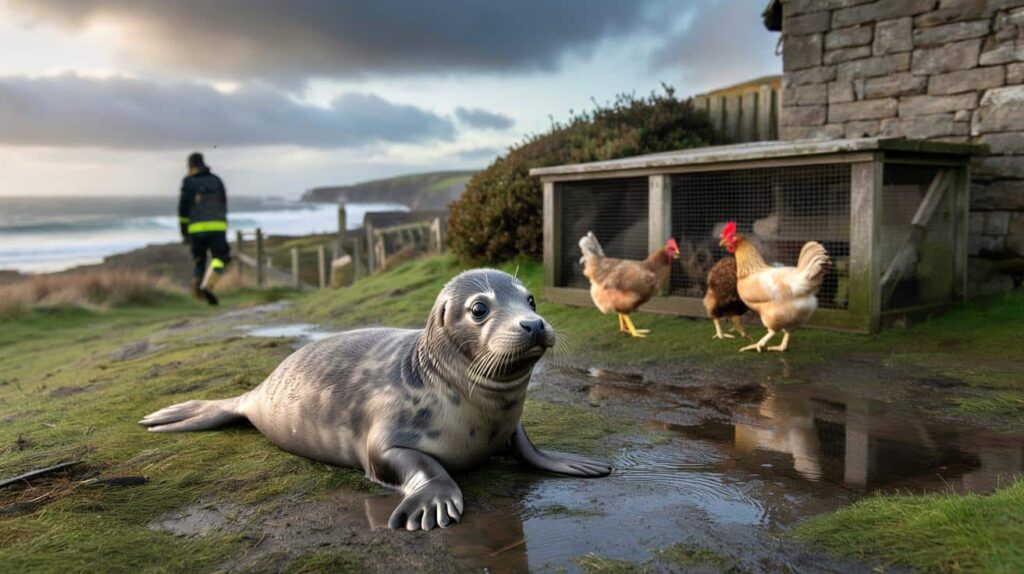
The muddy lawn was a mess from recent floods, chickens clucked nervously in their coop – and in the middle of it all lay a seal pup, calmly resting as if it had always lived there.
Storm chaos leads to an unexpected visitor
The young seal was discovered on Wednesday in a private garden at St Loy, near St Buryan in west Cornwall, just days after Storm Chandra had battered the region with heavy rain, strong winds and rough seas.

The pup, thought to be a juvenile grey seal, had somehow left the beach, crossed a coastal path and squeezed under a gate before settling beside a chicken run. For the surprised homeowner, the scene felt surreal: countryside sounds, a battered lawn and, right by the chicken coop, a wide-eyed marine mammal.
The animal was later estimated to be around five to six months old and about 100m (328ft) from the shore when it was found.
Rescue charity British Divers Marine Life Rescue (BDMLR) received a call from the resident, who suspected the pup had sought refuge from the pounding surf and rising tides brought in by the storm.
How rescuers responded to the garden seal
Dan Jarvis, from BDMLR, was among the team who headed to St Loy after the alert came in. He said the rescue was unusual but not entirely unexpected given recent conditions along the Cornish coast.
On arrival, the team found the seal surprisingly calm. While many stranded pups appear weak or distressed, this one lay quietly in the garden, seemingly unbothered by its new surroundings or by the curious chickens nearby.
Rescuers described the seal as “pretty content” despite being far from the water’s edge.
Jarvis and his colleagues carried out a visual and physical assessment on site. At first glance, they worried the animal was slightly underweight, a common problem for storm-battered youngsters. A closer hands-on check eased some of those fears.
“Everything was ok,” Jarvis reported, meaning the pup did not need to be taken into rehab at the BDMLR hospital. It was thin but not dangerously so, alert, and strong enough to be given a second chance at sea.
Why it could not stay where it was
Leaving the seal in the garden was never really an option. The presence of domestic animals posed a risk of stress or conflict, and the layout of the land raised concerns that the pup might struggle to navigate safely back to the beach.
Rescuers feared that without help the animal might wander further inland, collide with traffic or become trapped in fields and hedges.
BDMLR decided to transport the youngster to a more suitable site. Because seas remained rough along some stretches, the team chose a more sheltered beach rather than the one closest to the garden. That way, the pup had calmer water and a better chance of rejoining other seals without being hurled back onto rocks by big waves.
A busy season for Cornwall’s seal rescuers
The incident comes after an intense winter for Cornwall’s seal response teams. Jarvis said the BDMLR Cornwall seal hospital handled 31 pups in December alone, describing the month as “incredibly busy”.
Despite Storm Chandra pushing animals into tricky spots, January has so far been slightly gentler, with fewer admissions than the team feared at the start of the year.
- December: 31 seal pups admitted to Cornwall seal hospital
- Common issues: injuries from rocks, exhaustion, separation from mothers, underweight pups
- January: Fewer rescues than expected, even with stormy spells
Not all seals are as fortunate as the St Loy youngster. Recent months have seen animals tangled in marine debris, stranded on rocks, or found dehydrated and in need of longer-term care at sanctuaries.

Why seals end up inland after storms
Grey seals and common seals normally haul out on beaches or rocky ledges to rest, molt or nurse pups. Extreme weather can scramble that routine. Storm surges and high tides can knock pups from safer spots, separate them from their mothers or push them into unfamiliar areas.
Strong winds and churning waves can force young seals to seek shelter well above the normal tide line – and occasionally into gardens, car parks or farmyards.
In places like Cornwall, where cliffs, narrow coves and coastal paths sit close together, there is not always much space between wild coastline and people’s homes. A disoriented pup can cover surprising distances when spooked by noise, dogs or receding water.
What to do if you find a seal on land
Incidents like the St Loy garden visitor highlight how members of the public can help without putting themselves or the animal at risk. Marine charities give clear, practical advice:
- Keep dogs on leads and children back from the animal.
- Stay at least 50m away and avoid loud noises or sudden movements.
- Do not try to push or drag the seal back into the sea.
- Call a recognised rescue organisation and follow their guidance.
- Only intervene physically if you are explicitly asked to and it is safe.
Many well-meant attempts to “help” can go wrong. A pup that looks abandoned may actually be resting while its mother forages. Forcing it into the sea while it is exhausted or injured can reduce its chances of survival.
Seals, storms and a changing coastline
The story of a lone pup in a Cornish garden sits within a bigger pattern along UK and US coasts, where more frequent and intense storms are raising concerns for marine wildlife.
Repeated battering of beaches can erode the sandbanks and rocky ledges that seals rely on for breeding. At the same time, higher visitor numbers in some beauty spots put animals under pressure, with disturbance from photography, drones and curious walkers already a growing problem.
Every rescued pup is a reminder of how tightly coastal wildlife is tied to weather, tides and human behaviour.
Rescue teams in places from Cornwall to the Channel Islands report fluctuating seasons: some years they are overwhelmed with stranded pups, other years the numbers fall, often linked to storms and food availability.
Understanding grey seal pups
For readers unfamiliar with these animals, a five- or six-month-old grey seal is already a substantial wild predator, even if it still looks cute. By that age, pups have usually shed their fluffy white coat and are learning to fend for themselves at sea.
| Stage | Approximate age | Key features |
|---|---|---|
| Newborn pup | 0–3 weeks | White fur, stays on land with mother, feeds on rich milk |
| Weaned pup | 3–6 weeks | Loses white coat, begins to fast and learn to swim |
| Juvenile | 2–12 months | Fully in water, learning to hunt, often most vulnerable in storms |
Young seals launched into winter seas must quickly master finding fish while avoiding large waves, rocky shorelines and human hazards like fishing gear. A spell of extreme weather can be the difference between coping and being washed ashore in trouble.
Storm-season risks and how communities adapt
Coastal communities are increasingly learning to live with wildlife dramas like this one in St Loy. Farmers, dog walkers and holiday cottage owners are more aware than they were even a decade ago that a stranded or “lost-looking” seal may be nearby during and after storms.
Some are now building simple steps into their routines, such as checking beaches after heavy weather, alerting local charities when animals appear in unusual places, and warning visitors to keep distance from resting seals.
For families, situations like a seal in the garden raise safety questions. While grey seals are not aggressive without cause, they have strong jaws. Standing back, keeping pets away and calling experts remains the safest approach, not just for people but for the animal itself.
As Storm Chandra fades from the headlines, the St Loy pup is now back in the Atlantic, facing the normal challenges of a young seal at sea. For the homeowners who found it outside their window, the memory of a wild visitor among the chickens will probably linger far longer than the floodwater did.